
📘 Gut Health Library • Cornerstone
Understanding the Gut Microbiome
Learn how the gut microbiome influences digestion, immunity, Candida, IBS, SIBO, leaky gut, and overall health—and discover practical ways to restore microbiome balance naturally.
Written & Clinically Reviewed by Eric Bakker, N.D. • Last Updated: July 2026 • 35 min read
📘 Gut Health Library • Cornerstone
Understanding the Gut Microbiome
Learn how the gut microbiome influences digestion, immunity, Candida, IBS, SIBO, leaky gut, and overall health—and discover practical ways to restore microbiome balance naturally.
Evidence-Based
Gut Microbiome Focused
Root Cause Approach
Written & Clinically Reviewed by Eric Bakker, N.D. • Last Updated: July 2026 • 35 min read
What is the Gut Microbiome?
Your gut microbiome is the community of trillions of tiny microbes that live mainly in your digestive system. Most are bacteria, but they also include fungi, viruses, and other microorganisms.
These microbes do much more than simply live in your gut. They help digest your food, make important nutrients, support your immune system, protect your gut lining, and play a vital role in keeping you healthy.
When the balance of these microbes is disturbed, it’s called gut dysbiosis. This imbalance has been linked to problems such as Candida overgrowth, IBS, SIBO, leaky gut, and other digestive disorders. It may also contribute to inflammation and reduced immune function.
In This Guide, You Will Learn
- What the gut microbiome is and why it’s so important for your health.
- How healthy gut microbes support digestion, immunity, and your gut lining.
- What gut dysbiosis is, what causes it, and the symptoms to look for.
- How the microbiome is linked to Candida, IBS, IBD, SIBO, and leaky gut.
- Best ways to improve your gut health through diet, probiotics, prebiotics, & lifestyle.
- When gut testing may be helpful and the next steps you can take.
Main Role
When Imbalanced
Can Be Improved By
Table 1: Quick Facts About the Gut Microbiome
|
Key Fact |
Why It Matters |
|---|---|
|
|
|
|
|
|
|
|
|
|
|
|
|
|
|
|
|
|
Key Takeaways
- Most important important lesson after seeing thousands of patients? Most gut problems don’t happen on their own.
- People with Candida imbalance often had gut dysbiosis, low-levels of beneficial bacteria
- Many people also had poor stomach function (hypochlorhydria) and low pancreatic enzyme levels.
- Those with IBS frequently had an unhealthy balance of gut bacteria.
- Many people with SIBO, bloating, or food intolerances also had poor digestion and an unhealthy gut.
That’s why I always looked for the underlying cause, rather than treating each problem as something separate. When you understand what’s happening in the gut as a whole, it’s much easier to restore balance and support long-term health.
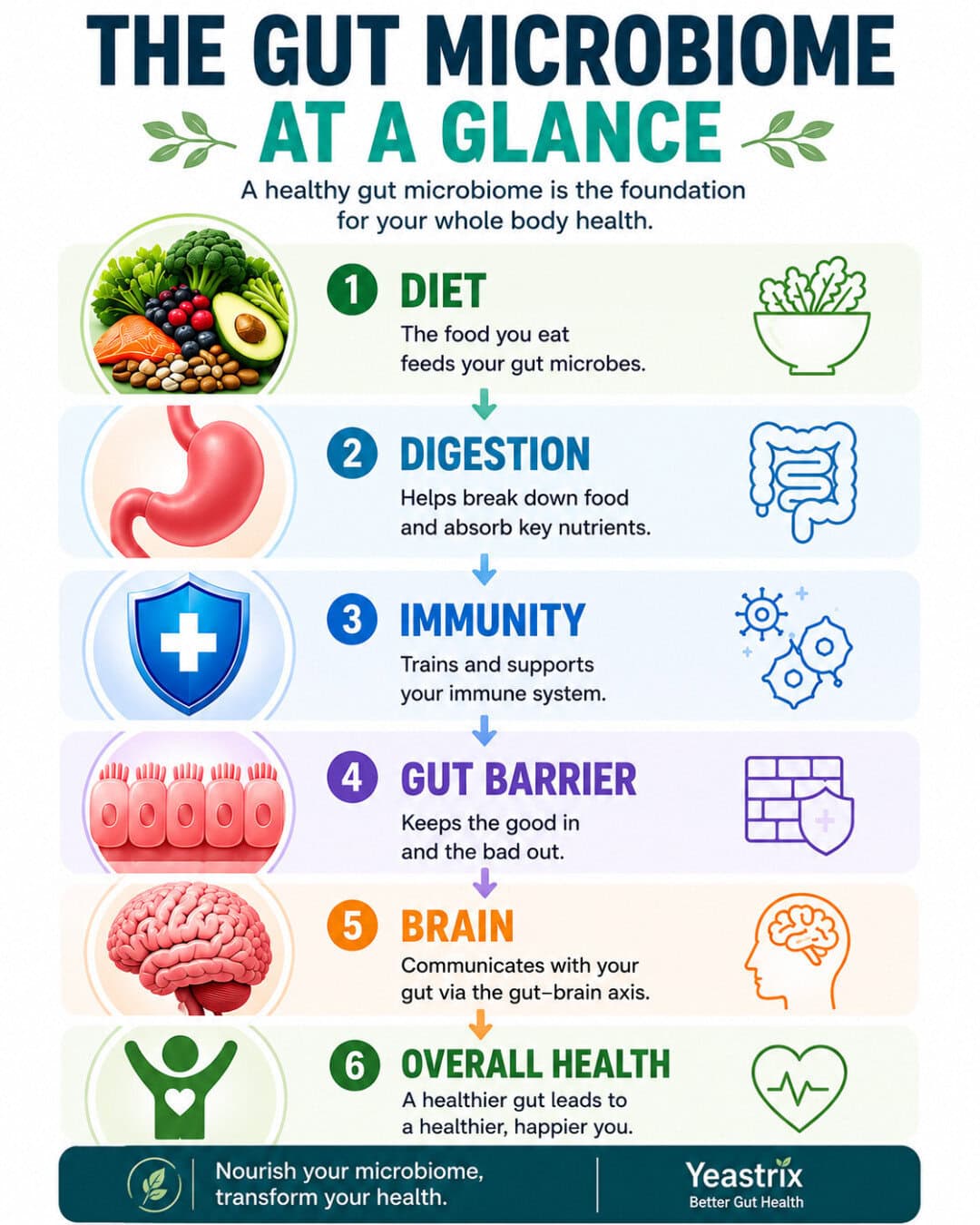
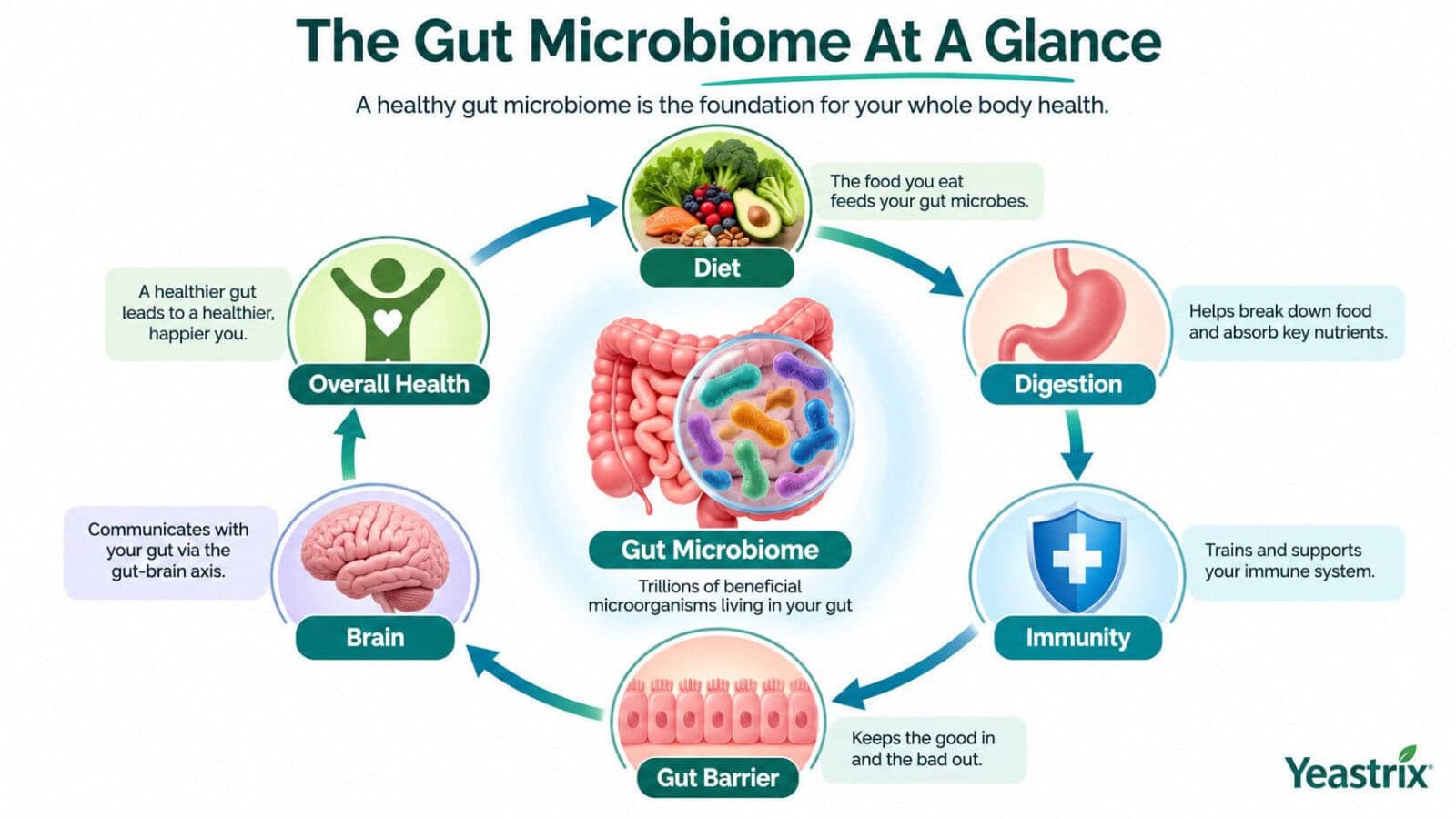
Why Understanding Your Gut Microbiome Is So Important
Not long ago, doctors often looked at digestive problems as separate conditions. If someone had bloating, the focus was usually on the stomach or bowel. If they had frequent infections, attention turned to the immune system. Skin problems were treated as skin conditions, and low mood or anxiety were seen as separate issues.
Today, we know the body doesn’t work like that.
Your digestive system, immune system, brain, hormones, and metabolism are all connected. One of the most important links between them is the gut microbiome.
Over the past 20 years, scientists have discovered that the gut is home to trillions of tiny microbes that do much more than help digest food. They communicate with your immune system, help protect your gut lining, produce important nutrients, and influence many other parts of your health.
In other words, these microbes aren’t just living in your gut—they’re working for you every day. That’s why the gut microbiome has become one of the most exciting and important areas of health research.
This guide will explain the gut microbiome in clear, everyday language. My goal is to help you understand how it works, why it matters, and what you can do to improve it. Rather than focusing on just one digestive condition, we’ll look at the bigger picture and explore how the gut microbiome affects your overall health.
By the End of This Guide You’ll Understand
Whether you’re beginning your gut health journey or have struggled with digestive problems for years, understanding the microbiome provides the foundation for making informed decisions about your health.

Every Person Has Their Own Unique Microbiome
No two people have the same gut microbiome. Gut bacteria is are much like a fingerprint, every person’s microbial community is unique to that person. Your microbiome is shaped by many factors, including:
Although everyone’s gut microbiome is unique, healthy microbiomes usually have one thing in common:
They contain lots of different types of beneficial bacteria. Think of your gut like a rainforest. A rainforest is healthy because it contains many different plants and animals living together. If one species is affected, the whole ecosystem can still survive.
Your gut works much the same way. The more diverse your gut microbes are, the stronger and more resilient your gut is likely to be.
Our Gut Microbiome Is Like a Living Garden
One analogy I often use with patients is to think of the gut microbiome as a carefully maintained garden.
In a healthy garden:
Now imagine neglecting that garden. The soil becomes depleted. Useful insects disappear. Weeds begin taking over. Chemicals are used to “control” insects, pests, and diseases. Before long, the entire ecosystem changes. The same thing happens within the human digestive tract.
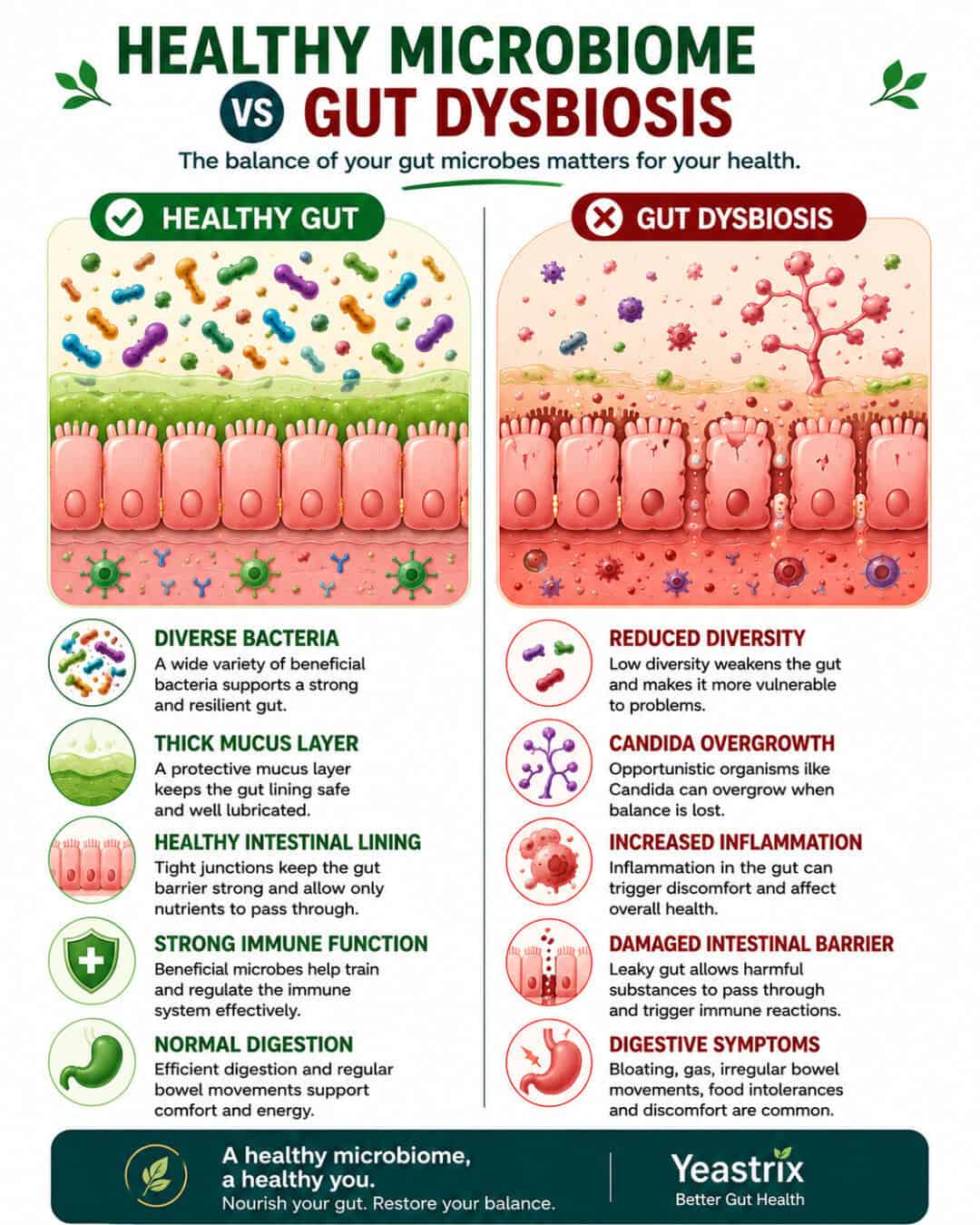
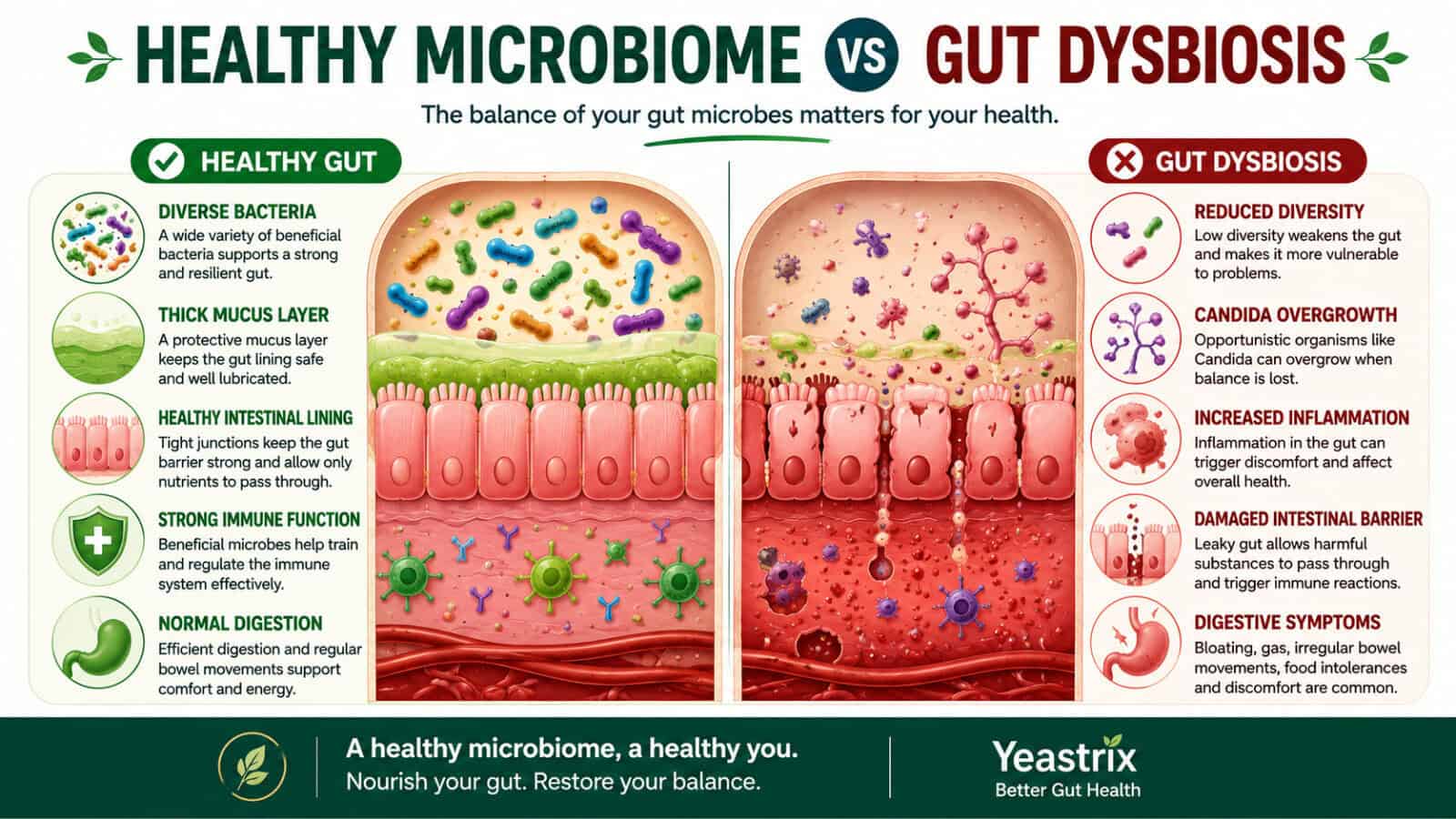
When beneficial microorganisms decline in your gut, opportunistic microorganisms begin multiplying, gut microbial diversity falls, and the balance that once maintained health gradually disappears. This process is known as gut dysbiosis.
Why Our Gut Microbiome Matters
Knowing what the gut microbiome is is only the beginning. The next question is: Why is it so important?
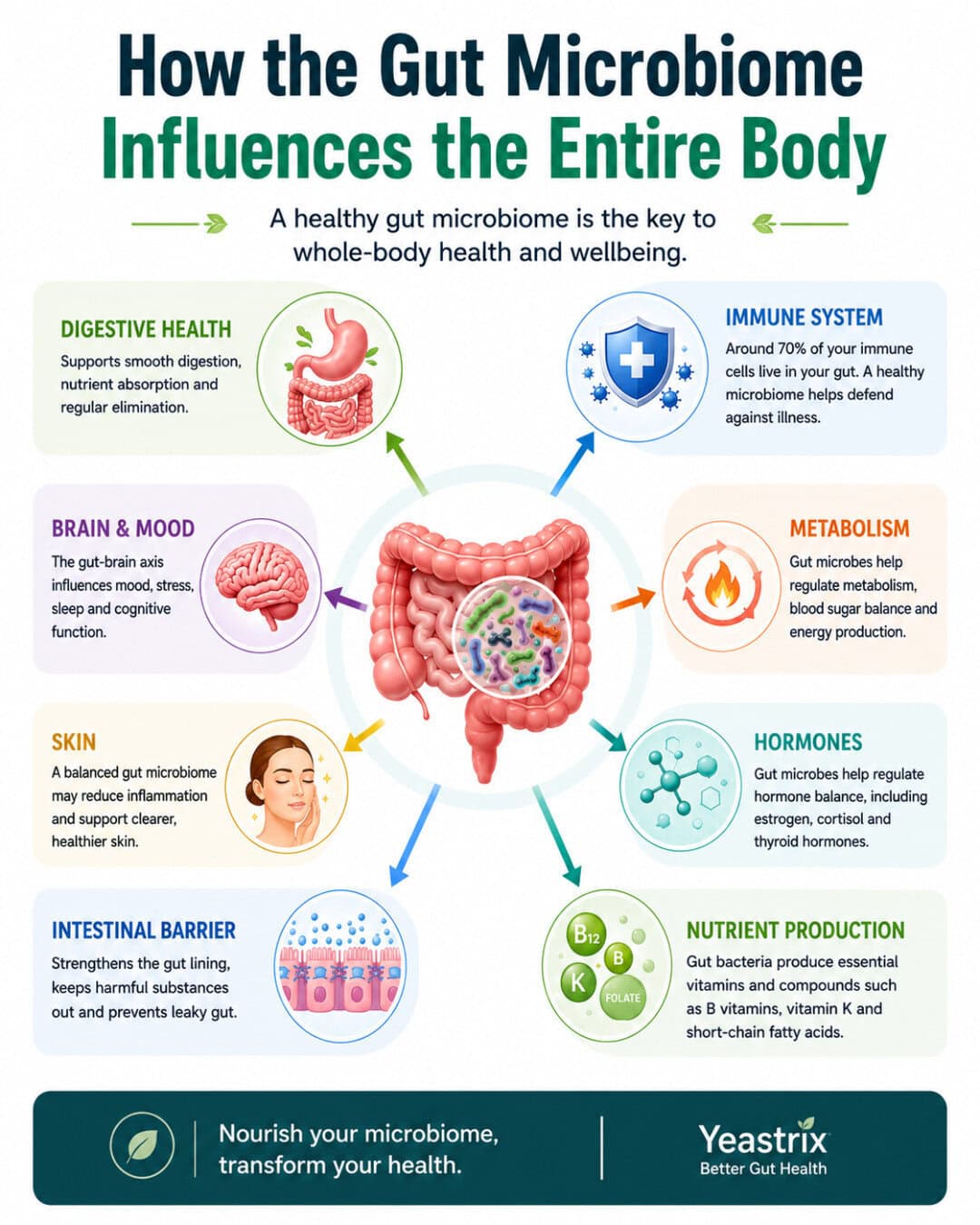
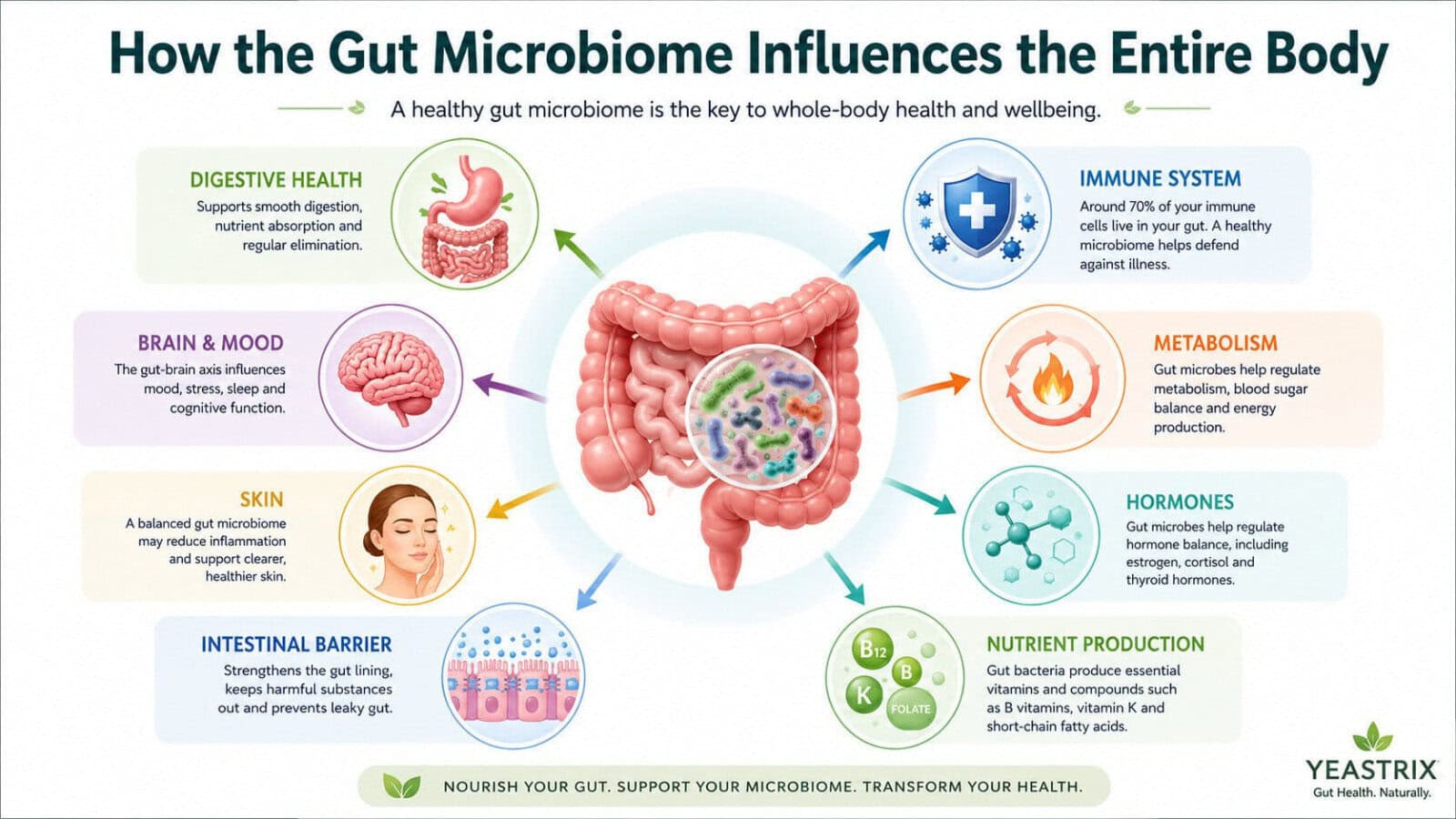
Over the past 20 years, scientists have discovered that your gut microbiome does much more than help digest food. It also supports your immune system, helps make important nutrients, influences your metabolism, helps control inflammation, and even communicates with your brain. That’s why many experts now think of the gut microbiome as an “extra organ.” It isn’t made of human cells like your heart or liver. Instead, it’s made up of trillions of tiny microbes working together to help keep you healthy.
When your gut microbiome is healthy and well balanced, it supports good digestion and helps protect you from disease. But when that balance is lost, harmful microbes can begin to outnumber the beneficial ones. This can affect not only your digestion, but many other parts of your health as well.
Supporting Healthy Digestion
One of the gut microbiome’s most important jobs is helping you digest your food.
Your body can digest many foods on its own, but it can’t break down everything you eat. Foods rich in fibre, especially from fruits, vegetables, legumes, and whole grains, reach the large intestine almost unchanged.
This is where your beneficial gut microbes go to work. They break down these fibres and turn them into important compounds called short-chain fatty acids (SCFAs), including:
- Butyrate
- Acetate
- Propionate
These natural compounds help keep your gut healthy. They feed the cells lining your colon, support your gut barrier, help control inflammation, and encourage the growth of beneficial bacteria. Without your gut microbes, you wouldn’t get the full health benefits of eating fibre.
Maintaining a Healthy Immune System
Your gut does much more than digest food. It’s also home to about 70% of your immune system. Every day, your immune system has to make important decisions. It needs to know the difference between:
- Healthy foods that are safe to eat.
- Beneficial microbes that help keep you healthy.
- Harmful germs that need to be destroyed.
Your gut microbes help guide those decisions. From the day you’re born, beneficial microbes help train your immune system. They encourage it to respond to real threats while avoiding unnecessary inflammation.
When the balance of your gut microbes is disturbed, your immune system may not work as efficiently. Over time, this may increase inflammation and make it harder for your body to stay healthy.
Did You Know?
Your gut is home to trillions of tiny microorganisms, including countless bacteria, fungi, and viruses. Together, they have millions of genes—far more than your own body. That’s why they can do so many important jobs. They help digest your food, support your immune system, make important nutrients, and help keep you healthy every day.
Protecting the Intestinal Barrier
Your immune system isn’t the only thing protecting you from infections. Your healthy gut microbes are constantly helping too.
They do this by:
This natural protection is called colonisation resistance. It’s one reason why many healthy people carry Candida without ever developing symptoms. Problems are more likely to occur when the balance of the gut microbiome is disturbed.
Producing Essential Nutrients
Another fascinating role of the microbiome is its ability to manufacture nutrients that our own bodies cannot produce efficiently.
Certain types of beneficial bacteria help make these:
They also generate numerous bioactive compounds that support digestive health and immune regulation. This illustrates an important point. The gut microbiome isn’t simply living inside us—it actively contributes to our nutrition every day.
Defending Against Harmful Microorganisms
Many people assume that preventing infections depends solely on the immune system. In reality, beneficial microorganisms provide one of the body’s first lines of defence.
A healthy microbiome naturally suppresses harmful organisms by:
This protective mechanism is known as colonisation resistance.
It helps explain why healthy individuals can carry organisms such as Candida albicans without developing symptoms. Problems usually arise when the surrounding microbial ecosystem has already been disturbed.
The Gut-Brain Connection
Did you know your gut and brain are constantly talking to each other. Scientists call this the gut-brain axis.
Your gut and brain communicate through nerves, hormones, your immune system, and even chemicals made by your gut microbes. Researchers are still learning exactly how this works, but one thing is clear: Your gut doesn’t just affect your digestion. It can also influence how you feel. I’ve found that’s one reason why people with long-term digestive problems often experience stress, anxiety, or changes in mood.
Eric’s Clinical Pearl
Table 2: Quick Facts About the Gut Microbiome
|
Type |
Examples |
Primary Role |
|---|---|---|
|
Microoganisms |
|
|
|
Microorganisms. |
|
|
|
Microorganisms. |
|
|
Beneficial Microorganisms
Most of the microbes living in your gut are there to help you, not harm you. These beneficial microbes do hundreds of important jobs every day. They help:
- Digest dietary fibre.
- Produce important nutrients called short-chain fatty acids (SCFAs).
- Make vitamins, including vitamin K and some B vitamins.
- Support a healthy immune system.
- Help keep your gut lining strong.
- Reduce inflammation.
- Stop harmful microbes from taking over.
Every type of beneficial microbe has its own job to do. That’s why having lots of different types of healthy microbes is so important. No single probiotic can do everything that a healthy gut microbiome can.
Opportunistic Microorganisms
Not all microbes are completely good or completely bad. Some are called opportunistic microbes because they usually live peacefully in your gut, but can become a problem when conditions change.
Candida is a good example.
Small amounts of Candida albicans can live quite normally in a healthy gut without causing any symptoms. Problems usually begin when Candida grows out of control. This can happen after repeated courses of antibiotics, long-term stress, poor diet, illness, or when the healthy balance of gut microbes is disturbed.
This is why my goal has never been to eliminate every yeast cell. Instead, I focus on restoring a healthy gut microbiome so opportunistic microorganisms stay under control naturally.
Harmful Microorganisms
Some microorganisms don’t belong in a healthy digestive system. These harmful microorganisms can cause food poisoning, stomach bugs, and other digestive infections. Unlike opportunistic microorganisms , they are more likely to make you sick and may need medical treatment.
The good news is that a healthy gut microbiome is one of your body’s best natural defences. When your beneficial gut microbes are healthy and well balanced, they make it much harder for harmful microorganisms to settle in and cause problems.
Common Signs of an Unhealthy Gut
How do you know if your gut microbiome is out of balance?
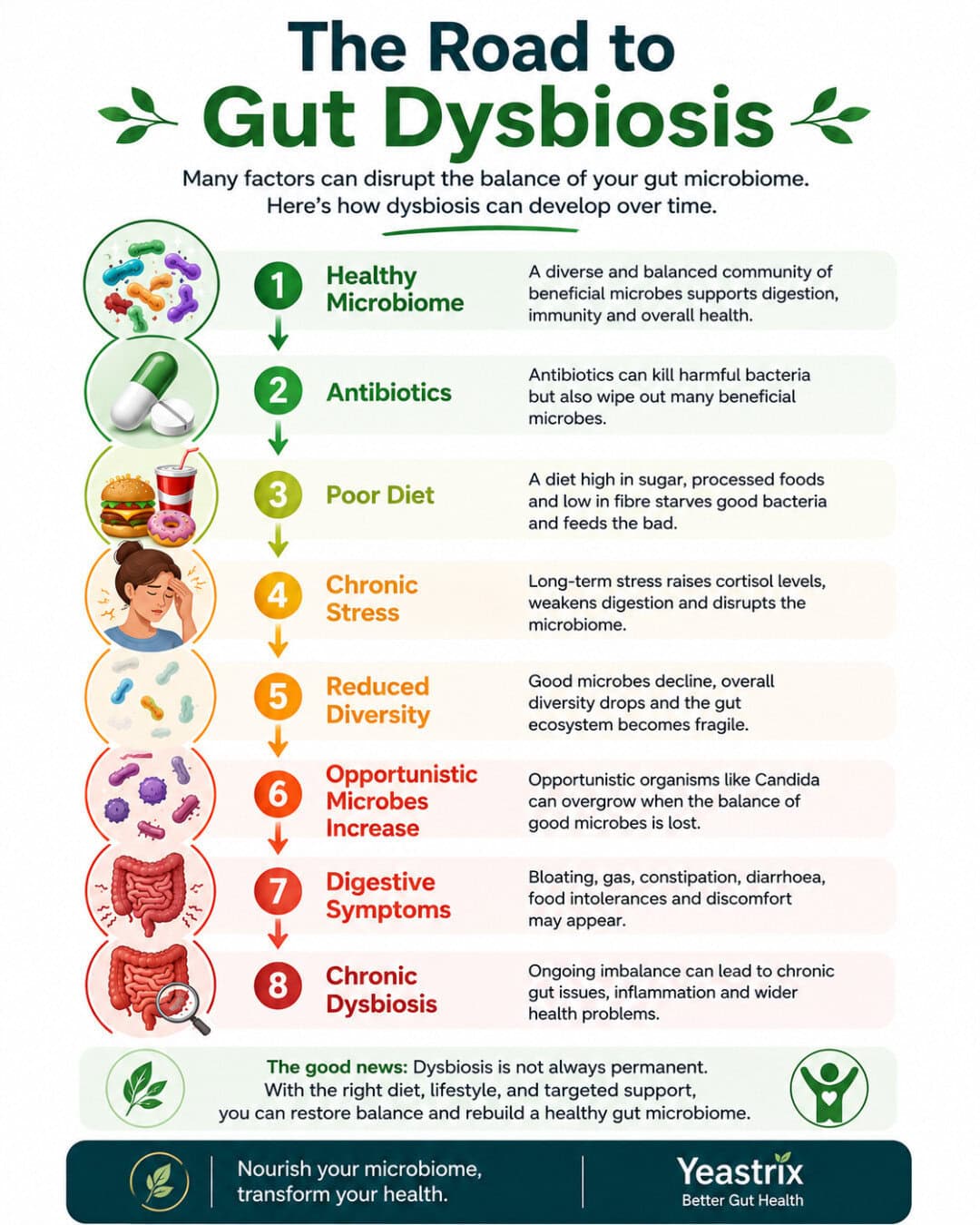
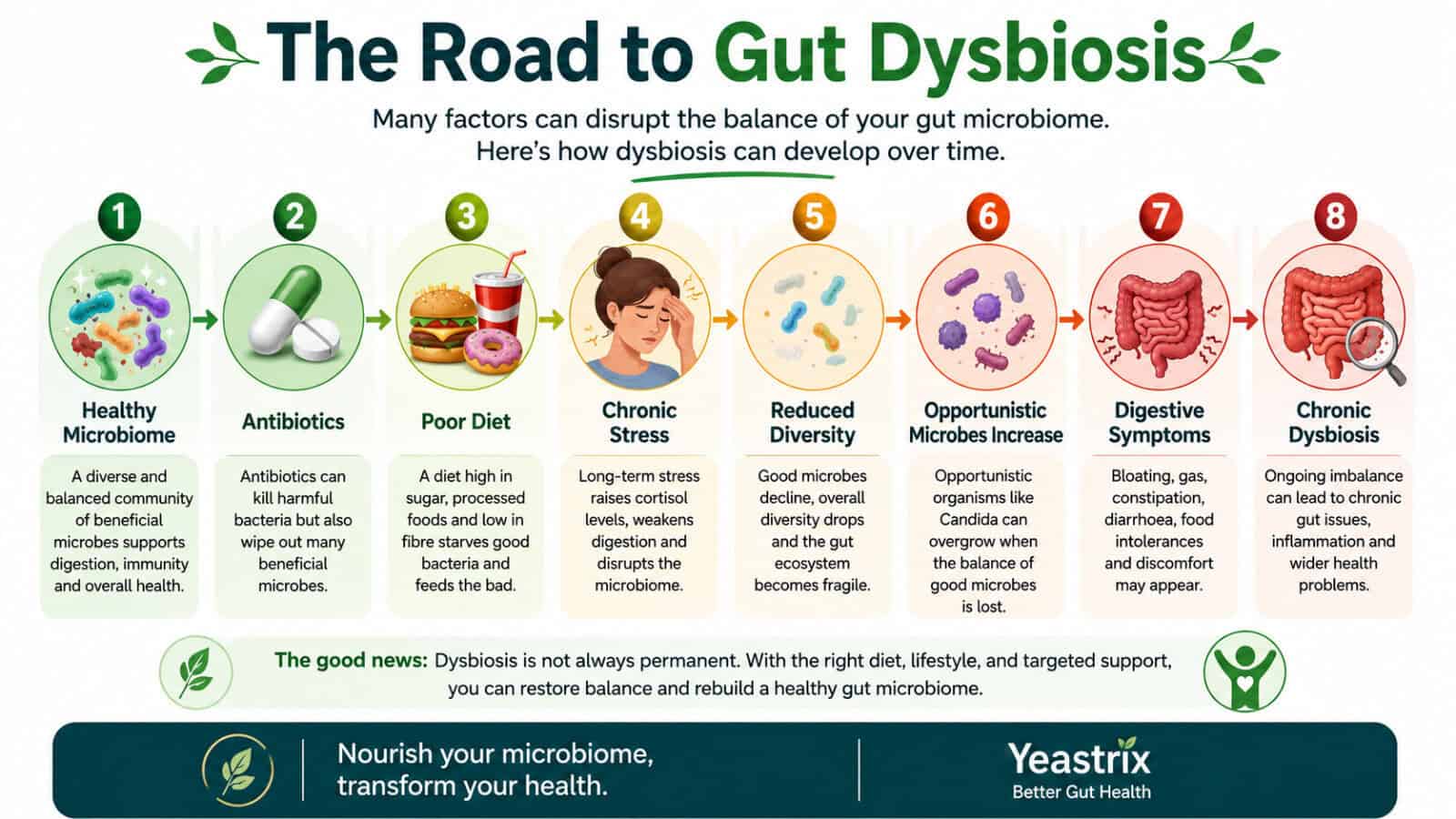
Your gut microbiome is surprisingly resilient. It changes every day in response to the foods you eat, your lifestyle, stress, illness, and even the medicines you take. Most of the time, these changes are small and your gut naturally returns to a healthy balance. Problems begin when the things that harm your gut happen again and again.
You’ll often be able to tell why your gut doesn’t feel right by what happened to you recently, or in some cases – a long time ago. Like taking antibiotics, one of the most common reasons patients came to see me. For example, repeated courses of antibiotics, a diet high in processed foods, ongoing stress, poor sleep, too much alcohol, gut infections, and certain medications can all reduce the number of beneficial microbes living in your gut.
As the healthy microbes decline, other microorganisms can begin to take their place. Over time, the balance of your gut microbiome changes. This is known as gut dysbiosis. It can happen, but in many cases this process is months or years in the making.
Unlike food poisoning or a stomach bug, gut dysbiosis usually doesn’t happen overnight. It often develops slowly over months or even years, so many people don’t realise their gut health has been getting worse. One of the challenges is that there isn’t just one symptom that points to gut dysbiosis. Instead, most people experience a combination of digestive problems and other health issues that gradually become more noticeable over time.
Common Signs of Gut Dysbiosis
One of the first signs that your gut microbiome may be out of balance is a change in your digestion. These symptoms can have many different causes. But if they continue for weeks or months, it’s worth taking a closer look at your gut health.
Common digestive symptoms include:
Many of these symptoms are also common in people with IBS, SIBO, Candida overgrowth, and other digestive problems. That’s one reason why these conditions can sometimes be difficult to tell apart.
Symptoms Outside the Gut
Your gut microbiome doesn’t just affect your digestion. It also communicates with your immune system, your brain, and many other parts of your body. That’s why an unhealthy gut can sometimes affect how you feel in general.
Some people may also experience:
Not everyone with gut dysbiosis will have these symptoms. But when several of them occur together—especially alongside long-term digestive problems—they can be a sign that your gut health needs attention.
Key Takeaways
Why Symptoms Vary Between People
One question patients often asked me was: “If two people have the same gut problem, why do they have different symptoms?”
The answer is simple. No two gut microbiomes are exactly the same.
Each person has a unique mix of gut microbes. Your diet, stress levels, medications, genetics, and lifestyle all play a part in shaping your gut microbiome. That’s why one person may struggle with constipation, while another has diarrhoea. One may develop recurrent Candida infections, while another experiences bloating, food intolerances, or IBS.
This is one reason why there is no single solution that works for everyone. The best place to start is by understanding what’s happening in your gut, rather than simply treating a diagnosis.
Eric’s Clinical Pearl
I found that very few patients fitted neatly into one diagnosis, and their symptoms could vary dramatically from one patient to the other. Many people with IBS also had signs of SIBO. Others who thought they had Candida were actually dealing with a much bigger problem—an unhealthy gut microbiome, often after repeated courses of antibiotics. We even discovered several patients had inflammatory bowel disease believing it was IBS.
Many patients had several gut problems at the same time. That’s why I always looked at the gut as a whole, rather than focusing on just one condition. In my experience, helping to restore a healthy gut microbiome often led to better long-term results.
Gut Microbiome and Candida
Understanding the Connection
Candida is one of the most misunderstood topics in gut health. Some people blame Candida for almost every health problem. Others believe it doesn’t exist as a real issue at all. The truth lies somewhere in between.
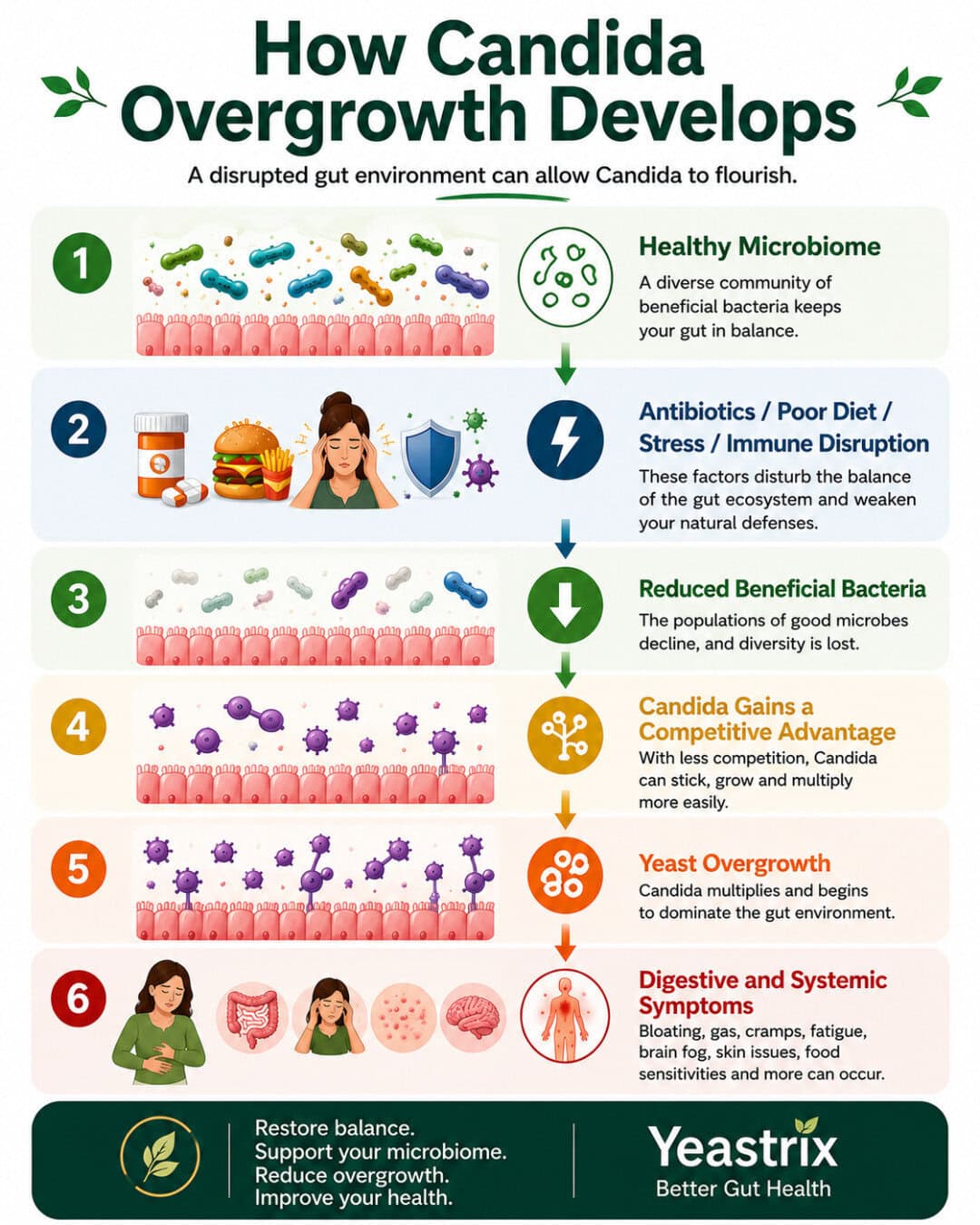
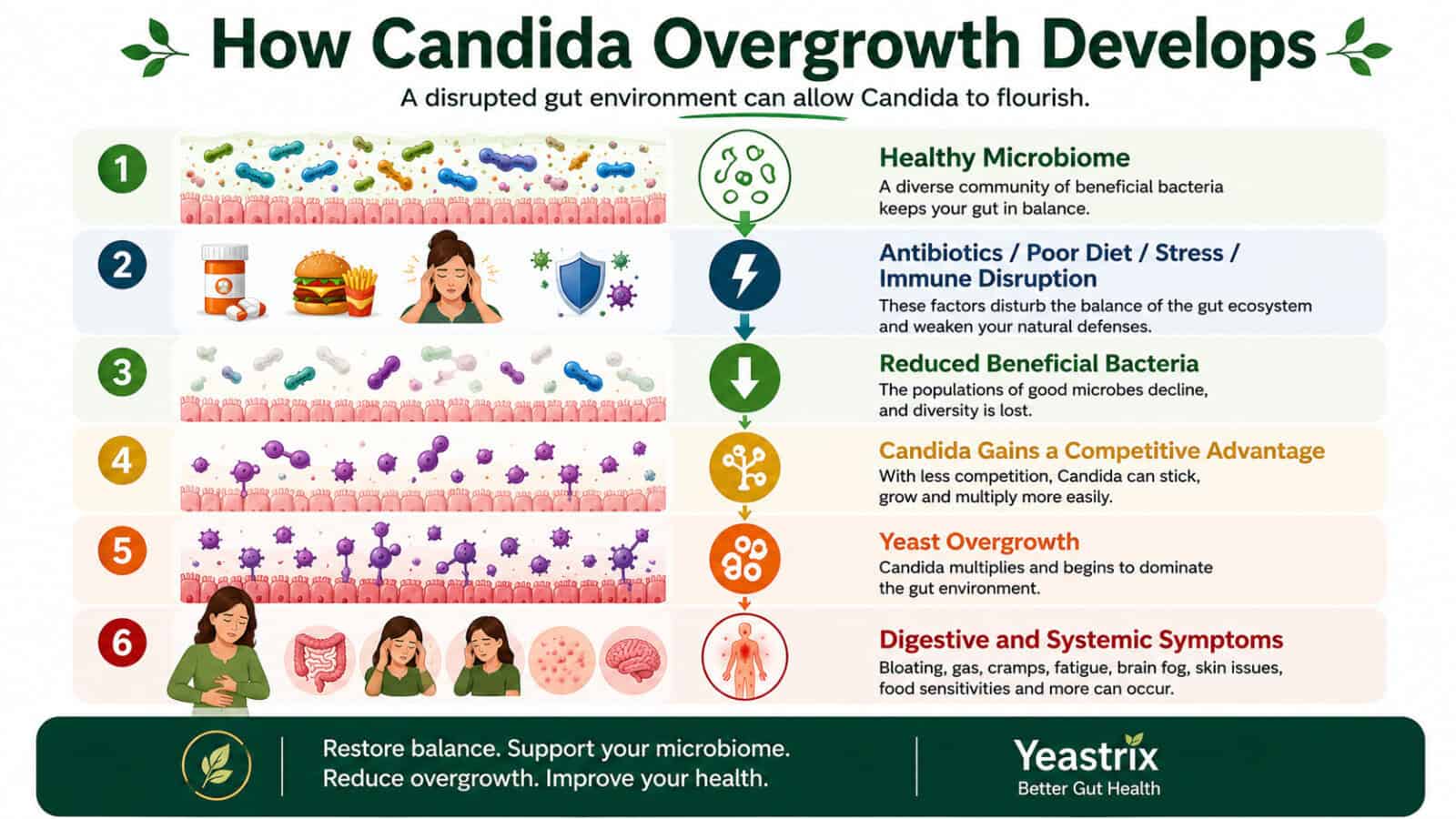
Candida is a type of yeast that naturally lives in the mouth, digestive tract, skin, and other parts of the body. In small amounts, it’s completely normal. In fact, many healthy people have Candida living in their gut without any symptoms. Problems usually begin when the balance of the gut microbiome is disturbed.
As beneficial gut microorganisms decline, Candida has more opportunity to grow. When this happens, it can contribute to digestive symptoms and other health problems. This is why I don’t see Candida as an isolated problem. In my experience, it’s often a sign that the gut microbiome is out of balance.
How Your Gut Keeps Candida Under Control
A healthy gut microbiome helps keep Candida species under control naturally. Beneficial gut bacteria do this in several ways. They:
Together, these natural defences make it much harder for Candida to become a problem. But when the balance of the gut microbiome is disturbed, these defences become weaker. Candida can then grow more easily and may contribute to digestive symptoms and recurrent fungal infections.
What Can Cause Candida To Overgrow?
There isn’t one single cause of Candida overgrowth. In most cases, several factors are involved. Some of the most common include:
Notice something? These are many of the same things that can lead to gut dysbiosis. That’s one reason I believe Candida is usually part of a bigger gut health problem, rather than the problem itself.
How Your Gut Keeps Candida Under Control
But when the balance of the gut microbiome is disturbed, these defences become weaker. Candida can then grow more easily and may contribute to digestive symptoms and recurrent fungal infections.
Eric’s Clinical Pearl
One of the biggest mistakes I see is focusing only on getting rid of Candida. You might reduce the amount of yeast for a while. But if the gut microbiome is still out of balance, Candida often comes back. That’s why my approach has always been different.
Rather than trying to kill more and more yeast, I focus on restoring a healthy gut. That means improving digestion, encouraging the growth of beneficial gut microbes, making better food choices, and avoiding unnecessary use of antibiotics and other antimicrobial products whenever possible.
When the gut becomes healthier, Candida often becomes much easier to manage. In my experience, this approach produces better long-term results than simply following more aggressive antifungal programmes.
Gut Microbiome and IBS
Is IBS Caused by an Unhealthy Gut Microbiome?
Irritable bowel syndrome (IBS) is one of the most common digestive problems in the world. It affects millions of people and can cause ongoing stomach pain, bloating, constipation, diarrhoea, or a combination of both. For many years, doctors believed IBS was a condition with no clear physical cause. Tests often looked normal, even though people continued to experience real and sometimes life-changing symptoms.
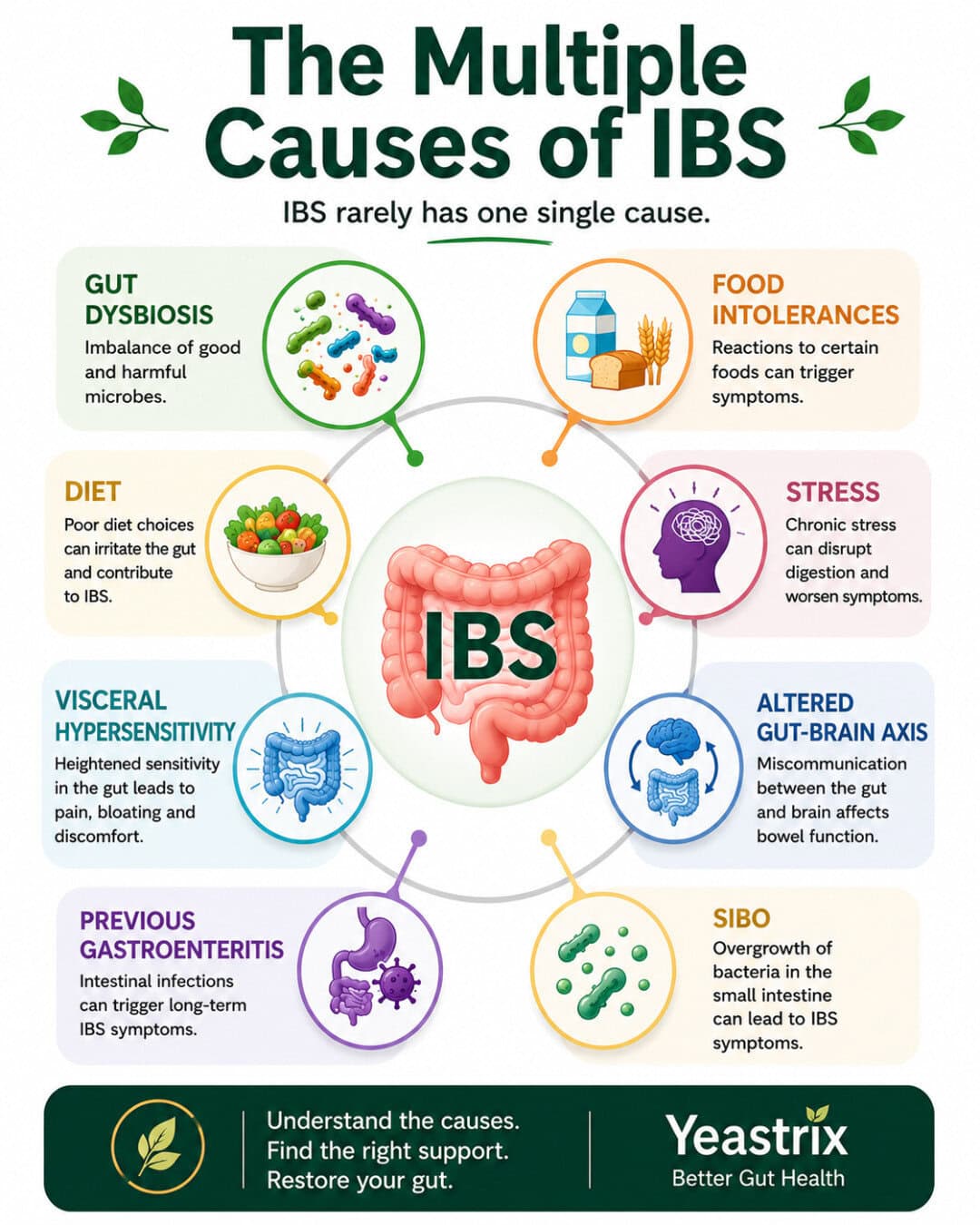
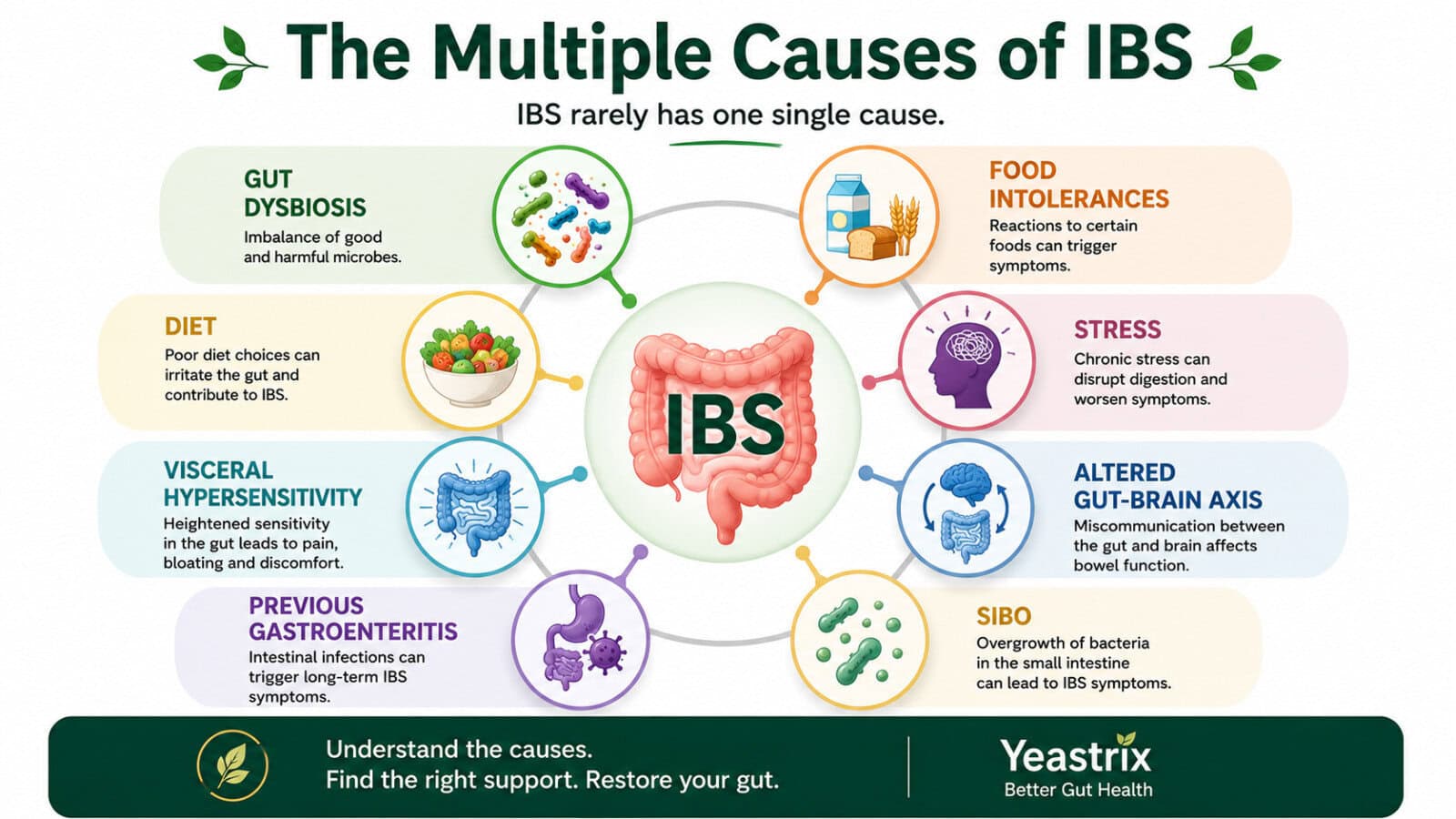
Today, we know much more. Research shows that many people with IBS also have an unhealthy gut microbiome. In other words, the balance of bacteria and other microbes in their gut has changed.
This doesn’t mean everyone with IBS has gut dysbiosis. But for many people, an unhealthy gut microbiome appears to be one of the factors that can contribute to IBS symptoms.
How an Unhealthy Gut Microbiome Can Affect IBS
Research has found that many people with IBS have an unhealthy gut microbiome. In many cases, they also have less variety in their gut microbes than people without IBS. This can affect the gut in several ways.
It may lead to:
These changes may help explain why people with IBS often experience bloating, stomach pain, cramping, and unpredictable bowel habits. Not everyone with IBS has the same gut microbiome. Some people have major changes, while others have only minor differences.
IBS Is Different For Everyone
One of the most important things to understand is that IBS isn’t one single disease. It’s a group of symptoms that can have many different causes.
For example, IBS may develop after:
That’s one reason why there is no single treatment that works for everyone with IBS.
How Your Gut Keeps Candida Under Control
But when the balance of the gut microbiome is disturbed, these defences become weaker. Candida can then grow more easily and may contribute to digestive symptoms and recurrent fungal infections.
Eric’s Clinical Pearl
One of the biggest lessons I learned during nearly 40 years in practice was this: Don’t just treat the IBS symptoms —find out what’s causing them.
I would ask typically ask questions like:
Once we understood why someone had developed IBS, it became much easier to choose the right treatment. In my experience, that approach almost always produced better long-term results.
Supporting a Healthy Gut With IBS
I’ve found in my clinic there is rarely one simple answer to IBS. Most people do better when they improve several areas of their gut health at the same time. That may include:
Small, consistent changes often produce the best long-term results. Persistence and discipline beats resistance.
Further Reading: Irritable Bowel Syndrome
Gut Microbiome and SIBO
Understanding the Connection
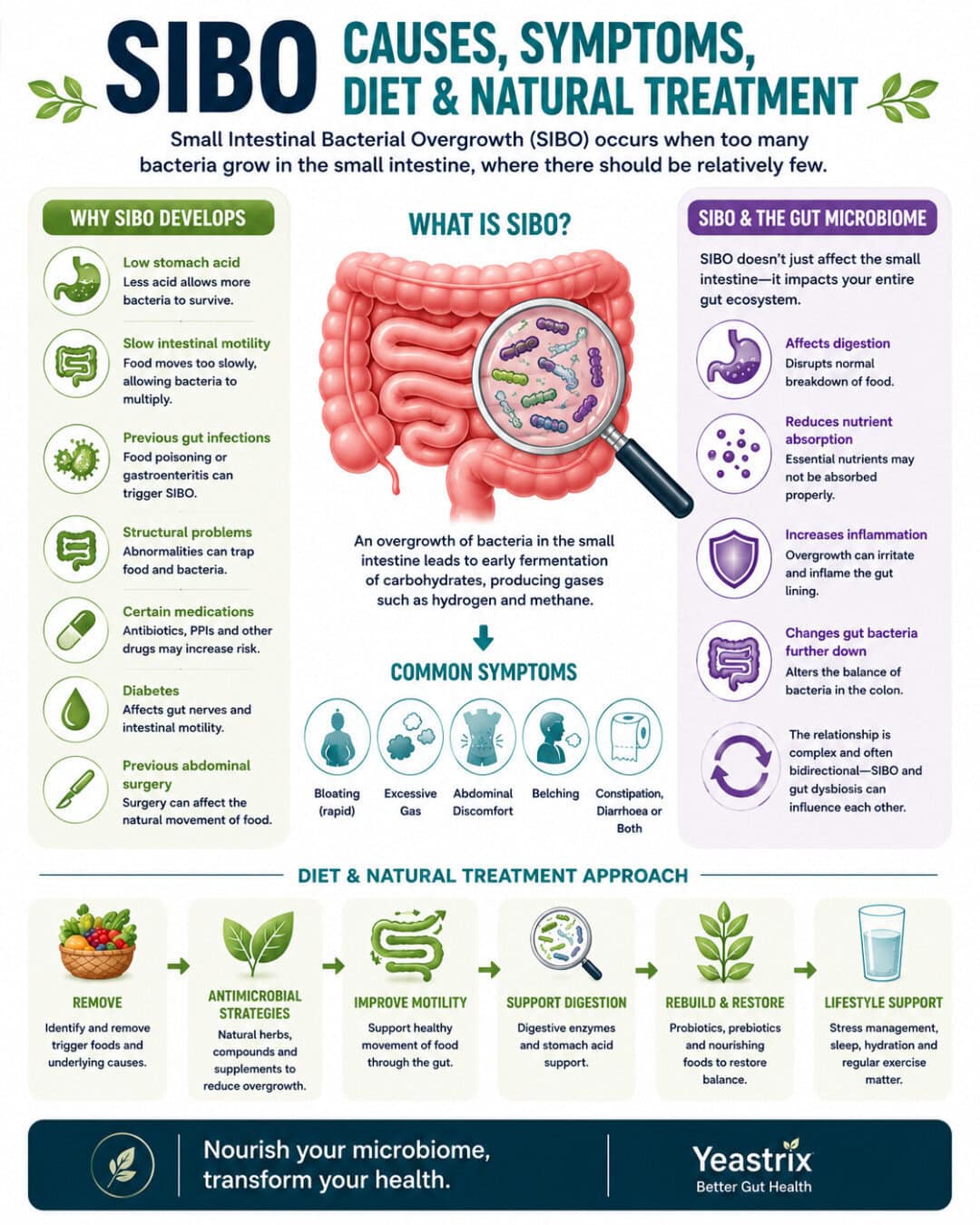
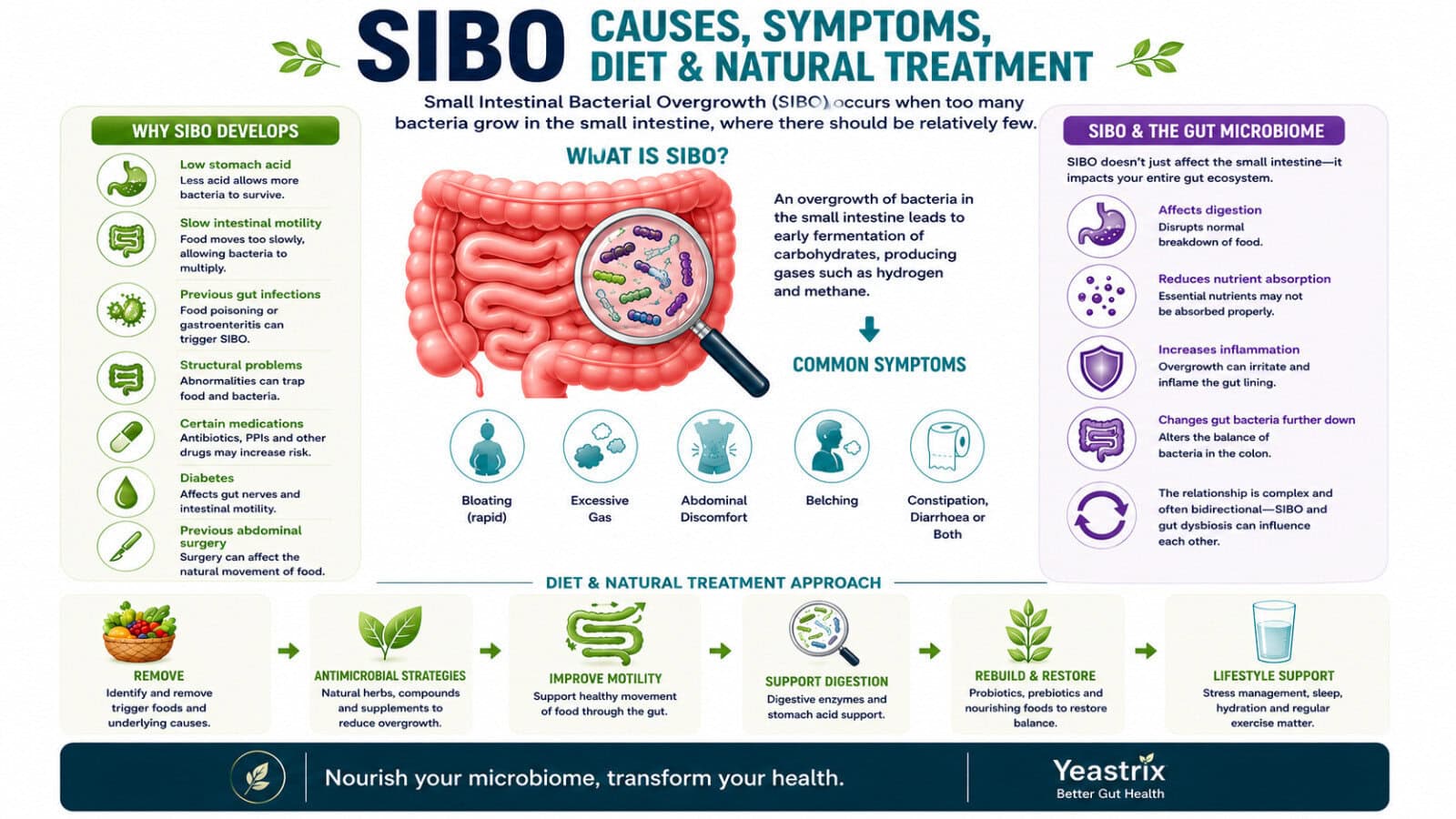
Small Intestinal Bacterial Overgrowth (SIBO) occurs when too many bacteria grow in the small intestine. Normally, this part of the digestive tract contains relatively few bacteria compared with the large intestine (colon).
Although SIBO and gut dysbiosis are closely related, they are not the same thing. The difference is quite simple:
Some people have gut dysbiosis without SIBO. Others have SIBO without significant dysbiosis. However, many people have both conditions, which is why they often overlap and can produce similar symptoms.
Many of these symptoms are also common in people with IBS, SIBO, Candida overgrowth, and other digestive problems. That’s one reason why these conditions can sometimes be difficult to tell apart.
Table 3: Gut Dysbiosis vs SIBO
|
Gut Dysbiosis |
SIBO |
|---|---|
|
|
|
|
|
|
|
|
|
|
|
|
|
|
|
Why Does SIBO Develop?
Several factors can increase the risk of developing SIBO. These include:
When bacteria stay in the small intestine longer than they should, they begin fermenting carbohydrates too early. This produces gases such as hydrogen and methane, which can lead to symptoms such as:
SIBO and the Gut Microbiome
Although SIBO occurs in the small intestine, it can affect the health of the entire gut microbiome. An overgrowth of bacteria may:
The opposite can also be true. An unhealthy gut microbiome (gut dysbiosis) may create conditions that make SIBO more likely to develop. In other words, SIBO and gut dysbiosis often influence each other, which is why many people have both conditions at the same time.
Eric’s Clinical Pearl
One of the most common questions I hear is this: “Do I have Candida overgrowth, IBS or SIBO?”
My answer is often the same: “It’s a possibility—but before worrying about the label, let’s first understand what’s happening inside your digestive system.”
A diagnosis can be helpful, but understanding why your gut has become unbalanced is often far more important. When you identify and address the underlying causes, recovery usually becomes much clearer.
Once we understood why someone had developed Candida issues, IBS or SIBO, it became much easier to choose the right treatment. In my experience, that approach almost always produced better long-term results.
Table 4: Why Accurate Diagnosis Matters
Many digestive symptoms overlap, for example:
|
Symptom |
Dysbiosis |
IBS |
SIBO |
Candida |
|---|---|---|---|---|
|
|
✓ |
✓ |
✓ |
✓ |
|
|
✓ |
✓ |
✓ |
✓ |
|
|
✓ |
✓ |
✓ |
Sometimes |
|
|
✓ |
✓ |
Sometimes |
Sometimes |
|
|
✓ |
✓ |
✓ |
✓ |
- SIBO Treatment: SIBO Treatment Guide
Gut Microbiome & Leaky Gut
Protecting Your Intestinal Barrier
Your lining of the small intestine has a very important job. Every day it absorbs nutrients from the food you eat while acting as a barrier to keep harmful bacteria, toxins and undigested food particles out of your bloodstream. It does this with the help of millions of tightly packed intestinal cells joined together by special proteins called tight junctions.
You can think of these tight junctions as security gates. They allow nutrients to pass through while helping to keep unwanted substances out.
The Role of Beneficial Bacteria and Your Gut Microbiome
A healthy gut microbiome helps keep this protective barrier strong. Beneficial bacteria do this by:
When the gut microbiome becomes less diverse, these protective functions may begin to weaken. Many factors can contribute to increased intestinal permeability, often called “leaky gut.” However, maintaining a healthy and diverse gut microbiome is considered one of the most important ways to support a strong intestinal barrier.
What is Leaky Gut?
Leaky gut is the common name for increased intestinal permeability. It happens when the lining of the intestine becomes less effective at controlling what passes from the gut into the bloodstream.
Normally, your intestinal barrier allows nutrients to pass through while helping keep bacteria, toxins and other unwanted substances where they belong—inside the gut. When this barrier becomes weakened, larger particles may pass through more easily than they should.
Research into leaky gut is still evolving. However, studies suggest that changes in intestinal barrier function may occur alongside gut dysbiosis, inflammation, IBS, autoimmune conditions, and other digestive disorders.
Rather than being a disease on its own, leaky gut is often one part of a bigger picture affecting your gut microbiome, digestion and the immune system.
Did You Know This?
The cells lining your intestines are replaced every three to five days.
This makes the intestinal lining one of the fastest-renewing tissues in the body. To stay healthy, these cells rely on good nutrition, a healthy gut microbiome and a steady supply of beneficial nutrients.
Looking at the Bigger Picture
One of the biggest mistakes people make is looking for one single cause of all their digestive symptoms. In reality, gut health problems often overlap.
For example, someone may have:
These conditions often influence one another rather than occurring on their own.
Eric’s Clinical Pearl
During my many years in clinical practice, I rarely found a patient to just just “one problem”. In fact – most people had several gut health issues occurring at the same time. That’s why I always preferred treating the whole digestive system rather than focusing on a single diagnosis. Not chewing food sufficiently, poor stomach function, not enough water drinking, low pancreatic function (stress), and poor bowel function.
When digestion improves, the gut microbiome becomes healthier, and the intestinal barrier begins to recover, many seemingly unrelated symptoms often improve together.
The Picture Worth Looking At
Your gut microbiome doesn’t just affect your digestion. It influences your whole body. When the gut microbiome becomes unbalanced, it can contribute to problems such as:
These conditions often occur together because they share many of the same underlying causes. That’s why I don’t like looking at them as completely separate diseases. Instead, I prefer to ask one simple question: “What has caused this person’s gut to become unhealthy in the first place?”
When you improve your diet and lifestyle, support your gut microbiome and restore healthy digestion, many of these problems often begin improving together. That’s why I always encourage people to focus on building a healthier gut and a healthier life, rather than chasing one diagnosis after another.Testing the
Testing the Gut Microbiome
One of the Most Common Question I Get
One of the most common questions people ask is this: “Eric, do I need a gut microbiome test?”
The answer is: not always. Today, many companies offer stool tests that claim to analyse your gut bacteria, predict disease risk, or recommend the perfect diet based on your microbiome. While these tests can provide useful information, they don’t tell the whole story.
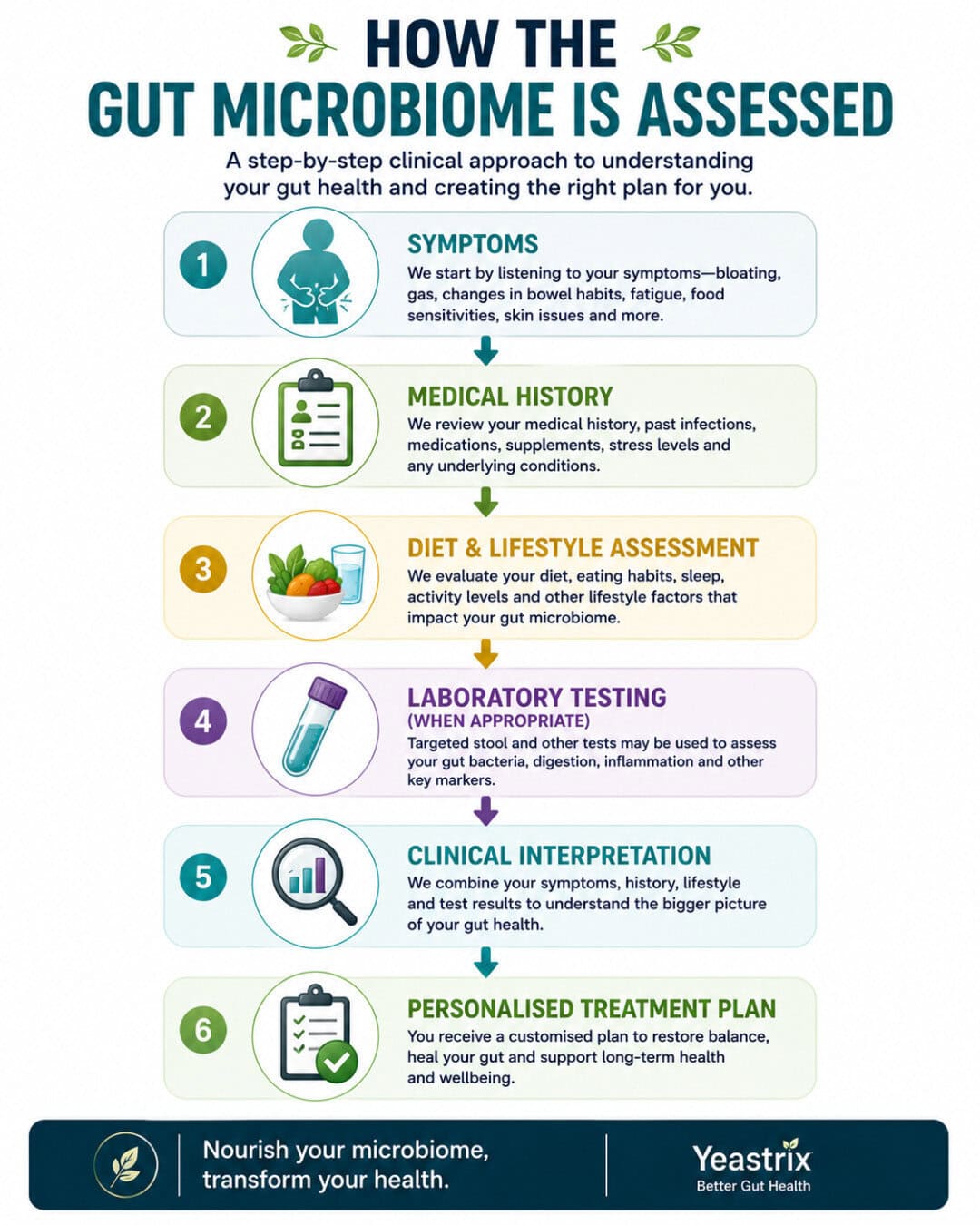
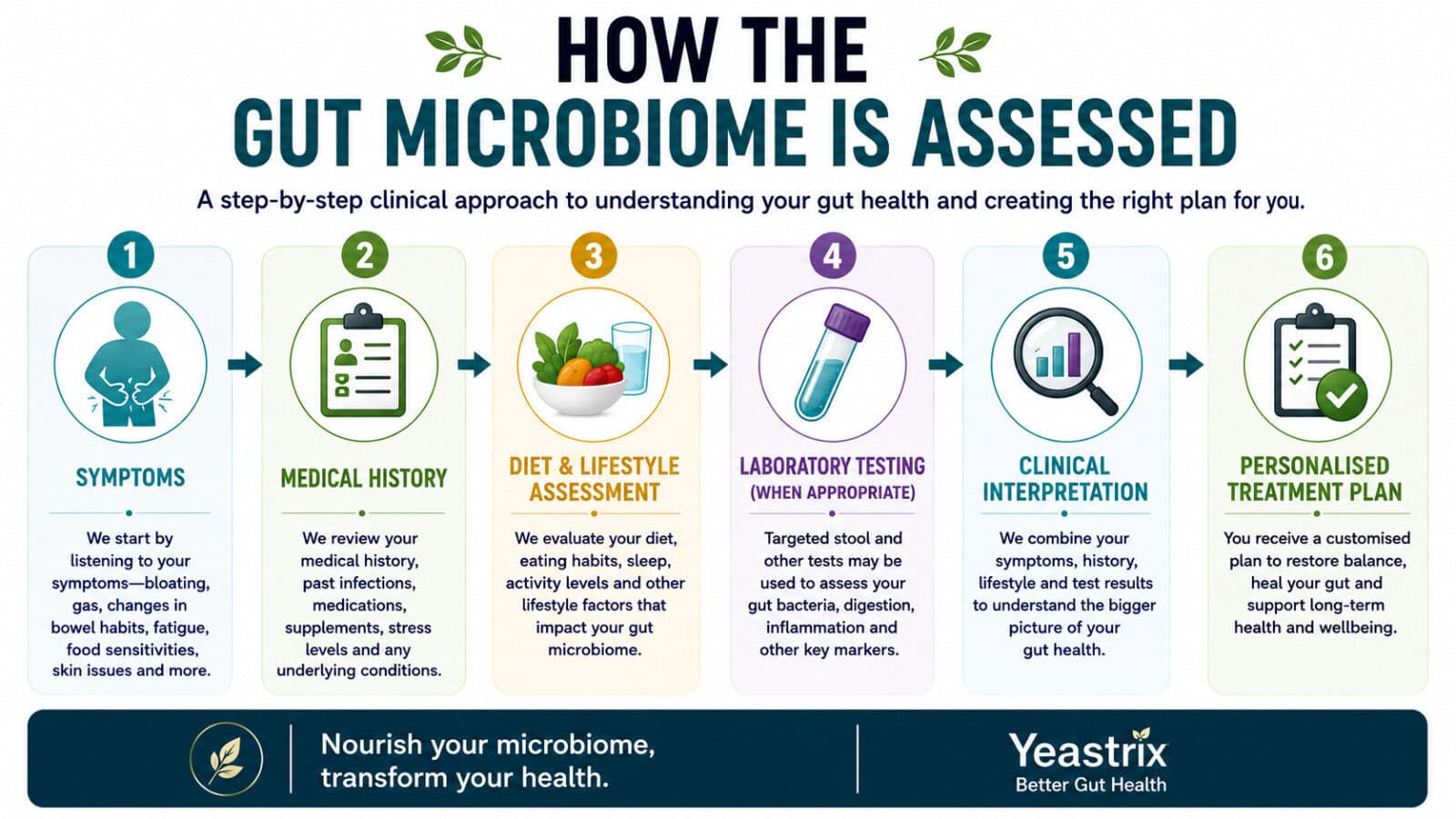
Your gut microbiome is incredibly complex, and no test can currently measure everything that’s happening inside your digestive system or explain every symptom you may have. During my years in clinical practice, I always saw lab tests as tools, not answers. A person’s symptoms, diet, medical history and lifestyle were often just as important as the laboratory results.
The best decisions came from looking at the whole person, not just the test report.
How is the Gut Microbiome Tested?
The gut microbiome is most commonly tested using a stool sample.
Comprehensive stool tests can measure:
The results can be helpful, but they should always be interpreted alongside your symptoms, medical history and overall health—not on their own.
Do You Need a Gut Microbiome Test?
Not everyone with digestive problems needs a gut microbiome test. For example, if you’ve developed mild bloating after taking antibiotics, your gut may recover with time, a healthy diet and the right probiotic support.
However, if you’ve been struggling with digestive problems for months, or your symptoms keep coming back, testing may help identify what’s going on. Testing may be worth considering if you:
Remember, laboratory tests are tools, not answers! They work best when combined with a careful review of your symptoms, diet, lifestyle and medical history.
When Should You See a Doctor?
Some digestive symptoms should always be assessed by a doctor before considering functional gut testing. These include:
These symptoms don’t always mean something serious is wrong, but they should never be ignored.
Comprehensive Stool Testing
One of the most useful ways to assess gut health is through a comprehensive stool test. Stool samples can provide valuable information about what’s happening inside your digestive tract and may help identify factors contributing to ongoing digestive problems.
Depending on the test, it may measure:
No single test can tell the whole story. That’s why the results should always be considered alongside your symptoms, diet, medical history and overall health.
Table 5: What a Comprehensive Stool Test Can Evaluate
|
Test Category |
What It May Reveal |
|---|---|
|
|
|
|
|
|
|
|
|
|
|
|
|
|
|
|
|
|
|
|
|
|
|
|
Understanding Stool Test Results
Many people think a stool test result is either “normal” or “abnormal.” In reality, it’s rarely that simple. For example, a laboratory may report low levels of beneficial bacteria. But that doesn’t automatically explain all of your digestive symptoms.
Likewise, finding small amounts of Candida does not necessarily mean you have Candida overgrowth. Many healthy people naturally carry Candida as part of a balanced gut microbiome.
This is why stool test results should never be interpreted on their own. They are just one piece of the puzzle and should always be considered alongside your symptoms, medical history, and clinical assessment.
Eric’s Clinical Pearl
After decades in clinical practice, I reviewed thousands of stool test results. One thing became crystal clear. Many patients focused on the organism highlighted in red on the laboratory report. I was usually much more interested in the bigger picture. I asked questions such as this:
In my experience, looking at the gut microbiome as a complete ecosystem provided far more useful information than concentrating on a single microorganism.
Other Functional Tests
Although stool testing provides valuable information, it is only one part of the diagnostic picture. Depending on the individual’s symptoms, additional investigations may sometimes be appropriate. These include:
Breath Testing
Breath tests are commonly used when Small Intestinal Bacterial Overgrowth (SIBO) is suspected.
Following ingestion of a specific carbohydrate solution, breath samples are collected over several hours to measure hydrogen and methane gas production. Excess gas production may suggest bacterial fermentation occurring within the small intestine.
Suggested Reading: SIBO, Causes, Symptoms, Testing, Diet and Best Natural Treatment
Blood Tests
Routine blood investigations may help identify:
These conditions may contribute to digestive symptoms while requiring completely different management.
Food Intolerance Tests
Food intolerance testing remains controversial, I stopped authorising these tests many years ago because I found in most cases they were an unnecessary expense for the patient. In my experience, carefully conducted elimination diets, symptom tracking and systematic food reintroduction often provide more clinically useful information than many commercially available food intolerance panels.
When Testing Isn’t Necessary
Not everyone needs laboratory testing. Many people can improve their gut health by making a few simple lifestyle changes, such as:
If your symptoms are mild or straightforward, these simple steps are often enough to make a real difference without the need for expensive testing.
Did You Know?
How To Restore Your Gut Microbiome
“How Do I Heal My Gut?”
It’s a great question, I’ve heard many patients ask me this exact same question. Once you understand that an unhealthy gut microbiome may contribute to problems like bloating, food intolerances, IBS, SIBO and Candida overgrowth, the next step is learning how to restore it.
The good news is that your gut microbiome can improve. But there is no single food, supplement or “gut cleanse” that can fix it overnight. Your gut microbiome is a living community of trillions of microorganisms. If it has been out of balance for years, it takes time to restore.
In my clinical experience, the best results came from creating the right environment for beneficial bacteria to grow. This means eating well, supporting healthy digestion, getting enough sleep, managing stress and following healthy daily habits.
When you consistently support your gut, your microbiome has the opportunity to become stronger, more diverse and more balanced over time.
Can the Gut Microbiome Be Restored?
Yes. The gut microbiome is constantly changing and can improve over time. Eating a wide variety of whole plant foods, getting enough fibre, managing stress, sleeping well and using probiotics when appropriate can all help support a healthier and more balanced gut microbiome.
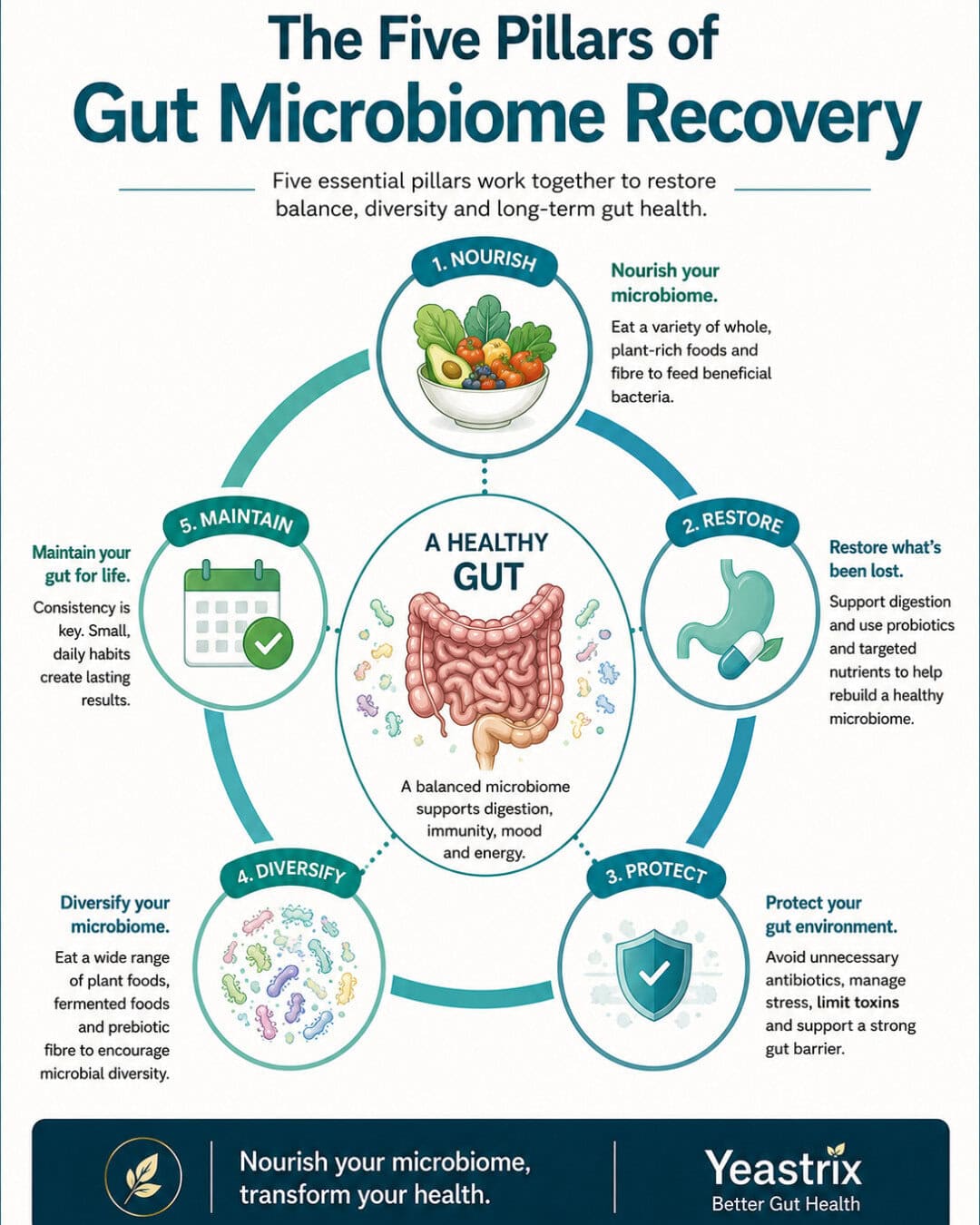
Diet for a Healthy Gut Microbiome
Food Is the Foundation
If there is one thing that has the biggest impact on your gut microbiome, it’s the food you eat. Every meal feeds not only you, but also the trillions of bacteria living in your digestive tract. Healthy foods help beneficial bacteria grow, while a poor diet can encourage less helpful microbes to thrive.
Many people search for the “perfect gut health diet,” but there isn’t one. The best diet is one you can enjoy and stick with long term. It should include a wide variety of nutritious foods that help support a healthy and diverse gut microbiome.
Eat a Wide Variety of Plant Foods
Research shows that one of the best ways to improve your gut microbiome is to eat a greater variety of plant foods. Different beneficial bacteria feed on different types of fibre and natural plant compounds. The more variety you eat, the more types of beneficial bacteria you can support.
Try to include a wide range of:
You don’t need to change everything overnight. Simply adding more variety to your meals each week can make a real difference over time.
Suggested Reading: Diet Diversity
Did You Know?
People who eat around 30 different plant foods each week generally have a healthier and more diverse gut microbiome than those who eat only a small range of foods. It’s not just how much plant food you eat—it’s how many different kinds you eat that matters.
Choose Whole Foods More Often
Whole foods do much more than provide vitamins and minerals. They are naturally rich in nutrients that help support a healthy gut microbiome, including:
- Dietary fibre
- Polyphenols
- Resistant starch
- Natural antioxidants
- Many other beneficial plant compounds
These nutrients help beneficial bacteria grow and create a healthier environment throughout your digestive system.
Suggested Reading: Foods High in Polyphenols and Foods High in Fiber
Cut Back on Highly Processed Foods
Highly processed foods often contain:
- Added sugars
- Refined starches
- Artificial ingredients
- Emulsifiers
- Very little fibre
Eating these foods occasionally is unlikely to cause problems. However, a diet based mainly on processed foods may reduce the diversity of your gut microbiome and affect your digestive health over time.
You don’t need to eat perfectly. Small changes are often the most successful. Replacing just one processed meal each day with a meal made from whole, minimally processed foods is a simple step that can make a real difference.
Suggested Reading: Ultra-Processed Foods
Eric’s Clinical Pearl
Many patients were surprised when I told them I wasn’t interested in creating a “perfect” diet. I was far more interested in helping them develop an eating pattern they could realistically maintain for years. Consistency almost always outperforms perfection.
Further Suggested Reading: Healthy Eating and Fermented Foods

Probiotics
Beneficial Bacteria
One of the questions I’m asked most often is: “Should everyone take a probiotic?”
Not necessarily. Many people have a healthy gut microbiome without ever taking a probiotic supplement. However, probiotics can be very helpful in many situations. For example, they may support recovery after a course of antibiotics or benefit some people with digestive problems.
The important thing to remember is that probiotics are not a substitute for a healthy diet and lifestyle. Beneficial bacteria are much more likely to thrive when they’re supported by good nutrition, quality sleep, regular exercise, and effective stress management. Check out the Yeastrix Daily Probiotic, formulated to optimise gut microbiome diversity and health.
Think of probiotics as one tool in the toolbox—not the entire solution.
Suggested Reading: Probiotics
Table 6: Foods vs Probiotic Supplements
|
Food First |
Probiotic Supplements |
|---|---|
|
|
|
|
|
|
|
|
|
Prebiotics
Feeding Your Beneficial Bacteria
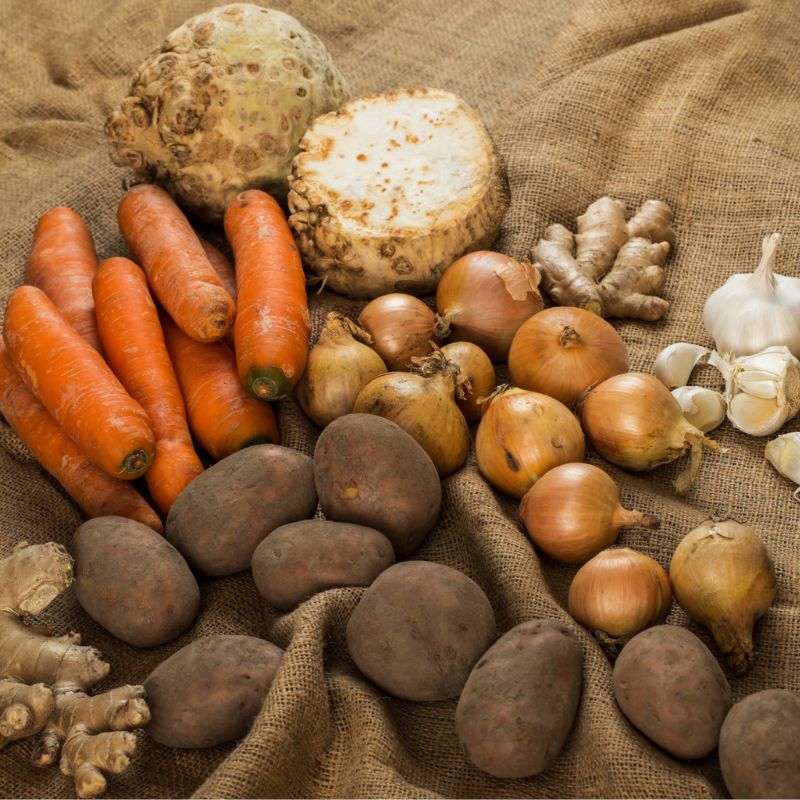
If probiotics introduce beneficial microorganisms, prebiotics help feed the beneficial bacteria already living within your digestive tract. Prebiotics are naturally occurring fibres that resist digestion until they reach the large intestine.
There they become food for beneficial bacteria. Good dietary sources include:
As bacteria ferment these fibres, they produce short-chain fatty acids that support intestinal health.
Suggested Reading: Prebiotic Foods
Introduce Fibre Gradually
Although dietary fibre is beneficial for most people, increasing intake too quickly may worsen bloating in susceptible individuals, particularly those with active IBS or SIBO. For this reason, gradual progression is usually preferable.
Small, steady improvements are generally better tolerated than sudden dramatic dietary changes.
Digestive Enzymes
Support Healthy Digestion
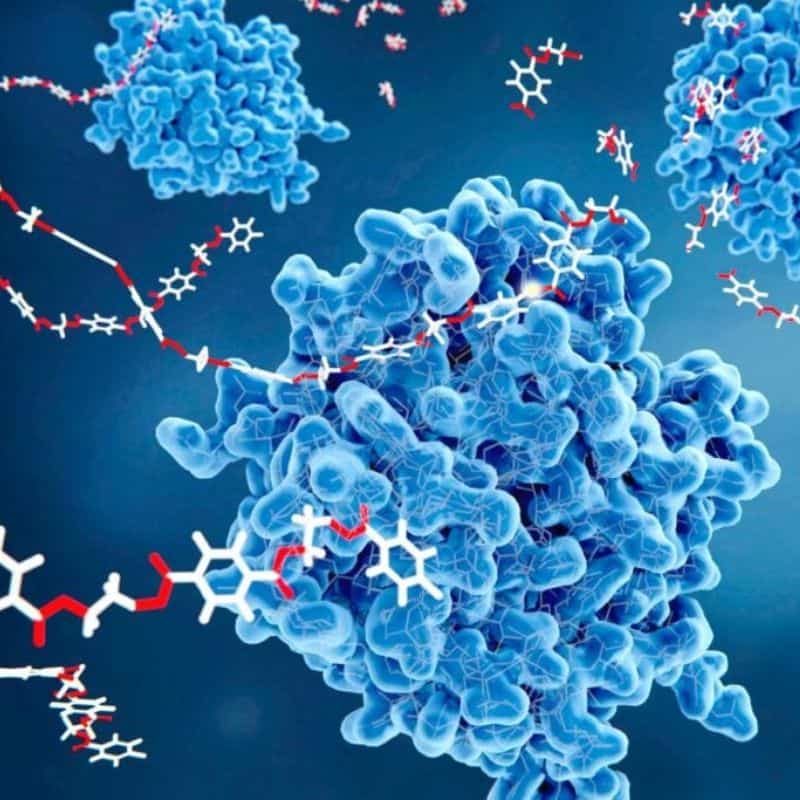
Good digestion is an important part of good gut health. If food isn’t broken down properly, it can reach the large intestine undigested. This may lead to extra fermentation, causing bloating, gas and digestive discomfort. Check out Yeastrix Active Enzymes, formulated to optimise digestion and nutrient uptake.
Digestive enzymes help break down:
Some people don’t produce enough digestive enzymes. In these cases, enzyme supplements may help improve digestion and reduce bloating.
Digestive enzymes don’t change your gut microbiome directly. Instead, they help create a healthier digestive environment where your beneficial bacteria can thrive.
Suggested Reading: Enzymes
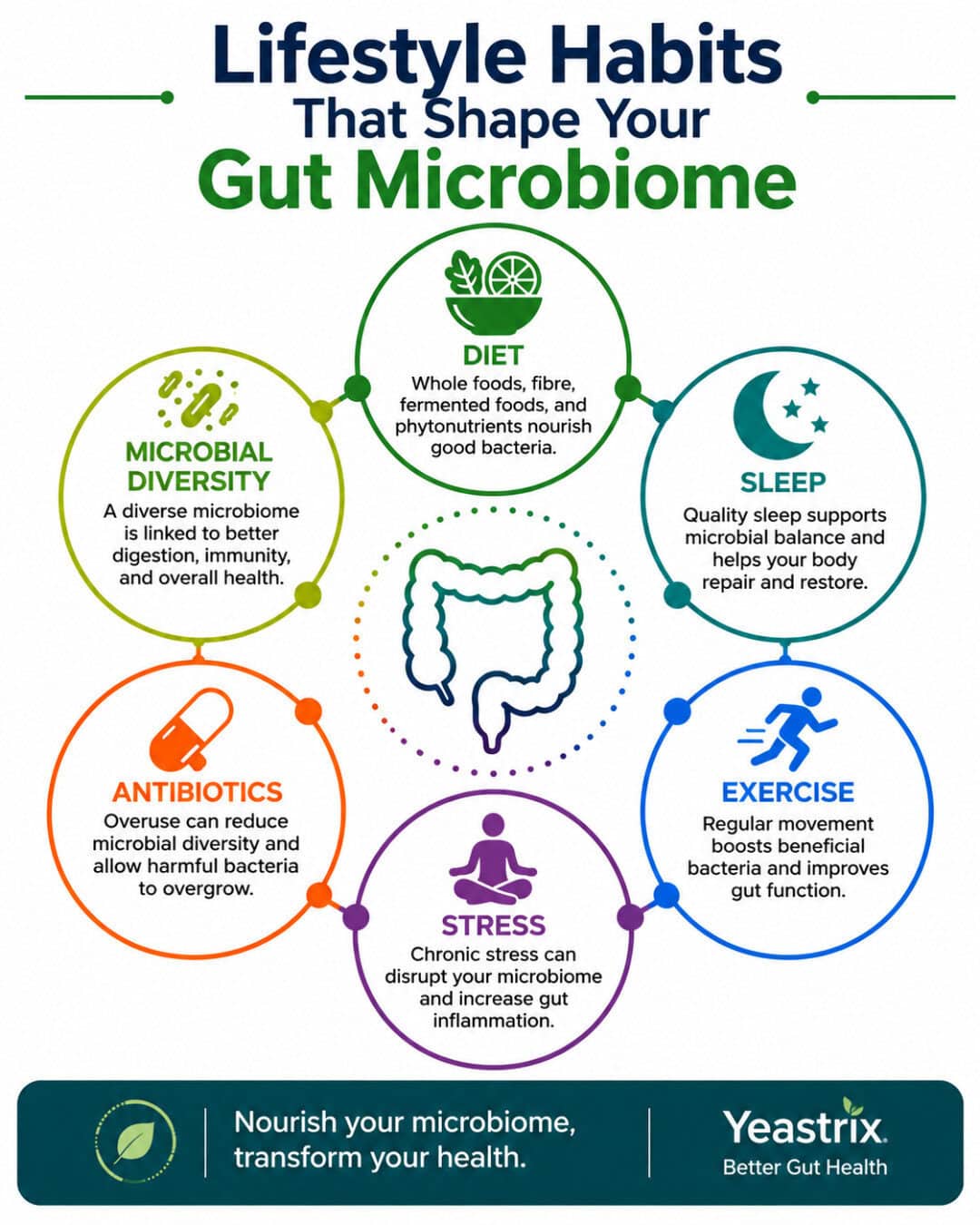
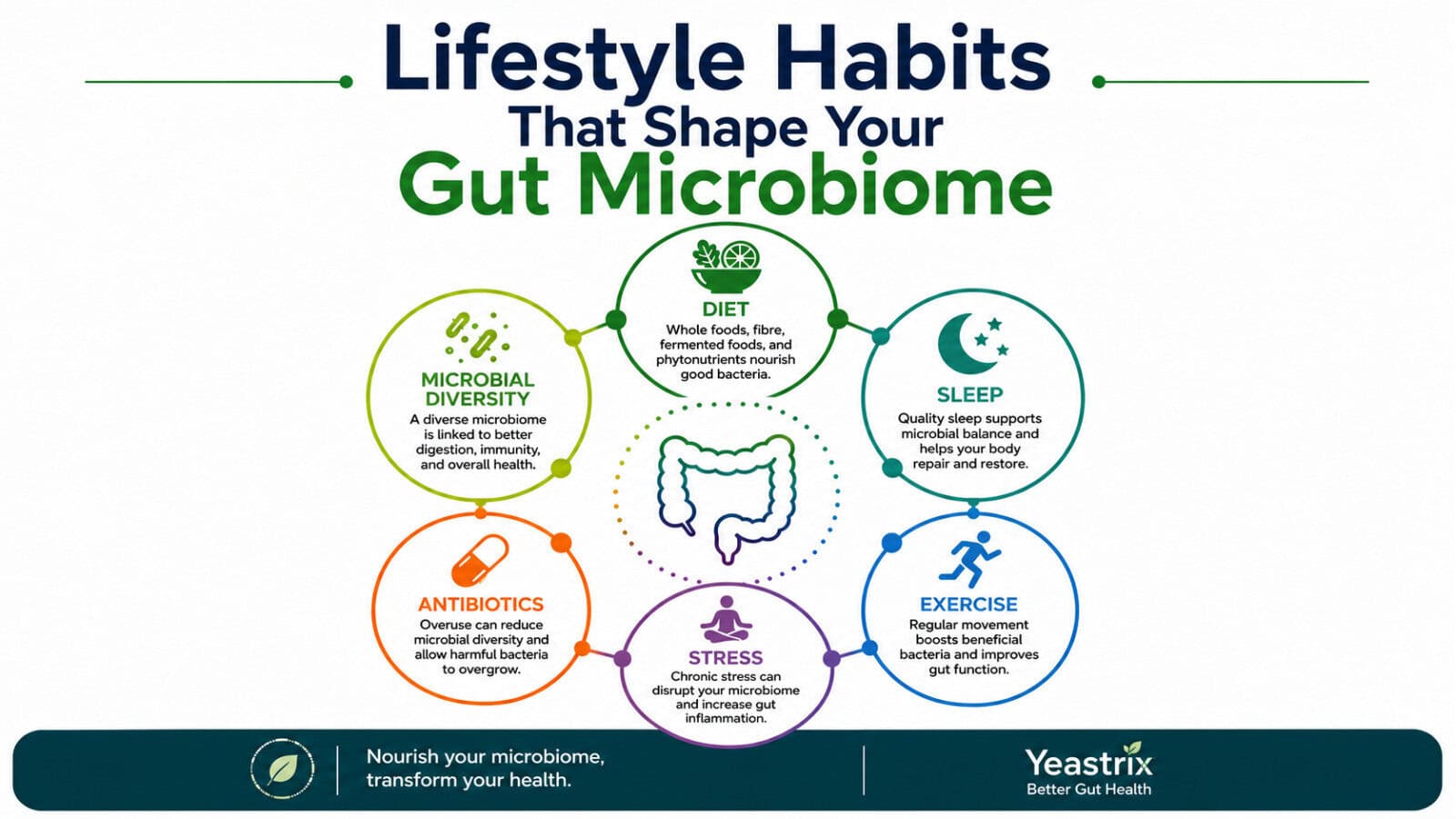
Lifestyle Factors That Influence Your Gut Microbiome
Manage Stress
Iour gut and brain are closely connected. When you’re under constant stress, it can affect your digestion and your gut microbiome.
Long-term stress may:
Finding healthy ways to manage stress can benefit both your gut and your overall health.
Suggested Reading: Stress
Get Enough Sleep
ReseaGood sleep is important for a healthy gut. Not getting enough sleep may do this:
Most adults should aim for 7 to 9 hours of quality sleep each night.
Suggested Reading: Insomnia
Did You Know?
People who eat around 30 different plant foods each week generally have a healthier and more diverse gut microbiome than those who eat only a small range of foods. It’s not just how much plant food you eat—it’s how many different kinds you eat that matters.
Staying Active
Regular physical activity is good for both your body and your gut. Exercise can really help all this:
- Keep your bowels moving regularly.
- Support a healthy gut microbiome.
- Improve your metabolism.
- Improve your mood and cognitive ability.
- Boost immune function
- Reduce inflammation.
You don’t need intense workouts. Regular, moderate exercise, such as walking, cycling or swimming, is often enough to support better gut health.
Suggested Reading: Exercise and The 3-Types of Exercise
Eric’s Clinical Pearl
After years of helping people with digestive problems, I’ve learned from patients many important lessons, here’s some of the most important:
The good news is that your gut microbiome is remarkably adaptable. When you create the right environment, it has an amazing ability to restore balance.
Please Read This Article: The 12 Major Signs of a Sick Gut and What to do About It
Key Takeaways
Frequently Asked Questions
One of the best ways to reinforce what you’ve learned is by answering the questions people ask most often about their gut health. These FAQs summarise many of the key concepts covered throughout this comprehensive gut microbiome guide while addressing common misconceptions about the gut, digestion and microbial balance.
Key Takeaways
IIf you’ve read this guide, you now have a much better understanding of your gut microbiome and why it matters.
Here are the main points to remember:
Eric’s Clinical Pearl
I do hope that a few things are becoming very clear to you by now, including this: most people don’t have just one gut problem.
Someone with Candida may also have IBS. A person with IBS may have food intolerances, low microbial diversity or SIBO. These conditions often occur together because they all affect the same gut ecosystem. Instead of treating one diagnosis at a time, I found it more helpful to ask one simple question:
“What has disrupted this person’s gut health?” When you improve the overall gut environment, many digestive problems (including many health problems) often improve together. The biggest lesson I’ve learned is this: Your gut microbiome wants to recover.
Give it the right food, the right lifestyle and enough time, and it can become healthier again.
Your Gut Health Journey Doesn’t End Here
Understanding the gut microbiome is the foundation. The next step is applying that knowledge to your own health.
Whether you’re trying to improve digestion, recover after antibiotics, understand persistent bloating, manage food intolerances or explore the relationship between Candida, IBS and SIBO, building a healthier microbiome is a process—not a single event.
Progress usually comes from making consistent improvements over time from:
- Every healthy meal.
- Every time you say “No” to junk or sugary food
- Every good night’s sleep.
- Every reduction in unnecessary processed foods.
- Every positive lifestyle choice.
Together, these small decisions gradually create a healthier environment in which beneficial microorganisms can thrive.
Explore More in the Gut Health Library
Your understanding of gut health doesn’t need to stop here. The Gut Health Library has been designed to help you explore individual conditions, testing methods and treatment strategies in greater depth.
Foundational Guides
Digestive Conditions
- Irritable Bowel Syndrome (IBS)
- Small Intestinal Bacterial Overgrowth (SIBO)
- Leaky Gut (Increased Intestinal Permeability)
- Food Intolerances and Food Allergies
- 12 Major Signs of a Sick Gut
Testing & Diagnosis
- Comprehensive Stool Testing
- Functional Gut Health Testing
- Breath Testing for SIBO
Nutrition & Lifestyle
Selected References
- Sanz Y, Cryan JF, Deschasaux-Tanguy M, et al. The gut microbiome connects nutrition and human health. Nature Reviews Gastroenterology & Hepatology. 2025;22:534–555.
- Ross FC, Patangia D, Grimaud G, et al. The interplay between diet and the gut microbiome: implications for health and disease. Nature Reviews Microbiology. 2024;22:671–686.
- Mann ER, Lam YK, Uhlig HH. Short-chain fatty acids: linking diet, the microbiome and immunity. Nature Reviews Immunology. 2024;24:577–595.
- Sanders ME, Merenstein DJ, Reid G, et al. Probiotics and prebiotics in intestinal health and disease: from biology to the clinic. Nature Reviews Gastroenterology & Hepatology. 2019;16:605–616.
- Marco ML, Cunningham M, Bischoff SC, et al. ISAPP Consensus Statement on the Definition and Scope of Gut Health. Nature Reviews Gastroenterology & Hepatology. 2026.
- Hill C, Guarner F, Reid G, et al. ISAPP Consensus Statement on the Scope and Appropriate Use of the Term Probiotic. Nature Reviews Gastroenterology & Hepatology. 2014.
- Gibson GR, Hutkins R, Sanders ME, et al. ISAPP Consensus Statement on the Definition and Scope of Prebiotics. Nature Reviews Gastroenterology & Hepatology. 2017.
- American Gastroenterological Association. Role of Probiotics in the Management of Gastrointestinal Disorders: Clinical Practice Guideline. 2020.
- Human Microbiome Project Consortium. Structure, function and diversity of the healthy human microbiome. Nature. 2012.
- Human Microbiome Project Consortium. A framework for human microbiome research. Nature. 2012.
- Qin J, Li R, Raes J, et al. A human gut microbial gene catalogue established by metagenomic sequencing. Nature. 2010.
- Thursby E, Juge N. Introduction to the human gut microbiota. Biochemical Journal. 2017.
- Valdes AM, Walter J, Segal E, Spector TD. Role of the gut microbiota in nutrition and health. BMJ. 2018.
- Sonnenburg JL, Sonnenburg ED. The ancestral and industrialized gut microbiota and implications for human health. Nature Reviews Microbiology. 2019.
- Flint HJ, Scott KP, Duncan SH, Louis P, Forano E. Microbial degradation of complex carbohydrates in the gut. Gut Microbes. 2012.
- Makki K, Deehan EC, Walter J, Bäckhed F. The impact of dietary fibre on the gut microbiota in host health and disease. Cell Host & Microbe. 2018.
- Rinninella E, Raoul P, Cintoni M, et al. What is the healthy gut microbiota composition? A changing ecosystem across age, environment, diet and disease. Microorganisms. 2019.
- David LA, Maurice CF, Carmody RN, et al. Diet rapidly and reproducibly alters the human gut microbiome. Nature. 2014.
- De Filippo C, Cavalieri D, Di Paola M, et al. Impact of diet in shaping gut microbiota. Proceedings of the National Academy of Sciences (PNAS). 2010.
- Yatsunenko T, Rey FE, Manary MJ, et al. Human gut microbiome viewed across age and geography. Nature. 2012.
- Lozupone CA, Stombaugh JI, Gordon JI, Jansson JK, Knight R. Diversity, stability and resilience of the human gut microbiota. Nature. 2012.
- Tilg H, Zmora N, Adolph TE, Elinav E. The intestinal microbiota fuelling metabolic inflammation. Nature Reviews Immunology. 2020.
- Thursby E, Juge N. Introduction to the human gut microbiota. Biochemical Journal. 2017.
- Brasiel PGA, et al. Effect of probiotic supplementation on gut microbiota diversity in healthy populations: a systematic review and meta-analysis of randomised controlled trials. BMC Medicine. 2025.
- Brasiel PGA, et al. Effects of probiotic supplementation on short-chain fatty acids: a systematic review of randomized controlled trials. Nutrition Reviews. 2025.
