
Testing for Candida: How to Identify a Yeast Infection Accurately
Detecting Candida overgrowth or infection can be a complex process, as there is no single test that provides 100% certainty, besides, Candida albicans is a naturally occurring yeast that lives in the body, and in healthy people, the levels are kept in balance by our immune system and beneficial bacteria. Identifying an overgrowth can be important, but it requires a combination of clinical observation and laboratory testing.
When our internal gut balance is disrupted—due to factors such as antibiotic use, high sugar intake, stress, or immune system weakness—Candida species can multiply excessively and lead to various health issues. Testing can provide crucial information, allowing timely treatment and follow-up to ensure Candida overgrowth has cleared successfully.
Laboratory Tests Don’t Provide Entire Picture

Many conventional medical practitioners rely on laboratory tests to detect Candida, but testing alone does not always provide a complete picture. While lab tests can confirm the presence of Candida, they do not always determine whether it is causing symptoms or simply existing as part of the normal flora.
False negatives and false positives can occur, and some tests may miss Candida overgrowth in certain areas of the body. For this reason, test results should always be interpreted in the context of a patient’s symptoms, medical history, and overall health status.
Clinically we have found that a holistic approach is the best —one that combines lab testing with a careful clinical evaluation—is the most effective way to identify a Candida-related problem.
Several different testing methods can help detect Candida overgrowth or infection. These tests target different body systems and can help determine whether the yeast has become invasive or remains localised in a specific area.
Some of the most commonly used diagnostic tools include blood tests, stool analysis, urine testing, and direct sampling from affected areas such as the skin, mouth, or genitals. Each of these methods has its advantages and limitations, and in many cases, multiple tests may be needed for an accurate diagnosis.
We’ll discuss several of these tests in more detail ahead, here is a brief outline of the different tests:
Common Methods for Candida Overgrowth Testing
Determining whether Candida overgrowth is the root cause of symptoms requires more than just lab testing—it requires an experienced practitioner who understands how to interpret results in the context of a person’s overall health.
By combining medical tests with a detailed symptom evaluation, practitioners can develop a more accurate diagnosis and recommend the most appropriate treatment plan. The diagnosis of Candida overgrowth is still met with skepticism, likely due to there being so much misinformation and wildly-exaggerated claims online today.
Your Doctor and the Candida Diagnosis

The diagnosis of Candida infections remains a contentious issue in modern medicine. Some doctors dismiss the idea of Candida overgrowth as a legitimate health concern, often attributing symptoms to other conditions or psychosomatic causes.
This skepticism stems from both the challenges in accurately diagnosing Candida and the broader perceptions within evidence-based medicine.
Why Some Doctors May Dismiss Candida
Open-Mindedness in Medicine
Unfortunately, preconceptions can be a barrier. According to one researcher, a good doctor must set aside personal biases to focus on the patient’s symptoms and concerns. As Lauer (2017) stated, open-mindedness is an active process.
The Power of Listening in Healthcare

Throughout my years in naturopathic practice, one of the most valuable lessons I learned came from a seasoned doctor: the simple act of listening—truly listening—can uncover vital insights into a patient’s health.
Allowing a patient to speak freely, without interruption, for 15 to 30 minutes often reveals crucial details that might otherwise be overlooked. In that time, patients not only share their symptoms but also express their fears, frustrations, and experiences in a way that no lab test can fully capture.
Maintaining An Open Mind
Equally important is understanding the distinction between signs and symptoms. Signs are measurable, objective findings—things like a fever, inflammation, or abnormal lab results. Symptoms, on the other hand, are subjective experiences reported by the patient, such as fatigue, brain fog, or digestive discomfort.
While some practitioners may dismiss symptoms that lack clear-cut diagnostic markers, a skilled clinician recognises that subjective experiences can hold the key to identifying underlying imbalances.
Maintaining an open mind and giving patients the space to share their experiences fosters trust and leads to more accurate assessments. A person’s symptoms are not just a “random bunch of complaints” – they are their body’s way of communicating distress. By listening and acknowledging both the measurable and the immeasurable, we gain a deeper understanding of each individual’s unique health journey—allowing for more effective and compassionate care.
You’ll invariably find that doctors trained in functional or integrative medicine are often more open to considering Candida overgrowth as a potential diagnosis, and it’s usually down to their extended training in nutritional medicine and functional gastroenterology. They’ve also generally got more time to spend with their patients but will charge accordingly.
Why Candida Overgrowth Diagnosis Can Be Difficult
The Patient’s Role in Diagnosis
Let’s now examine the primary ways for identifying candida in more detail, and I’ll share my thoughts with you since I’ve utilised them all:
Candida Blood Testing
Methods, Reliability, and Considerations

Testing for Candida overgrowth through blood analysis can provide insight into whether the yeast has become a problem in the body. However, there are two different types of blood tests available, each with varying degrees of reliability and clinical usefulness.
While blood testing may offer clues, it is important to interpret results alongside symptoms and other diagnostic tools for a more accurate assessment.
Many Candida infections go undiagnosed due to inadequate testing, even though they can contribute to various symptoms both inside and outside the gastrointestinal system. Some research suggests that persistent immune responses to Candida may be linked to chronic conditions.
A study highlighted the potential for a Herxheimer reaction in individuals with high antigenic loads, connecting Candida to chronic fatigue syndrome (Straub et al., 2021). Additionally, studies have associated atopic dermatitis in adolescents and young adults with the presence of Candida antibodies in the bloodstream.
1. Candida Blood Culture
A Candida blood culture is performed when a systemic Candida infection (candidemia) is suspected. This condition is rare but serious, as Candida enters the bloodstream and spreads throughout the body.
2. Candida Antibody Testing
This test detects Candida-specific antibodies (IgG, IgM, and IgA) in the blood. It is quicker than a blood culture but far less reliable for diagnosing an active Candida infection.
Limitations of Candida Blood Testing
Final Thoughts
Blood tests for Candida should always be interpreted in combination with symptoms, medical history, and additional testing such as stool analysis. While Candida antibody testing can provide insight into immune responses, it is not a standalone diagnostic tool.
Based on years of clinical experience, I ultimately stopped relying on Candida blood tests and instead favoured comprehensive stool testing, as it provided far more clinically relevant data for patients. We’ll discuss this a little later.
Candida Skin Testing
Diagnosis and Confirmation

For most patients, a Candida overgrowth can be identified based on common symptoms alone.
Signs such as a white coating on the tongue (oral thrush), genital itching, or a white discharge often point to a yeast infection, making laboratory testing unnecessary in many cases.
However, when symptoms are unclear or persistent, further testing may be required to confirm the diagnosis and determine the best treatment approach.
Microscopic Examination for Candida
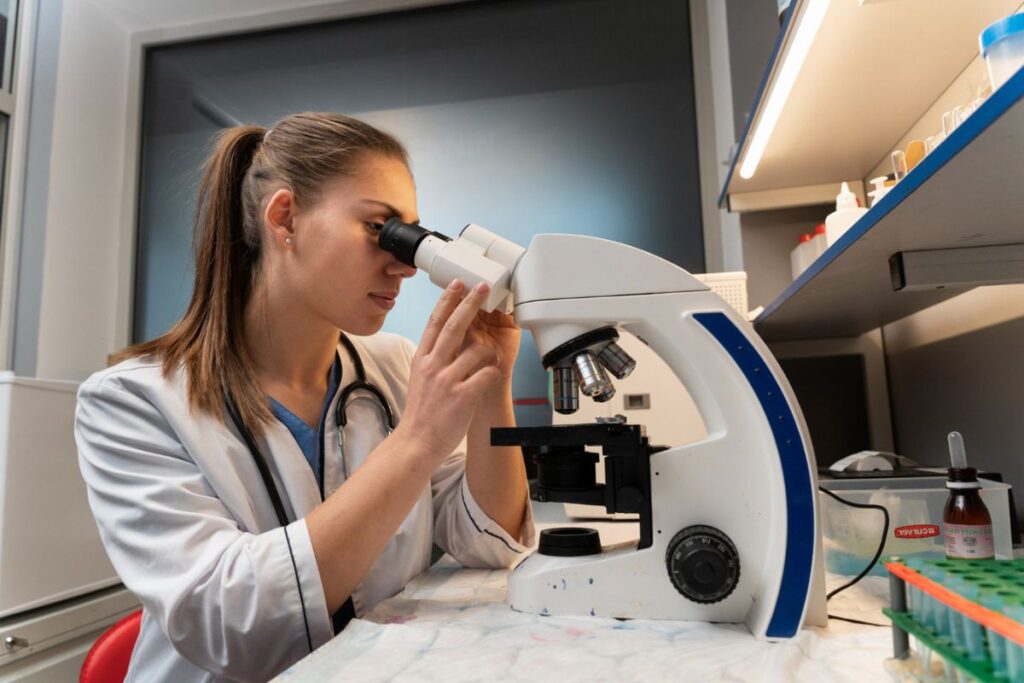
In cases where additional confirmation is needed, a doctor may take a sample from an affected area—such as the tongue, vaginal discharge, or skin lesions—and examine it under a microscope to look for fungal structures.
Final Thoughts
In most cases, Candida skin and mucosal infections can be diagnosed based on symptoms alone. However, when needed, microscopic examination provides a quick and effective way to confirm a yeast infection. Proper diagnosis ensures the most effective treatment, preventing recurrent or mismanaged infections.
Candida Stool Testing
Stool Cultures and Microscopy

Stool cultures and microscopy are commonly used in conventional medicine to check for parasites and bacteria.
However, they can also be utilised to assess Candida species and measure yeast growth in the digestive system.
While many bacteria and yeast coexist harmoniously in the gut, certain strains can become problematic, leading to infections both in the digestive tract and beyond.
Specialised stool tests, such as a Comprehensive Stool Analysis (CSA) and Microbiology Stool Test, can help detect and identify bacteria and yeast from the lower digestive tract.
Research highlights the growing recognition of fungal-bacterial interactions in the gut microbiome:
Sugar-Cravings and Auto-Immune Diseases

From my clinical experience, many patients with autoimmune conditions—including Sjogren’s syndrome and rheumatoid arthritis—had a history of sugar cravings, often consuming refined sweet foods and drinks regularly. This connection further emphasises the role of gut imbalances in chronic disease.
Because of these findings, I strongly recommend that anyone with an autoimmune disease—particularly chronic conditions—request a CSAx3 test (including parasitology) from a naturopath or functional medicine practitioner.
Through extensive stool testing in our clinic, we found that many autoimmune patients had elevated Candida species and reduced beneficial bacteria, such as Lactobacillus and Bifidobacteria, long before the gut microbiome gained mainstream attention.
Your healthcare provider can provide a test kit for you to collect a stool sample at home and send it to a laboratory for analysis. Let’s first examine conventional stool testing and its limitations before discussing functional stool testing.
Conventional Medical Laboratory Stool Testing
Conventional stool tests are not ideal for accurately assessing Candida overgrowth. While medical pathology labs can identify Candida albicans, these tests are often limited in scope and require proper interpretation.
Limitations of Standard Stool Testing
While conventional stool testing can be useful, it is not routinely performed for Candida detection. Additionally, I doubt that most medical pathology labs match the expertise of specialised functional medicine labs, particularly in culturing and identifying different Candida species.
Gut Microbiome Mail-Order Tests
Some direct-to-consumer tests analyse bacterial composition in stool samples and are marketed as “gut microbiome” tests. While these tests offer interesting insights, they clearly lack the depth required for Candida detection.
Comprehensive Stool Analysis (CSA)

For a detailed and accurate assessment of gut health, I strongly recommend this functional medicine test, the Comprehensive Stool Analysis (CSA) authorised through a functional medicine doctor or naturopath. This test provides an extensive evaluation of gut dysbiosis, including Candida overgrowth.
From my clinical experience, this is the #1 problem-solving test for many patients. Over the years, we solved numerous chronic cases using CSA results to guide treatment. We exclusively used Doctor’s Data Inc. (DDI) in the USA for over twenty years due to their high-quality testing and quick turnaround times.
A comprehensive stool test evaluates more than just bacteria—it also examines yeasts, parasites, and other microorganisms that significantly impact gut health. You may harbour some or all of these, and their presence can directly affect your digestive system.
Personally, I’ve found stool tests highly invaluable when it comes to diagnosis and follow-up of gastrointestinal disorders in men, women and children. A study found stool tests particularly important when it comes to the assessment of children and gastrointestinal disorders (Kasirga 2019).
The Role of Stool Testing in Candida Management
Many Candida-related symptoms involve the gut, including bloating, gas, cramps, and irregular bowel movements. A stool test can confirm whether Candida is contributing to these symptoms and guide treatment strategies.
If Candida overgrowth is identified, a comprehensive Candida protocol including dietary changes, lifestyle adjustments, and targeted supplements should be implemented.
Comprehensive Stool Analysis (CSA x3) Including Parasitology
The most advanced stool tests, such as the CSA x3 (including parasitology), go beyond standard microbial analysis. They also assess key functional markers, including:
This type of stool test is ideal for those looking for a thorough assessment of their gut health. By combining microbiological findings with functional indicators, you can gain deeper insight into your symptoms and their root causes.
CSA Testing is Ideal for Patients With:
For patients with chronic digestive complaints and unexplained symptoms, stool testing helps identify Candida, bacterial overgrowth, parasites, and microbiome imbalances. The CSA test provides clinicians with invaluable clinical data to create a personalised treatment plan for each patient.
Who Should Consider the CSA x3 Test?
The CSA x3 test is especially beneficial for individuals who:
Why a Three-Day Stool Collection?
Yeast and other microorganisms are not evenly distributed throughout the stool. A three-day collection increases the likelihood of detecting Candida species, bacteria, and parasites that may not appear in a single sample.
What the CSA x3 Test Reveals
A thorough stool test provides insight into multiple aspects of gut health, including:
Interpreting Stool Test Results
Stool tests should be interpreted by a qualified healthcare professional. Findings may reveal:
In some cases, microscopic yeast detection may be inconsistent due to uneven distribution in the stool. If live Candida species are cultured in large amounts, this suggests an active overgrowth that should be addressed.
Antimicrobial Susceptibility Testing
A key advantage of comprehensive stool testing is antimicrobial susceptibility testing, which helps determine the best treatment options. This can include:
By reviewing susceptibility panels, I’ve been able to develop effective natural anti-Candida formulations tailored to individual needs.
Do You Need a Re-Test?
Re-testing depends on multiple factors, including symptom resolution and treatment response. For chronic or complex cases, a follow-up test may be beneficial. However, many individuals can achieve significant gut health improvements based on an initial comprehensive test and a well-structured protocol.
Final Thoughts
Even if you do not have a Candida overgrowth, stool testing can uncover hidden digestive issues such as:
Stool testing should be used as part of a holistic approach to gut health, providing valuable insights that can lead to effective, personalised treatment plans. A comprehensive stool test is one of the most valuable tools for diagnosing and managing gastrointestinal health, particularly when interpreted in conjunction with a detailed case history.
Although CSA testing is not necessary for everyone, it provides critical insights for patients struggling with chronic conditions. While some of these tests can be expensive, they often deliver answers that conventional medicine overlooks, making them invaluable for those seeking to resolve persistent gut-related health issues.
Key Take-Away
For those struggling with persistent gut symptoms, comprehensive stool analysis can be a game-changer in identifying the root cause and restoring balance to the digestive system.
Candida Urine Testing
Conventional Medicine Urine Testing

A medical pathology lab Candida test, such as a vaginal swab or urine sample, is primarily used to detect Candida albicans in the urinary tract. This test is most effective when:
In this test, a laboratory technician examines a urine sample under a microscope to determine whether a yeast infection is present. Additionally, labs may cultivate Candida yeast in a small dish for confirmation.
How Conventional Urine Testing Works
Candiduria: Candida in the Urinary Tract
Symptoms & Diagnosis Challenges
When Candida Urine Testing is Useful

An Expert Opinion
Dr. Geo Espinosa, director of the Integrative Urological Center at NYU Langone Medical Center, also acknowledges the value of urine testing for Candida-related urological concerns. He is one of the few naturopathic physicians I know specialising in urology with a deep understanding of Candida and candiduria.
Functional Medicine Urine Testing
Organic Acids Test (OAT)
I began using Organic Acids Testing (OAT) in 2013 and continued until retiring from clinical practice in 2019. This urine test is highly effective for detecting dysbiosis—an overgrowth of harmful yeast or bacteria in the gut.
By measuring urinary organic acids, OAT provides insight into a patient’s cellular health, metabolic function, and microbial imbalances. It detects multiple fungi, including mold and yeast toxins, and includes specific markers for Candida overgrowth.
Compared to stool testing, OAT offers a more direct way to identify Candida and its toxins. While some practitioners view stool tests as unreliable for detecting Candida overgrowth, I see them as complementary.
High urinary concentrations of D-arabinitol have been validated in numerous studies as a biomarker for systemic Candida overgrowth. D-arabinitol, a metabolite of Candida, signals invasive candidiasis. This compound is produced when yeast proliferates in the low-oxygen (anaerobic) environment of the small intestine and metabolises dietary carbohydrates.
By carefully analysing a patient’s medical history alongside their urinary organic acid levels, I was able to identify specific metabolic dysfunctions and develop personalised Candida treatment plans over a period of many years.
When combined, OAT and stool testing improve diagnostic accuracy and treatment outcomes. One key Candida marker in OAT is D-arabinitol, a metabolite linked to invasive candidiasis. Since sweet fruits like pears, apples, and grapes contain D-arabinitol, they should be avoided 24 hours before urine collection to prevent false-positive results.
Key Benefits of OAT Testing:
For those with Candida-related health concerns, reducing sweet fruit intake can help minimise yeast overgrowth and improve gut health.
Moving Forward
Diagnosing and testing for Candida remains challenging, but holistic medicine continues to make strides in recognising and addressing this condition.
Functional medicine practitioners adopt a broader perspective, tailoring treatments that address underlying imbalances in gut health.
In another webpage we explore 5 home tests for detecting Candida overgrowth, as well as practical strategies to manage symptoms and restore balance to the body.

Eric Bakker N.D.
Greetings! I am a naturopathic physician from New Zealand. Although I’ve retired from clinical practice since 2019 after 34 years of clinic. I remain passionate about helping people improve their lives. You’ll find I’m active online with a focus on natural health and wellbeing education through my Facebook page, Reddit page and YouTube channel, including this website.





Hi- i have been looking for your online quiz to determine candida overgrowth, as recommended on your youtube videos, but I haven’t been able to find it on any of your sites from doing a search.
Can you please direct me to the test? I need to know you how to proceed, and your test seems like an excellent start.
Thank you.
Hi there, thanks for reaching out. I actually don’t run the online Candida quiz anymore. Instead, I’ve been working hard on two new books that I’m just about to release — they go much deeper than the quiz ever could.
In the Guide book, I outline several simple home tests and other reliable ways to determine if you’ve got Candida overgrowth. That way, you’re not relying on just one method but have a few practical tools at your disposal.
On top of that, I’ve developed a 6-stage Ultimate Candida Cleanse (UCC) program. This is a structured approach that takes you step by step through recovery — from diet and lifestyle foundations, to gut repair, rebuilding the microbiome, and finally long-term prevention. It’s much more comprehensive and effective than the quiz ever was.
So while the quiz is gone, you’ll actually be getting something far more complete, practical, and up to date very soon. Thanks for your comment