

How To Avoid Candida Die Off
Candida die-off is one of the most common concerns people have when they begin addressing yeast overgrowth. Many people feel hopeful when starting a Candida cleanse, but then symptoms suddenly appear and they begin to worry something is going wrong. One of the first questions I hear is simple:
How Long Does Candida Die-Off Actually Last?
The answer depends on several factors, including how aggressive the treatment is, the health of the gut and liver, and the overall resilience of the immune system. In this article we’ll look at the typical Candida die-off timeline, why these reactions happen, and how to reduce unnecessary discomfort during recovery.
These reactions are often referred to as Candida die-off symptoms. While these symptoms are typically short-lived and usually resolve within a week, they can persist longer in more chronic cases.
What Is Candida Die-Off?
Candida die-off, sometimes called a Herxheimer reaction, occurs when large numbers of yeast cells break down during treatment. As the yeast cells die, they release metabolic by-products that the body must process and eliminate.
These substances can temporarily irritate the system, which may lead to symptoms such as fatigue, headaches, digestive upset, and brain fog.
Common Candida die-off symptoms include:
These reactions can feel alarming, but in many cases they are simply signals that the body is adjusting to microbial changes.
For a full explanation of these reactions, see the complete guide to Candida die-off symptoms.
Why Candida Die-Off Duration Varies
Some people experience very mild die-off symptoms, while others feel quite uncomfortable for a period of time. Several factors influence how long die-off lasts.
Treatment intensity
Aggressive antifungal protocols can trigger stronger die-off reactions because large numbers of yeast cells break down at once.
Gut health
People with underlying digestive problems such as IBS, SIBO, or sluggish elimination may experience stronger reactions.
Liver detox capacity
The liver plays an important role in processing metabolic by-products released during microbial breakdown.
When liver function is supported and hydration is adequate, die-off reactions often resolve more quickly.
Immune system balance
A well-regulated immune system helps the body adapt to microbial changes without excessive inflammatory responses.
How To Reduce Candida Die-Off Symptoms
In nearly four decades of clinical practice, I’ve seen that the best Candida programs rarely push the body aggressively. Instead, the focus should be on supporting normal physiology.
Simple strategies can help minimise unnecessary reactions:
Gentle digestive support can also be helpful for some people. Digestive enzymes, probiotics, and gradual dietary improvements often support a smoother transition during gut recovery.
What Candida Die-Off Symptoms last Too Long
You’ll find that die-off reactions should not persist indefinitely. If symptoms remain severe or continue for many weeks, it may indicate that the approach is too aggressive or that other digestive issues are present.
Possible reasons prolonged symptoms occur include:
In many cases, simply slowing the pace of treatment will allow your digestive system to stabilise. If reactions become too strong, there are practical strategies for avoiding Candida die-off.
A Calm Approach Works Best
One of the biggest misconceptions about Candida cleansing is that “stronger treatments produce faster recovery”. It’s not true. In reality, the digestive system often responds best to a calm, steady approach that supports natural physiological balance.
When the gut, liver, and nervous system are supported properly, microbial balance tends to improve gradually and sustainably.
Key Takeaways
Candida die-off usually lasts from a few days to several weeks depending on the individual.
Most reactions appear during the early stages of treatment as the body adjusts to microbial changes. A gradual approach to Candida treatment often reduces the intensity of die-off symptoms.
Supporting digestion, elimination, and stress balance helps the body recover more smoothly. If symptoms feel excessive or prolonged, slowing the pace of treatment is often the best solution.
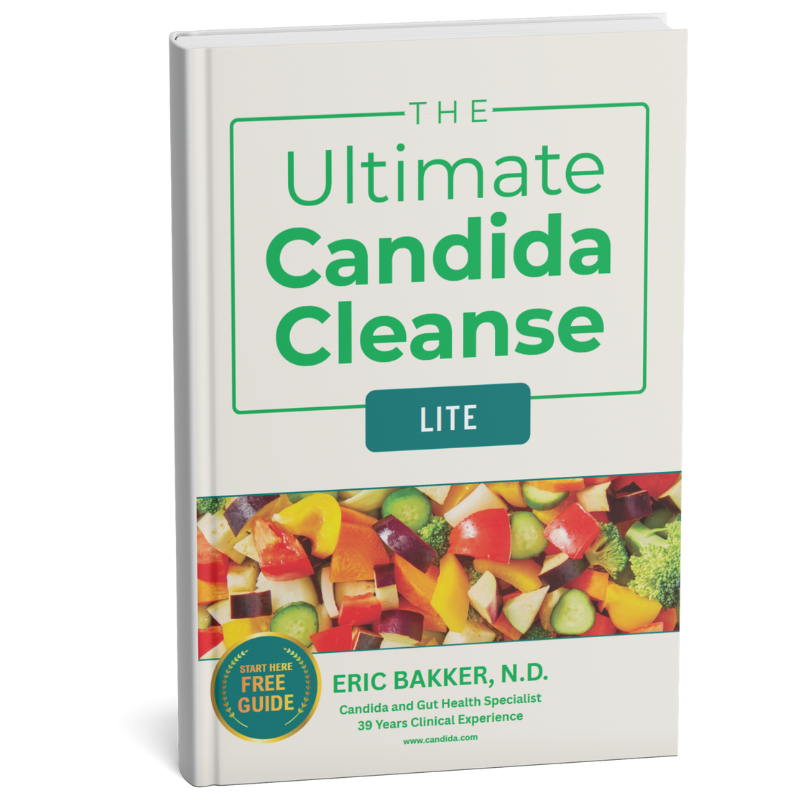
Ready to Break Free from Candida Overgrowth?
Start your journey today with our proven free 84-page Ultimate Candida Cleanse Lite Program + Yeastrix Gut Support Kit. Thousands have used our products — now it’s your turn!

Eric Bakker N.D.
Greetings! I am a naturopathic physician from New Zealand. Although I’ve retired from clinical practice since 2019 after 34 years of clinic. I remain passionate about helping people improve their lives. You’ll find I’m active online with a focus on natural health and wellbeing education through my Facebook page, Reddit page and YouTube channel, including this website.


