Candida Albicans Is A Survivor
Candida albicans is regarded as a survivor because of its extraordinary adaptability and resilience, which allow it to thrive in diverse environments. This yeast can withstand a wide range of conditions, including varying pH levels and oxygen concentrations, making it capable of colonising multiple sites in the human body, from the skin to the gastrointestinal and genitourinary tracts.
The 5 Essential Tactics Candida Uses For Survival
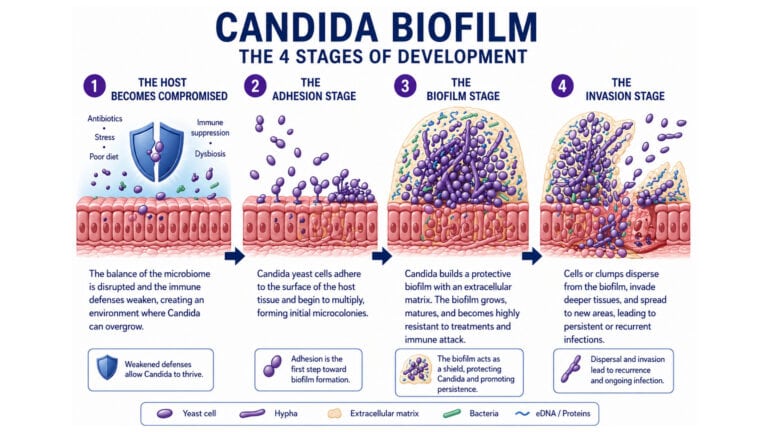
Additionally, Candida albicans has evolved mechanisms to evade the host’s immune system, such as altering its cell wall components and forming biofilms, which make it more difficult for immune cells to recognise and attack it.
One of the most concerning aspects of Candida albicans is its ability to develop resistance to antifungal treatments. Through genetic mutations and the activation of stress response pathways, it can survive exposure to drugs that would typically inhibit or kill other fungi. This resistance, combined with its capacity to form resilient biofilms on surfaces like medical devices, further complicates treatment and eradication efforts.
The versatility and persistence of Candida albicans in the face of immune defences and antifungal therapies underscore why it is considered a formidable survivor. Its ability to adapt and thrive under adverse conditions contributes significantly to its role as a leading cause of fungal infections in humans, particularly in immunocompromised individuals.
Read: The Fungal Characteristics of Candida Albicans
1. Candida Is A Shape Shifter
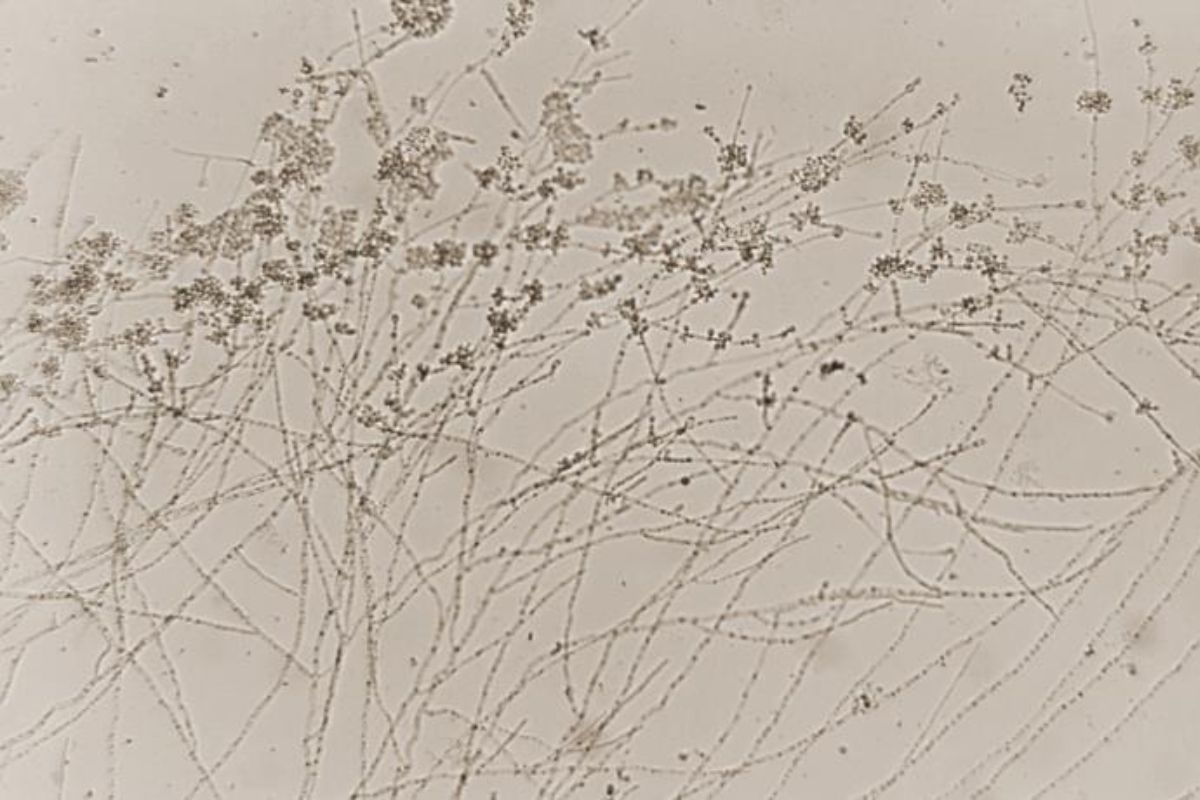
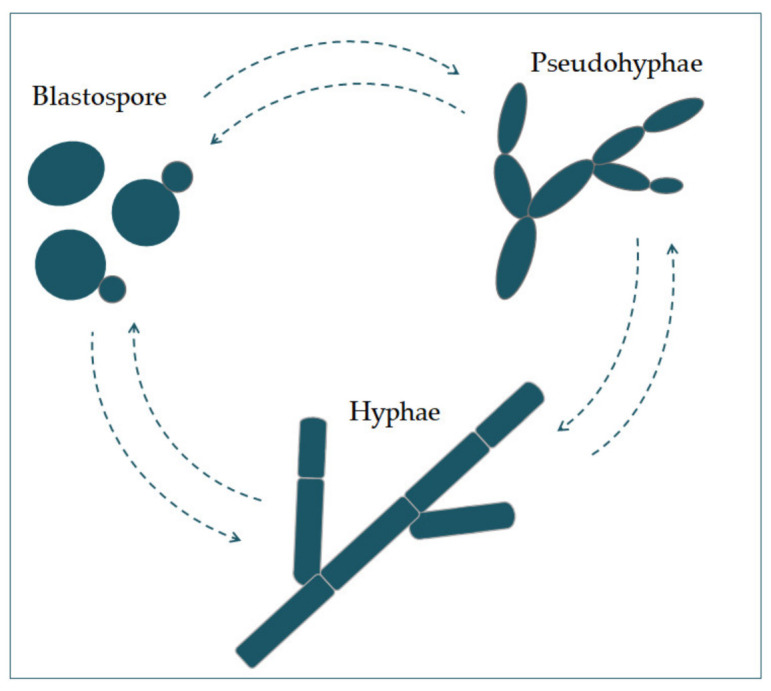
Research has uncovered that Candida albicans possesses the remarkable ability to switch between different forms, a feature that plays a crucial role in its survival and capacity to cause infection. This shape-shifting begins with Candida in its yeast form, characterised by budding cells. Under certain conditions, these buds can transform into long, branching filaments known as hyphae. These hyphae are not just structural adaptations; they are essential for the fungus’s virulence. (Lopes et al., 2022)
The structural switches and transitions of Candida albicans from blastospore to pseudohyphae and hyphae are reversible (Telapko et al., 2021).
As the filaments extend and branch out, they become more complex, and new buds emerge along their length. These buds can detach and develop into their own filamentous structures, further propagating the growth of the fungal colony. This continuous cycle of budding and filamentation allows Candida to spread rapidly within the host, making it increasingly difficult to control. (Lin et al., 2015)
The filamentous form of Candida is particularly adept at invading tissues and evading the immune system, which significantly enhances its ability to cause infection. This transition between forms is a key factor in the persistence and resilience of Candida yeast infections, as it enables the fungus to adapt to different environments within the body and resist antifungal treatments. The dynamic nature of Candida’s growth and its ability to switch forms contribute to the ongoing challenge of managing and eradicating these infections. (Talapko et al., 2021)
2. Candida Adapts To Temperature
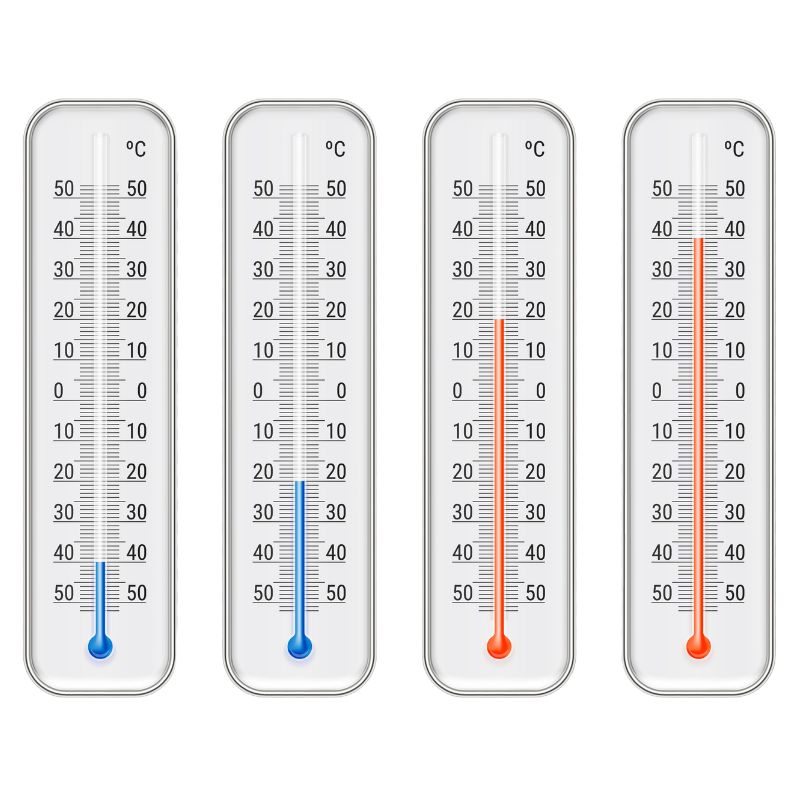
Candida albicans is uniquely adaptable to various temperature conditions, which plays a significant role in its ability to thrive and cause infections. At a temperature of around 25°C (77°F), Candida can grow in a mold-like form. However, when exposed to the human body temperature of approximately 37°C (98.6°F), Candida switches to a yeast-like form. This temperature-dependent flexibility allows it to flourish in diverse environments, from external surfaces to the warm, internal conditions of the human body. (Nadeem et al., 2013)
Moreover, Candida albicans is capable of adjusting and learning to grow at different temperatures, further enhancing its survival. This adaptability is not limited to Candida; other fungi, such as Aspergillus fumigatus, also exhibit this trait. (Subroto et al., 2022)
Both fungi can produce mycotoxins, toxic compounds that can contribute to disease. The optimal temperature for most mycotoxin production lies between 20°C and 30°C, yet these fungi can continue to thrive and produce toxins even at the higher temperatures found within the human body.
The ability of Candida albicans to transition from yeast to hyphal (filamentous) cells is a critical factor in its virulence. This transformation allows Candida to rapidly adjust to the host’s body temperature and nutrient availability, making it a formidable pathogen that is challenging to control. The hyphal stage not only aids in adherence and invasion of host tissues but also contributes to Candida’s resistance to the host’s immune defences and antifungal treatments. This adaptability, combined with its toxin production, makes Candida albicans a particularly resilient and difficult-to-manage fungal pathogen.

3. Candida Adapts To Available Nutrients
Candida’s ability to adapt to the available nutrients in its environment is one of the key factors that contribute to its success as a pathogen. This adaptability allows Candida to cause infections in a wide variety of host sites, each of which may offer different types and levels of nutrients. Candida’s metabolic flexibility enables it to thrive under both nutrient-rich and nutrient-poor conditions, making it particularly resilient in the face of varying environmental challenges. (Telapko et al., 2021)
Some people have the belief that Candida “prefers sugar”, but the reality is that in nutrient-rich environments, such as the gut or mucosal surfaces, Candida can rapidly proliferate by efficiently utilising available sugars, fats, and proteins. This allows Candida to establish a strong presence and overwhelm the local microbial community, leading to infection. Conversely, in nutrient-poor environments, Candida can alter its metabolism to survive on minimal resources. For instance, when glucose (sugar) is scarce, Candida can easily switch to alternative energy sources like fatty acids or amino acids, ensuring its continued growth and survival. (Pellon et al., 2022)
This metabolic versatility is not only a survival mechanism but also a competitive advantage. By being able to exploit different nutrient sources, Candida can outcompete other microorganisms in the same environment, further establishing its dominance. Moreover, this adaptability extends to Candida’s ability to withstand the host’s immune responses and antifungal treatments, which often target specific metabolic pathways. By shifting its metabolism, Candida can evade these attacks and persist in the host, leading to chronic or recurrent infections.
Candida’s food adaptability also plays a role in its ability to form biofilms, complex communities of cells that are highly resistant to treatment. Within a biofilm, Candida cells can share resources and protect each other, making them even more difficult to eradicate. The ability to switch between different metabolic states within a biofilm allows Candida to maintain its resilience and sustain infections over long periods. (Gulati et al., 2016)
In summary, Candida’s capacity to adapt its metabolism based on the available nutrients is a crucial factor in its pathogenicity. This flexibility enables the fungus to survive and proliferate in diverse environments within the host, making it a particularly formidable and persistent pathogen.

4. Candida Adapts To Available pH
Candida’s ability to adapt and thrive across a wide range of pH environments is a key factor that has contributed to its success as an opportunistic pathogen. Unlike many organisms that require a stable pH to survive, Candida not only tolerates but can also actively manipulate the pH of its surroundings to create more favorable conditions for its growth. This adaptability is crucial for Candida’s survival within its host and plays a significant role in its pathogenicity.
Candida can influence and alter the pH of its environment, which is essential for its survival and proliferation. Research has shown that Candida albicans can neutralise its surroundings, shifting the pH from acidic to neutral or even alkaline levels. For instance, in an acidic environment with a pH of around 4, Candida can raise the pH to over 7 in less than 12 hours. This rapid pH adjustment triggers Candida to switch from its yeast form to its more invasive hyphal form, enhancing its ability to invade tissues and evade the host’s immune system. (Vylkova et al., 2011)
This remarkable ability to manipulate pH is a unique and powerful trait of Candida, allowing it to thrive in diverse environments within the human body, such as the stomach, vaginal mucosa, and gut. A study conducted in 2017 highlighted that Candida’s growth in acidic conditions involves significant remodelling of its cell wall. This remodelling strengthens the cell wall’s structure, particularly by enhancing its chitin and β-glucan components, which are critical for maintaining cell integrity and resisting external stresses. (Sherrington et al., 2017)
Candida’s pH adaptability is not just about surviving in varying conditions; it’s also a strategic mechanism that enables the pathogen to colonize different niches within the host. Whether in the acidic environment of the stomach or the neutral pH of the bloodstream, Candida can adjust its growth and behavior to ensure its survival and continued infection. This pH flexibility makes Candida particularly challenging to control and treat, as it can adapt to a wide range of conditions that would typically inhibit other microorganisms.
In summary, Candida’s ability to thrive in both high and low pH environments, coupled with its capacity to alter the pH to suit its needs, is a critical factor in its success as a pathogen. This trait allows Candida to colonise various niches within the host and contributes to its persistence and resistance to treatment.

5. Candida Has Stealth Capabilities
Candida’s stealth capabilities are one of its most formidable traits, allowing it to evade the body’s immune defenses with remarkable efficiency. Much like a modern-day nuclear submarine, Candida can remain virtually silent and dormant, waiting for the right moment to strike. This ability to go “stealth” is a key factor in its success as a pathogen, making it difficult for the immune system to detect and eliminate. (Professor Al Brown 2016)
One of the ways Candida achieves this stealth mode is by exploiting vulnerabilities in the immune system, particularly in the way white blood cells communicate. Research has shown that Candida can cleverly deceive the immune system by presenting decoys and moving immune targets, effectively confusing the body’s defenses. By doing so, Candida yeast spores can hide from detection, making it challenging for white blood cells to identify and destroy them. (Ballou et al., 2016)
This immune evasion tactic is particularly concerning because it allows Candida to linger in the body undetected, often leading to chronic infections that can be difficult to treat. The spores can remain dormant for extended periods, only to become active and proliferate when the conditions are favorable, such as when the immune system is weakened.
In essence, Candida’s stealth capabilities enable it to outsmart the immune system, allowing it to persist in the body and cause ongoing health issues. This ability to hide and strike at opportune moments is one of the reasons why Candida infections can be so persistent and resistant to treatment.

Eric Bakker N.D.
Greetings! I am a naturopathic physician from New Zealand. Although I’ve retired from clinical practice since 2019 after 34 years of clinic. I remain passionate about helping people improve their lives. You’ll find I’m active online with a focus on natural health and wellbeing education through my Facebook page, Reddit page and YouTube channel, including this website.