
What You Need To Know About Candida Die-Off
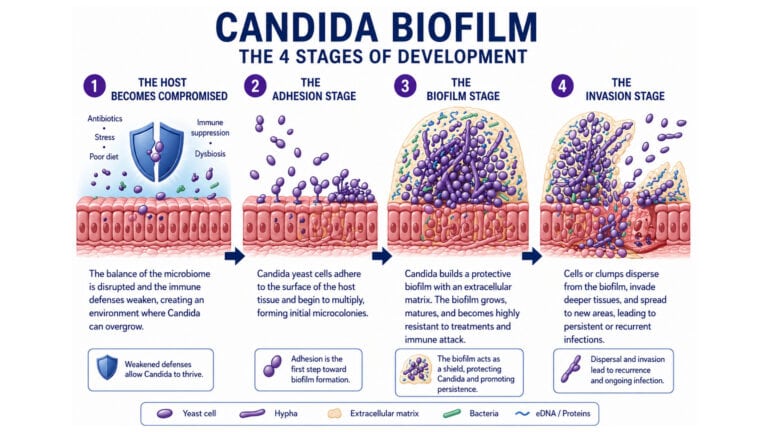
One of the most misunderstood parts of treating a Candida overgrowth is the “die-off” reaction. Also known as the Herxheimer reaction, it occurs when yeast cells (like Candida) are rapidly destroyed in the body. This destruction releases toxins that can overwhelm your detoxification systems, leading to a range of unpleasant symptoms.
Let me be clear upfront: Yes, Candida die-off is real, but it’s almost always avoidable — if you go about treatment the right way.
As a clinician with almost 40 years in natural medicine, I’ve seen hundreds of patients suffer unnecessarily due to rushing into treatment without a clear plan. I’ve also experienced it myself when I was in my twenties. Fortunately, with the right testing, a careful approach, and some common sense, it is entirely possible to prevent 99% of Candida die-off reactions.
Let’s explore how...
What Is Candida Die-Off?
Candida die-off happens when a large number of Candida yeast cells are destroyed in a short period of time. As these fungal cells break apart, they release metabolic byproducts, including:
These byproducts are normally handled by your liver, kidneys, and immune system. But when die-off happens too quickly, your body can’t keep up — and you start to feel worse before you feel better.
Common Symptoms of Candida Die-Off
These symptoms can feel like the flu, or even like your Candida symptoms are getting worse:
Sound familiar? That’s because these symptoms mimic the very thing you’re trying to heal. If you’re new to the concept, read my full guide on Candida die-off symptoms. While these symptoms are typically short-lived and usually resolve within a week, they can persist longer in more chronic cases.
How to Prevent Candida Die-Off: The Smart Way
1. Consider a Comp. Stool Analysis – Especially If Your Case is Chronic
Before starting any Candida protocol, it’s worth asking a simple question:
Do you actually know what’s going on inside your gut?
In straightforward, first-time cases, some people choose to begin with structured dietary correction and see how they respond. That’s reasonable.
But if your symptoms are:
Then a comprehensive stool analysis becomes extremely valuable.
Over the years, I’ve seen many patients delay proper stool testing — and spend months (sometimes years) guessing, as well as spending a lot of money needlessly. Candida overgrowth may be present… but so might bacterial overgrowth, parasites, low beneficial flora, or poor digestive enzyme output.
Without testing, you’re only making assumptions. A quality comprehensive stool test can assess:
This gives us clarity — not guesswork!
It also helps tailor treatment intensity appropriately, which reduces unnecessary die-off reactions and prevents over-treatment.
⚠️ Basic stool tests run through many mainstream medical clinics are often limited and may miss subtle imbalances. If you pursue testing, use a reputable functional or integrative laboratory such as Doctor’s Data, Genova Diagnostics, or another well-established provider.
Yes, comprehensive testing can cost several hundred dollars. However, in chronic or recurring cases, it often saves far more in the long run by preventing repeated trial-and-error protocols. In many countries, these tests are partially or fully covered by health insurers — it’s worth checking your policy.
Testing is not mandatory for everyone.
But when symptoms are persistent, complex, or repeatedly returning, proper data can change the entire trajectory of recovery.
2. Don’t Go In Heavy Handed
The biggest mistake? Starting your Candida cleanse with high-dose antifungals or aggressive detox protocols. I’ve seen this a thousand times or more.
Killing off Candida too quickly floods your system with toxins, overwhelming your detox capacity. That’s what causes die-off. So instead, you want to start slow and build gradually:
This approach allows your liver, kidneys, and lymphatic system time to adapt and process toxins gradually.
3. Support Detox Pathways From Day One
Your body can only eliminate toxins if your organs of elimination are working properly. That means focusing on:
If you already have a sluggish liver, poor digestion, or gut inflammation, you’re far more likely to experience die-off.
4. Start With Gut Repair First
Before you even begin antifungals or probiotics, I recommend a phase of gut repair. This means:
- Eating an anti-inflammatory, low-fermentation (low-sugar) diet
- Including prebiotic foods and probiotic-rich foods.
- Removing alcohol, sugar, and heavily processed foods
Your intestinal lining and immune system need to be stable and strong. If your gut barrier is compromised (a.k.a. leaky gut), you’re setting yourself up for trouble when Candida cells start dying off.
5. Use a Phased Supplement Approach
A good Candida protocol doesn’t throw everything at the body at once. It phases things in:
➤ Phase 1: Pre-Treatment Support
- Digestive enzymes (like Yeastrix Active Enzymes), and liver support
- Cleanse Diet (no-sugar)
- Hydration, stress reduction, and sleep support
➤ Phase 2: Introduce Antifungals Gradually
- Start with low-dose natural antifungals: caprylic acid, undecylenic acid, garlic, berberine
- Increase slowly over 7–14 days (like Yeastrix Candida Cleanse)
➤ Phase 3: Add Probiotics Once Antifungals Are Established
- Delayed-release, high-potency formulas like Yeastrix Daily Probiotic
- Start with 1 cap every other day if sensitive, then build up
The idea is to balance the kill with the rebuild.
6. Pause If Die-Off Happens
If you do start to feel symptoms of die-off:
- Stop antifungals immediately, continue with the probiotics and enzymes.
- Drink plenty of water with lemon or electrolytes
- Take activated charcoal or bentonite clay to bind toxins
- Rest, breathe, and give your body a few days to recover
Most mild die-off symptoms subside in 3–5 days. Don’t panic. Just slow down.
Once you’ve stabilised, restart at a lower dose or reintroduce gut repair support before continuing.
7. Don’t Skip Re-Testing
After 8–12 weeks, consider repeating your stool test to track your progress.
If you’ve been on probiotics, wait two weeks before testing so results aren’t skewed.
The new results will guide the next steps — whether you need to repeat treatment, rebuild gut flora, or maintain with diet and lifestyle.
My Clinical Advice on Die-Off
After having worked with many patients, I’ve found most cases of Candida die-off is self-inflicted. You can read more here about the 7 ways to avoid Candida die-off.
It’s a result of people:
It’s absolutely avoidable with the right education and stepwise plan.
Don’t just blindly follow an online “30-day Candida cleanse.” Work with your body, not against it.
Key Take-Aways

Eric Bakker N.D.
Greetings! I am a naturopathic physician from New Zealand. Although I’ve retired from clinical practice since 2019 after 34 years of clinic. I remain passionate about helping people improve their lives. You’ll find I’m active online with a focus on natural health and wellbeing education through my Facebook page, Reddit page and YouTube channel, including this website.