

Biofilm Explains Why Candida and Yeast Infection Are So Hard To Beat
By now, you understand what Candida biofilms are and how they form.
So the next logical question is: Why are they so difficult to treat?
Because once a biofilm is established, you’re no longer dealing with simple yeast. You’re dealing with a protected, adaptive system.
Why Standard Antifungal Drugs Often Fall Short
Most antifungal medications were designed to target free-floating yeast cells. But biofilms behave very differently.
Inside a biofilm:
This means treatments that would normally work can become far less effective. In many cases, higher doses are needed — and even then, results can be incomplete.
The Real Reason Treatments Fail
Once Candida forms a biofilm, everything changes. You’re no longer dealing with loose yeast cells.You’re There isn’t just one reason Candida biofilms are difficult to treat.
It’s a combination of factors working together:
This creates a layered defence system. And that’s exactly what makes biofilms so persistent.
Device-Related Infections — A Major Clinical Issue
Candida prefers mucosal surfaces in the body. When Candida forms a biofilm on a surface such as:
It becomes a continuous source of infection.
In these situations:
Once attached, Candida can build a stable biofilm that acts as a reservoir. This is why, in many clinical cases, removing the device is essential.
Bloodstream Infections — Why Biofilms Can Be Serious
In hospital settings, biofilm-related Candida infections can become severe.
They are associated with:
This highlights how important biofilms are in real-world medicine.
Mucosal Infections — More Common, Still Frustrating
Most people aren’t dealing with hospital-based Candida infections.
They’re dealing with mucosal infections — and these can occur in more places than just the mouth or vagina.
Common sites include:
What many people don’t realise is that these can overlap. Symptoms may shift, appear in different areas, or seem unrelated — but often share the same underlying pattern.
In all of these situations, biofilms play a key role.
They contribute to:
This is why many people feel like they’re stuck in a loop:
Once you understand that biofilms can exist across multiple mucosal surfaces, that pattern starts to make a lot more sense.
New Antifungal Drug Options — Promising, But Still Limited
Apart from older drugs such as fluconazole and amphotericin B, there are newer antifungal agents emerging, including:
These show improved activity against biofilms compared to older drugs.
However:
So while progress is being made, there is no universal drug solution.
Why a Smarter Strategy Is Needed
Once you understand how Candida biofilms function, one thing becomes clear:
This is not just about using a stronger antifungal, it’s about using a more complete approach.
Instead of focusing on a single target, you need to think in layers:
This is where many people start to see better results.
What the Research Is Showing About Botanicals
There is growing evidence that certain herbal and plant-based compounds can play an important role here.
These compounds have been shown to:
And importantly:
Unlike many pharmaceutical antifungals, certain botanicals do not appear to promote resistance in the same way. This is a key advantage.
Because instead of targeting a single mechanism, they:
A Structured Approach — Yeastrix Candida Cleanse
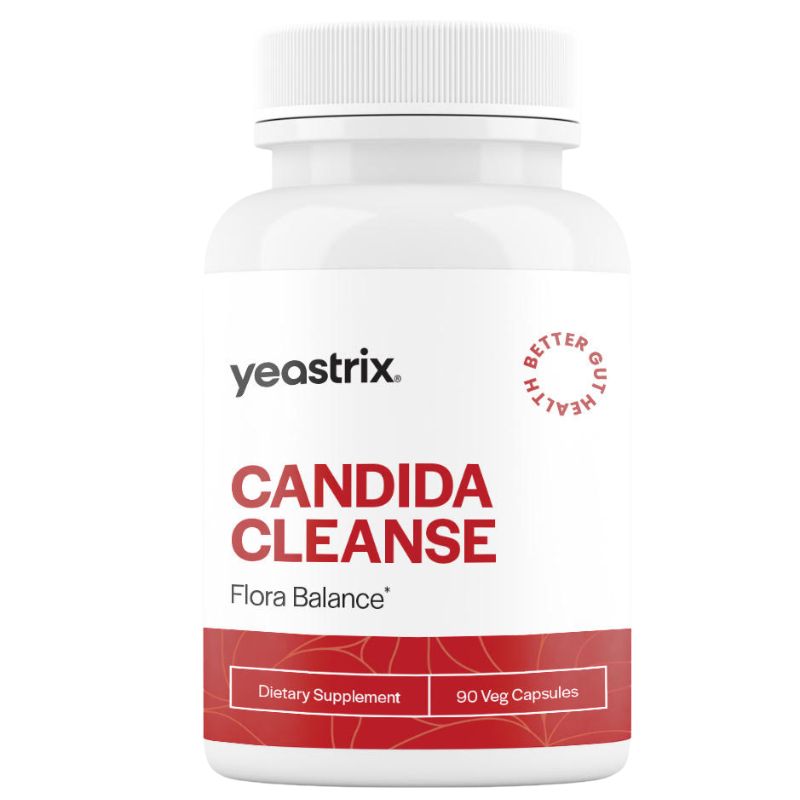
This is why I developed the Yeastrix Candida Cleanse. Not as a “quick fix”, but as part of a structured system called the Gut Restore Kit – designed to address Candida overgrowth, SIBO, and IBS more intelligently.
The Yeastrix Candida Cleanse formulation focuses on:
The goal is to suppress symptoms. It’s to shift the terrain so Candida is less able to persist and return. Yeastrix candida Cleanse represents my 3rd generation and best Candida balancing formulation yet.
Why This Matters for Long-Term Results
If Candida biofilms are not addressed, the pattern often looks like this:
But when you understand how biofilms work and apply the right strategy:
The Future of Candida Treatment
This is where things are heading:
Treatment is moving away from “kill only” approaches toward more integrated systems.
The Take-Away
Candida biofilms are difficult to treat because they are:
And that means one thing: Treatment needs to be smarter — not just stronger!
Key Take-Aways

Eric Bakker N.D.
Greetings! I am a naturopathic physician from New Zealand. Although I’ve retired from clinical practice since 2019 after 34 years of clinic. I remain passionate about helping people improve their lives. You’ll find I’m active online with a focus on natural health and wellbeing education through my Facebook page, Reddit page and YouTube channel, including this website.