

The Signs and Symptoms of Candida Overgrowth
Welcome to our comprehensive guide to Candida signs and symptoms, on this page you’ll find signs and symptoms by body system. Candida overgrowth is primarily caused by the yeast Candida albicans, a commonly overlooked health concern affecting millions worldwide.
Candida albicans is a fungal organism that can affect many parts of our body, leading to a host of symptoms ranging from mild to severe that can disrupt our daily living. This page delves deep into the world of Candida signs and symptoms and explores the common and less-common telltale signs that reveal the presence of Candida overgrowth in or on our body.
Candida Overgrowth Can Produce Many Symptoms
Candida overgrowth can occur when this normally harmless yeast proliferates uncontrollably, leading to an imbalance in our body’s microbiome. As Candida thrives and builds biofilm, it can compromise various bodily systems, manifesting in an array of symptoms that may initially seem unrelated. (Cavalheiro et al., 2018)
Even though there are many signs and symptoms of a Candida overgrowth or Candida yeast infection, we found most patients to have symptoms in one or several body systems. Therefore, for your convenience, we thought it would be easier to explain Candida complex amount of symptoms by looking at the body’s different systems, and how they are affected, and the Table of Contents makes it easy.
Difference Between a Sign and a Symptom
When it comes to health and diagnosis, terms like signs and symptoms are frequently used, yet they hold distinctly different meanings. Understanding these differences can empower patients and enhance communication with healthcare professionals, ultimately leading to more effective treatment and management.

So Many Candida Patients Have Gut Problems
We discovered that a significant number of patients, but not all with Candida overgrowth, also exhibited a predisposition towards several digestive health problems. I believe this is one of the key reasons Candida and SIBO patients were in the past, and still are, not taken seriously by some medical doctors. This occurs likely because “everyone complains of bloating, farting, and bowel issues”.
Working with patients struggling with chronic gut issues spanning several months, even years, may appear a demanding job, yet we found it to be most fulfilling, particularly when witnessing the patient’s progress and return to health and wellbeing once the gut became restored. I found antibiotic prescriptions to be behind many chronic gut cases, you can read more here about the primary causes of a Candida yeast infection.
When Candida cases are more chronic or of long-standing, the patient would be more inclined to have SIBO (small intestine bacterial overgrowth) in addition to Candida overgrowth. Part of this reason can be antibiotics, PPI drugs (for heartburn) or NSAID (painkiller) drugs. They all affect the gut long term, predisposing it to chronic gut problems over time. (Imhann et al., 2017) .
Additionally, it may come as a surprise to some that more than a few patients also tested positive for parasites after completing a comprehensive stool analysis.
Let’s first look at digestive symptoms, some of the most common Candida symptoms and then look at other symptoms produced by Candida species:

Digestive System Candida Yeast Infection Symptoms
A staggering number of digestive symptom are brought on by Candida yeast infections; in fact, more than half of the patients who arrived at our clinic with digestive issues had an overgrowth of Candida, dysbiotic bacteria, or both.
Patients can also have SIFO (small intestine fungal overgrowth), SIBO (small intestinal bacterial overgrowth, and/or LIFO (large intestine fungal overgrowth).
Do you still have that gut problem, especially recurring?
If you look over the list of symptoms below, you might recognise or even be familiar with a few of these Candida overgrowth signs and symptoms
These are all mostly common symptoms, some are less common however:
Mouth Symptoms
Stomach Symptoms
Gut Symptoms

Nose, Ear, Throat, and Lung Candida Symptoms
Do your ears itch or your throat feel scratchy? Do you cough up phlegm in the morning despite not being a smoker? These could be signs of a Candida yeast infection.
Candida overgrowth can affect the nose, ears, throat, and lungs, leading to symptoms ranging from mild discomfort to severe breathing problems. In the nose, it can cause congestion, sinus infections, and discharge. Some people may experience itching or discomfort in the nasal or sinus areas, often misdiagnosed as allergies.
Ear infections caused by Candida can result in itching, pain, and discharge. In severe cases, conditions like otitis externa or otitis media can develop, requiring medical attention.
Oral thrush and throat infections (oropharyngeal candidiasis) typically appear as white patches on the tongue or inner cheeks, causing discomfort or difficulty swallowing. A persistent sore throat and altered taste may also occur.
Excess Candida in the lungs can cause respiratory issues, including coughing, wheezing, and shortness of breath. In severe cases, pneumonia or bronchitis may develop. Breathing difficulties, especially in individuals with weakened immune systems, can be alarming.
Candida-related symptoms in these areas can significantly affect quality of life, and treatment is often necessary. If you experience breathing difficulties, it’s important to consult a medical professional for appropriate care.
Now, let’s explore some of the common ear, nose, throat, and lung symptoms seen in our clinic.

Musculoskeletal Candida Yeast Infection Symptoms
Did you know that symptoms in the muscles and joints can be brought on by yeast infections? Over the years, our clinic treated a lot of patients who had “unexplained” aches and pains that went away once their Candida yeast infection was treated.
Many of the ailments listed below frequently co-occur with gut, skin or other issues mentioned above. Can you relate to having a condition with your muscles or joints that neither a doctor nor a specialist can even begin to diagnose or treat? Have you given a yeast infection any thought as a possible trigger?
Although a Candida cleanse can result in muscle or joint discomfort, it’s more likely that your body’s immune system regulating inflammation is to blame. It’s struggling under the load of mycotoxins like candidalysin and acetaldehyde.
Inflammation resembles fire somewhat. Start a small fire; it’s simple to extinguish. But when you build a huge fire like a forest fire, it’s very difficult to put out. Inflammation is like heat, it resembles a flame.
Compared to a massive “forest fire” of inflammation, a tiny amount of inflammation is considerably simpler to put out and extinguish. Inflammation is necessary for healing, inappropriate inflammation leads to chronic inflammatory disease. Let’s look at the common and rare symptoms caused by Candida that affect the musculoskeletal system.
Osteomyelitis and Candida
Candida has the ability to infect any part of our body, it can even infect bone tissue. Inflammation of bone caused by infection, generally in the legs, arm or spine, is called osteomyelitis. Candida infection can reach bones by travelling through the bloodstream or spreading from nearby tissue.
Common symptoms include pain, fever and chills. Treatment is usually surgery to remove portions of bone that have died. Although Candida osteomyelitis is rare, it does occur. It can occur without any predisposing risk factors. Without treatment the disease is progressive and leads to widespread bone destruction and nerve damage.
Without antifungal treatment, they developed spinal collapse and neurological deterioration within 3–6 months from the onset of symptoms. In 2004, a case report was published online about Candida osteomyelitis located in a person’s foot bones.
Knee pain And Candida
Aches, pain (like joint pain), and weariness are just a few of the numerous ways that inflammation in the body can physically manifest itself. I found an interesting case report from 2019, of a 56 year old male with recurrent knee arthritis caused by Candida parapsilosis.
Candida was discovered inside his knee joint, it had infiltrated deep into the synovial fluid. Synovial fluid, also known as joint fluid, is a thick liquid located between your joints. The fluid cushions the ends of bones and reduces friction when you move your joints. A synovial fluid test is a group of tests that checks for disorders (like infections) that affect the joints.
A family history of inflammatory diseases and long-term use of pharmaceutical drugs, particularly antibiotics, are two further indications that inflammation may be a concern. Checking for small bowel function is something I’m most interested in doing if I suspect a patient has an inflammatory issue. Many cases of immunological dysfunction first appear in the small intestine. Now you know why I frequently suggest stool testing.
Do you have any unexplained muscle or joint pain? The symptoms below are potential symptoms of a Candida infection. Most of these symptoms are less commonly seen, however, especially when compared with the prevalence of digestive or genital yeast infections. Just because a symptom is less common than another, it doesn’t mean it’s not connected to Candida.
Muscle aches and pains that don’t tend to be responsive to other treatments:

Genital and Urinary Candida Yeast Infection Symptoms
Did you realise that your urinary system might be impacted by a Candida yeast infection?
It’s vital to keep in mind that yeast prefers dark, warm, and moist environments in which to grow and thrive. Additionally, your urinary and digestive systems are ideal hangout spots for yeasts.
Have you ever thought that yeast might be the cause of your recurrent urinary tract infections, prostate problems, vaginal problems, or a child or adolescent’s bedwetting issue?
Let’s now look at some of the most common genital and urinary tract Candida symptoms affecting people we’ve seen in our clinic.

Kidney and Bladder Candida Symptoms
A common area for recurring and chronic yeast infection is in the urinary system, especially common with females. The occurrence of frequent and persistent Candida yeast infections in the urinary system is common, especially among females. Candida species can thrive in the urinary tract, which includes the kidneys, ureters, bladder, and urethra, causing urinary candidiasis.
Women are more susceptible to urinary candidiasis due to factors like anatomical differences, hormonal fluctuations, and vaginal Candida colonisation. Candida yeast organisms can enter the urinary tract through different pathways, such as ascending from the genital area, contamination during medical procedures like catheterisation, or through other infection sites.
Common signs of urinary candidiasis may include frequent urination, urgency, painful urination, blood in urine, and lower abdominal discomfort. In certain cases, the patient may also have back pain or a fever, which could suggest a more serious kidney infection (called pyelonephritis).
Treatment for urinary Candida infection usually consists of antifungal medication, which can be taken orally or administered intravenously depending on the infection’s seriousness. Additionally, it is important to take preventive measures to avoid future occurrences. These measures may involve maintaining good hygiene, avoiding unnecessary catheter use, and addressing underlying factors such as poor diet (sugar, alcohol, take-away foods, etc.), diabetes or immunodeficiency.
Although urinary candidiasis is usually treatable, recurrent infections can be challenging and may need a collaborative approach involving urologists, infectious disease specialists, and gynaecologists. Addressing both acute symptoms and underlying causes and risk factors enables healthcare providers to effectively manage kidney and bladder infections and enhance patient outcomes.
Bladder
Bladder infection, especially if a recurring problem. Cystitis (inflammation of the bladder with possible infection).
It’s important to clear up any Candida yeast infections if you want to avoid bladder or urinary tract infections. Research published in 2020 discovered that under the presence of Candida albicans (a common urogenital coloniser), Group B Streptococcus (GBS) adheres more firmly to the cells lining the bladder, increasing the likelihood of a urinary tract infection. GBS is a common cause of UTI in susceptible populations, including older people and those who are pregnant.
Kidney
The kidney can become infected with Candida, it is more common in hospitalized patients, and the result of indwelling catheters and antibiotic prescriptions. It is a difficult to treat and more rare symptom, and can lead to disseminated candidiasis. Candida albicans is the species most commonly isolated from the urine of kidney-infected patients. Urine produced containing Candida is called funguria, also known as candiduria.
Invasive infection of the kidney is unusual and is difficult to treat. The vast majority of fungal infections of the kidney and bladder result from Candida albicans, and occasionally a few other Candida species. A variety of other fungi can involve the kidney (more rare) as a result of disseminated infection, including Aspergillus, Fusarium, and Trichosporon yeast species.
Research has shown that despite receiving antifungal treatment, hospital-acquired disseminated candidiasis has a high death rate. Kidney damage is a common cause of mortality in individuals with disseminated candidiasis, according to autopsy investigations, and the kidneys are the main target organs in this condition.
Here are signs and symptoms of kidney and bladder dysfunction:

Male-Associated Genito-Urinary Candida Symptoms
When I first started to work with patients affected by Candida, it was commonly assumed that only women experience yeast infections. Yet yeast infections can also affect men!
Does the man consume alcohol regularly, like beer? If a man routinely consumes alcohol and complains of prostatitis, itchiness of the groin or rectum, burping, bloating, sweet cravings, and other symptoms listed here, suspect Candida infection. I’ll discuss this topic a lot more in-depth in the Men’s yeast infection page a bit further.
Warm, humid surroundings are ideal for Candida growth. It frequently appears in moist, wrinkled places like the foreskin of your penis. Candida doesn’t only affect the penis of a male, it can also appear in the folds of skin around the belly, between the thighs or armpits (Candida intertrigo). Candida can also affect a male’s prostate gland, as we shall soon see.
Male yeast infection primarily affects the penis, causing penile yeast infection. The symptoms here include acute penile yeast infections, and also Candida balanitis, a much more severe and debilitating form.
White patches and itching are the two key symptoms of a penile yeast infection. Itchiness, redness, pain and discharge, however, can also signal a more serious condition, like an STD (sexually transmitted disease). If in any doubt, it is best you seek help (testing) from a medical doctor or urologist to be certain of the diagnosis.
Candida balanitis is the medical word the more severe form and potential complication of Candida penile yeast infection, or inflammation of the penile head (glans penis).
A study in 2022 by Wray found the most common cause of balanitis is related to inadequate personal hygiene in uncircumcised males. Of cases with identifiable causes, Candida infection is the most common. Candida however is not the only cause, other microorganisms, skin conditions, and chronic conditions all have associations with balanitis.
Fungal prostatitis
Chronic fungal infection of the prostate gland (chronic prostatitis) is a disease which significantly affects the quality of life of patients, and does not respond adequately to treatments.
You’ll find this condition in some males who are immunocompetent, who did not benefit from any medical treatments. Most cases are not diagnosed for a long time (if ever), in my clinical experience.
Those who are older, hospitalised, catheterized, or immunosuppressed are more likely to develop fungal prostatitis. The scientific literature unfortunately lacks studies Candida albicans and prostate infections, let alone the more rare species, like Candida glabrata. Fungal infections really should be taken into account, particularly in chronic prostatitis patients who do not respond well to medical intervention.
Treatment for chronic prostatitis is typically challenging. Only one-third of the 100 patients studied by Nickel et al. were found to have benefited from any treatment.
Acute prostatitis symptoms
Lower back discomfort, pain on ejaculation, and a general feeling of being poorly with aches, pains, and possibly a high temperature. Bowel motions may be painful if you have pain in or around your penis, testicles, anus, lower abdomen, or lower back.
If you also experience frequent (especially night-time) urination, difficulty starting to urinate, an urgent need to urinate, or blood in your urine, you may experience acute urinary retention, which requires immediate medical attention.
If you experience these symptoms, consult your doctor so the cause can be looked into.
Chronic prostatitis symptoms
If you have experienced a few of these symptoms for at least three months, you may have chronic prostatitis:
Candida Intertrigo
A condition like Candida intertrigo can also be present, either at the same time or independently of a penile yeast infection. Intertrigo is a common inflammatory skin ailment called intertrigo is brought on by skin-to-skin friction (rubbing), which is exacerbated by heat and dampness. (Metin et al., 2018)
The surfaces of the skin adhere to one another in the folds of the skin because of trapped moisture, typically brought on by sweating.
The immune system reacts to this bacterial and/or fungal overgrowth, causing additional inflammation and a noticeable red rash. A secondary infection might develop when the bacterial and/or fungal overgrowth is more severe.
.
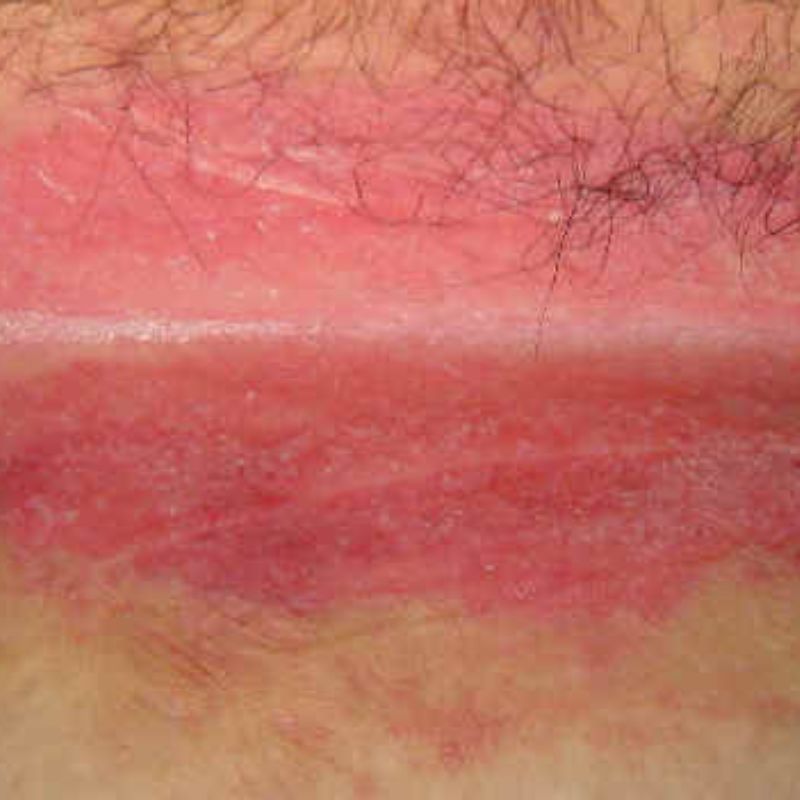
I’ve seen this with guys, especially men who tend to be of a larger build, who wear coveralls, boots, gloves, etc. This may be for example a fireman, a tradesman, the guy who works at a water treatment plant, or a guy who works in a factory environment, on a dairy farm for example.
Here are the most common symptoms of a yeast infection involving men:

Female-Associated Genito-Urinary Candida Symptoms
Yeast-related illnesses can significantly affect women’s health. Women make up the majority of the patients we see as naturopaths, in fact, more than 75% of our clientele is female.
Many of the women we have seen in the past had Candida fungal issues affecting their nervous system, their gut, urinary, or reproductive systems.
Our naturopathic clinic had a strong focus on treating Candida infection right from the beginning, more than 35 years ago, we gained plenty of experience in treating vaginal yeast infections.
A woman’s life can be drastically transformed when a yeast infection is treated. I still vividly remember a patient telling me:
“I was very difficult to live with until I finished your treatment. My entire life changed once I stopped using the oral contraceptive pill, cleaned up my system, and changed my diet, it might have even saved my marriage.”
Vulvovaginitis Symptoms and Symptoms
After treating vaginal yeast infections for a while, you’ll discover that there are various ways they can present themselves. It is simple to assume that they are all vaginal issues, but in some cases, the vulva (the area around the vagina) or the perineum (the area of skin between the anus and the vagina) may only be infected. Fungal infections including itching are common in the perineum region in both women and men, but in many chronic cases not commonly spoken about due to embarrassment.
It’s a symptom I find is often admitted when asked, but not always freely mentioned in the clinic when discussing Candida symptoms. Besides, patients get used to the sensation of itching and discomfort in this region after a period of time.
When a woman has a yeast infection, it can affect her vagina alone (vaginitis), the skin around her vagina (vulvitis), or both the vagina and the vulva (labia minor and major), in which case it is referred to as vulvovaginitis. This is the most typical (and, according to women, most unpleasant) problem.
Because the symptoms of vaginal yeast infections are sometimes different, they can also be brought on by other health problems. However, the itching in the vaginal and/or vulvar area, which is painful, embarrassing, and extremely annoying, is the most typical sign of a vaginal yeast infection.
Additional signs of vaginal yeast infection and vulvitis include:
Vaginal discharge is not always present, but when it does, it usually has a whitish, thick appearance and consistency, similar to cottage cheese, and is usually odourless.
Local discomfort might also accompany the aforementioned symptoms of vulvitis. Vulvodynia is the medical term for pain in the vulvar region. Yeast vulvovaginitis may result in a reoccurring issue for up to 15% or 20% of women, as I previously stated. When a woman gets four or more yeast infections in any given year, it is said to be recurrent.
Other yeast-associated female urinary or reproductive symptoms:
Click here to order Yeastrix Candida Cleanse if you have most of the signs and symptoms of yeast infection.

Eric Bakker N.D.
Greetings! I am a naturopathic physician from New Zealand. Although I’ve retired from clinical practice since 2019 after 34 years of clinic. I remain passionate about helping people improve their lives. You’ll find I’m active online with a focus on natural health and wellbeing education through my Facebook page, Reddit page and YouTube channel, including this website.


