

Introduction to Tempeh
Tempeh is one of Indonesia’s greatest culinary gifts to the world—and yet, it remains one of the most under-appreciated superfoods in the West. Originally from the island of Java, tempeh has been a staple source of protein in Indonesian households for centuries. Unlike tofu, which is made from soy milk, tempeh is created by fermenting whole cooked soybeans using a starter culture containing Rhizopus oligosporus, a type of mold.
What Is Tempeh – The Forgotten Superfood with Gut-Healing Power

Tempeh (or tempe) is unique being the only fermented soy product that did not originate in China or Japan. During the fermentation process—typically 24 to 36 hours—the Rhizopus mold (also called a tempeh starter) binds the whole soy beans together with a white edible mycelium, resulting in a dense, cake-like food that is both rich in both texture and nutrition, and forming a solid block that can be sliced, marinated, and cooked.
Tempeh vs Tofu
When it comes to soy-based foods, tempeh and tofu often get lumped together—but they’re vastly different in terms of nutrition and gut health potential. The big advantage of tempeh is that it retains the entire soybean, unlike tofu which is made from soy milk. This means tempeh delivers significantly more fibre, protein, and essential micronutrients like calcium, magnesium, iron, and even B vitamins such as B2 and B6—nutrients that support energy, immunity, and microbial diversity.

What makes tempeh especially interesting from a gut health perspective is its fermentation process. Soybeans are soaked overnight, de-hulled, and gently cooked, then cooled and inoculated with a fungal starter (usually Rhizopus oligosporus). Over the next 24 to 48 hours, the beans ferment into a firm, sliceable patty.
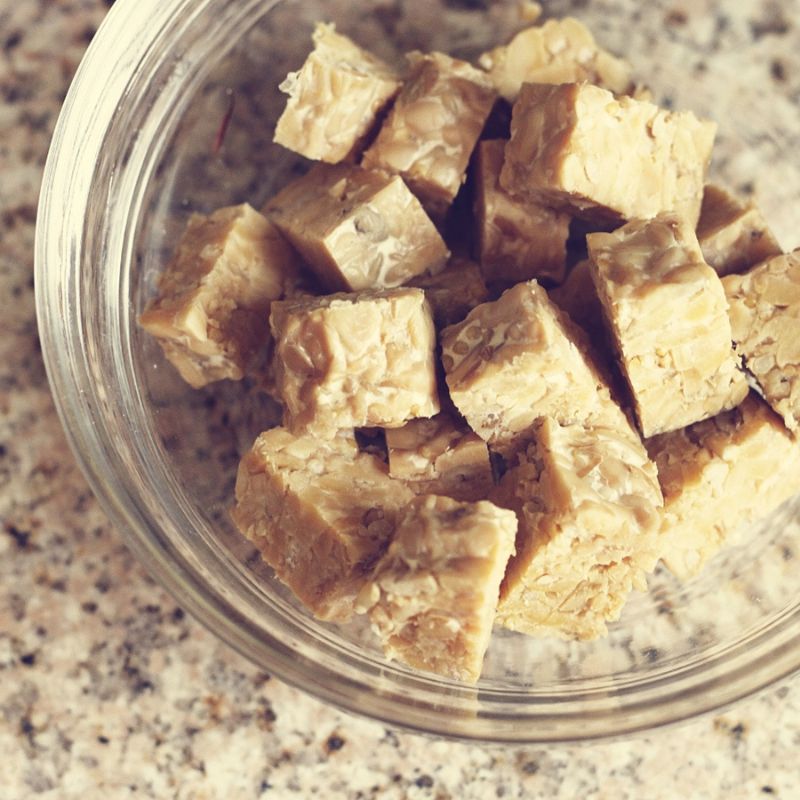
You can often see the individual beans still intact—nature’s way of saying: “I’m whole, I’m real, and I’ll feed your microbiome.” This traditional process not only enhances nutrient bioavailability but also adds beneficial compounds that help support digestion and reduce antinutrients like phytic acid.
Tempeh has a nutty, earthy flavour and a hearty texture that holds up well in stir-fries, grills, and salads. It’s a fermented whole food that ticks nearly every box for people dealing with Candida, SIBO, or leaky gut—making it far more than just a plant-based protein. In contrast, tofu, while still useful in moderation, lacks the fibre and complexity that your gut bugs crave.
Described as Nutty, Mushroom, Umami Taste

The result is a mildly nutty, mushroom-like flavour with hints of earthiness and a slightly fermented, meaty/cheesy edge. The first time I tried tempeh was in the early 1980’s in a take-away store near a alternative living commune in Byron Bay, Australia. I was blown-away and thought it tasted better than any steak burger I’ve ever had, and I’ve been enjoying tempeh ever since. It’s all in the preparation and marination, and I’ll discuss all that later.
For some, the tempeh flavour can be an acquired taste, but tempeh readily absorbs marinades and sauces, making it incredibly versatile in the kitchen. Think stir-fries, stews, salads, wraps, and even breakfast scrambles. It also freezes well for 6 months or more (I had block in the freezer for over a year and it still tasted great). It doesn’t get much better than this if you’re looking for a super-healthy protein source that’s gut friendly, healthy, and sustainable.
Complete Source Plant Protein
What makes tempeh especially valuable today is not just its rich history or cultural significance, but its extraordinary nutritional benefits—especially for those dealing with Candida overgrowth, gut dysbiosis, or seeking high-quality plant protein alternatives.
Tempeh is a complete protein, meaning it contains all nine essential amino acids. It’s also rich in dietary fibre, making it more filling and gut-supportive than many other soy products. Being fermented, it supports beneficial gut flora, helps with digestion, and is much less likely to cause bloating than non-fermented soy products. It’s also high in key micronutrients such as calcium, manganese, copper, phosphorus, and B vitamins, especially B12.
Here’s Why Tempeh Deserves a Place in My Kitchen
Tempeh is less processed than tofu, has more calories and protein per weight, and is becoming easier to find in health food stores and even mainstream supermarkets. You can also make it at home if you’re into DIY fermentation. And while it’s traditionally made from soybeans, you can now find varieties made from chickpeas, lentils, or other legumes—ideal for those who wish to avoid soy entirely.
Key Take-away
Don’t overlook this “forgotten” ancient, gut-healing powerhouse. It isn’t just a meat alternative—it’s a microbiome-friendly superfood with ancient roots and modern relevance.
Tempeh Is Packed With Beneficial Nutrients
Tempeh is a nutrient-dense fermented food with a well-earned reputation as a gut-supportive and immune-boosting addition to a balanced diet. One of its most celebrated features is its high-quality protein content, delivering all essential amino acids needed for tissue repair, enzyme production, and overall metabolic function.
High-Quality Plant Protein
Tempeh is a standout plant-based protein, offering a complete amino acid profile that rivals animal sources. This makes it an excellent choice for vegetarians, vegans, or anyone looking to reduce their meat intake without compromising protein quality. A recent study highlights tempeh as an ideal meat substitute due to its rich content of non-animal protein, prebiotics, vitamins, and minerals (Teoh et al., 2024).
What sets tempeh apart is its fermentation process. Fermentation not only improves protein digestibility by partially breaking down amino acids but also enhances the food with gut-supportive compounds. Amino acids like glutamic acid and arginine—naturally present in tempeh—support gut lining repair, immune defense, and neurotransmitter production, key components of the gut-brain axis.
These benefits are especially valuable for people managing Candida overgrowth or dysbiosis, where gut integrity and microbial balance are often compromised.
More Than Just Protein
Tempeh isn’t just a source of protein—it’s a live, functional food powered by beneficial microbes. From vitamin B12 production to anti-pathogen activity and GABA production, the bacteria involved in tempeh fermentation offer a remarkable range of gut- and health-supporting effects. This makes tempeh an exceptional food choice for anyone seeking high-quality food-based solutions for digestive health, immune resilience, and microbial diversity.
Take-Away
Rich in Minerals and Vitamins
Beyond protein, tempeh is rich in vital minerals including calcium, magnesium, phosphorus, manganese, and copper—each of which is essential for bone health, energy and blood sugar metabolism, and immune resilience. Notably, tempeh can also be a source of naturally produced vitamin B12 when fermented with certain bacteria like Klebsiella pneumoniae or Citrobacter freundii, offering a potential plant-based solution to a nutrient often lacking in vegan diets.
Tempeh’s fermentation also boosts its antioxidant profile, helping to reduce oxidative stress and cellular damage. These properties, combined with its protein density, fibre content, and bioactive compounds, make tempeh not only a complete food—but a powerful ally for gut and immune health.

Key Benefits Of Fermented Foods
Fermented foods like tempeh are very rich in probiotic bacteria, beneficial micro-organisms that support a healthy gut microbiome. Countless studies exist online supporting the consumption of probiotic bacteria, because they have proven to aid in digestion, reduce bloating, and alleviate symptoms of gastrointestinal disorders like irritable bowel syndrome (IBS).
It’s only been quite recently in the history of medical science that gut micro-organisms have been linked to so many health benefits. Because of this, these microorganisms have become a serious scientific topic of interest.
Lactic acid bacteria (LAB) have become some of the most studied bacteria for this reason. During fermentation, these lactic acid bacteria have been found to make many vitamins and minerals, make different enzymes and biologically active peptides, they even manage to help get rid of “anti-nutrients”. (Sanlier et al., 2017).
Key Articles About Fermented Foods
Tempeh Improves Gut Microbiome Health

Tempeh has been found to help restore microbial balance in the gut. Tempeh belongs to the family of fermented foods, known for their probiotic benefits. Although some commercially available tempeh is pasteurised (reducing its live bacteria content), traditionally (or home-made) fermented varieties can still contribute significantly to the health of our gut microbiome.
Fermented foods like tempeh are very rich in probiotic bacteria, beneficial micro-organisms that support a healthy gut microbiome. Many studies exist online supporting the consumption of probiotic bacteria, because they have proven to aid in digestion, reduce bloating, and alleviate symptoms of gastrointestinal disorders like irritable bowel syndrome (IBS).
It’s only been very recently in the history of medical science that gut micro-organisms have been linked to so many health benefits. Because of this, these microorganisms have become a serious scientific topic of interest. Lactic acid bacteria (LAB) found in tempeh in large amounts have become some of the most studied bacteria for this reason. During fermentation, lactic acid bacteria have been found to create several vitamins and minerals, make different enzymes and biologically active peptides, they even manage to help get rid of “anti-nutrients”. (Sanlier et al., 2017).
Gut Health Benefits – Probiotics
Tempeh provides prebiotic fibre that nourishes beneficial gut bacteria, encouraging their growth and diversity. These gut bacteria produce short-chain fatty acids (SCFAs), which improve gut lining health and have systemic anti-inflammatory benefits (throughout our body).
Prebiotics help restore microbial balance, especially in people with gut dysbiosis (SIBO) or Candida overgrowth.
An animal study (Chen et al., 2021) found that consuming tempeh :
Protects Gut Barrier – Reduces Gut Inflammation
An animal study found that 28 days of tempeh consumption led to increased IgA levels a key immune (antibody) molecule that defends the gut lining (Soka et al., 2015).
A study was conducted using human stool sample studies in those who consumed tempeh. It was discovered that tempeh boosted secretory IgA. (the dominant antibody type found at mucosal surfaces throughout the gut), as ell as increased levels of Akkermansia muciniphila, a key bacteria known to strengthen the gut barrier. (Stephanie et al., 2017).
Colon Cancer Risk Reduction
Another study found that when rats consumed tempeh they had significantly increased levels Lactobacillus numbers in addition to species in their digestive system. They were are found to have reduced levels of harmful bacteria. The same study found that tempeh protected the colon by reducing intestinal permeability (Bestari et al., 2023).
Key Functional Tempeh Bacteria and Their Contributions
Modern research has confirmed that the microbial community involved in tempeh fermentation isn’t just safe—it’s profoundly beneficial for our gut health and function. Tempeh can help create a protective lining in the gut, defending against harmful pathogens such as Salmonella and E. coli. (Teoh et al., 2024).
A diverse range of bacteria – including several Lactobacillus species – naturally thrive or are co-inoculated along with the Rhizopus oligosporus fungus during fermentation, each contributing unique functionalities to this traditional food.
Let’s look at some of the key bacteria isolated from tempeh and their benefits:
Other Health Benefits of Tempeh
Tempeh is rich in nutrients, fibre, and beneficial compounds that can support many aspects of our health. With its impressive protein profile, probiotic and antimicrobial potential, and isoflavone content, tempeh is much more than just a meat alternative it’s a functional food with wide-reaching health benefits.
Helps Balance Blood Sugar

Tempeh offers promising health benefits, especially for those concerned about blood sugar control and Type 2 diabetes. Its fermentation process significantly boosts the nutritional profile by increasing isoflavones and breaking down complex macromolecules into more digestible peptides and amino acids. Tempeh is rich in manganese—a trace mineral involved in metabolic regulation and blood sugar control.
Anti-Diabetic Effects
These changes have been linked to reductions in blood sugar, body weight, and total cholesterol levels, as seen in studies by Hsu et al. (2003), Huang et al. (2013), and Lee (2006). Research by Kwon et al. (2010) also showed that tempeh (fermented soybeans) contains phytoestrogens, soy peptides, and isoflavonoids that exhibit anti-diabetic effects, which are not present in raw soybeans to the same extent.
Animal studies support these findings. For instance, Cabello-Olmo et al. (2019) found that plant-based fermented foods containing lactic acid bacteria (LAB) improved gut microbiota balance, reduced glucose levels, and promoted healthier pancreatic function in rats. Bintari et al. (2015) compared tempeh and soy milk and found that tempeh had a stronger blood sugar-lowering effect due to its higher levels of active isoflavones. More recently, Su et al. (2023) found that one month of tempeh supplementation significantly lowered blood sugar and body weight in obese diabetic mice.
Take-Away
Tempeh and Brain Health: What Research Shows

Fermenting soybeans into products like tempeh boosts their nutritional value, especially when it comes to brain health. During fermentation, levels of vitamin B2, B12, and gamma-aminobutyric acid (GABA) increase. GABA is a compound that helps calm the nervous system and support brain function (Jayachandran & Xu, 2019; Ayuningtyas et al., 2019).
One study compared the cognitive performance of elderly Indonesians who ate a lot of tofu versus those who ate more tempeh. Interestingly, those who consumed more tempeh had better memory scores. Researchers believe this could be due to tempeh’s higher levels of folate and vitamin B12, which are known to protect brain function and may reduce the risk of dementia, including Alzheimer’s (Hogervorst et al., 2008; Smith, 2002).
Improved Memory
More recently, a six-month study (Handajani et al. 2021) gave elderly participants with mild cognitive impairment 100 grams of tempeh daily. The results showed a clear improvement in their memory and cognitive abilities. Tempeh’s antioxidants and anti-inflammatory compounds help protect and support overall brain function (Handajani et al., 2022).
In a follow-up study, the same research team (Handajani et al., 2022) tested probiotics isolated from Lactobacillus fermentum found in tempeh. They discovered that these beneficial bacteria improved memory, language, and visual-spatial skills—especially at higher concentrations (108 CFU/mL). This supports earlier research (Park et al., 2020), showing that Lactobacillus fermentum helps regulate immune function and improves brain health.
Take-Away
Heart & Cholesterol Management

Tempeh is more than just a high-protein plant food—it offers impressive heart health benefits, thanks to its rich content of soy protein, fiber, isoflavones, and phytosterols. These compounds have been shown to help lower total cholesterol and LDL (low-density lipoprotein), the so-called “bad” cholesterol (Ramdath et al., 2017).
The fermentation process in tempeh not only enhances nutrient availability but also contributes to cholesterol reduction. Fiber and protein in tempeh help block cholesterol absorption in the gut and support bile acid excretion, mechanisms linked to better lipid control (Greany et al., 2004).
Clinical studies back these effects. A 14-day study involving 41 women with high cholesterol found that consuming tempeh led to LDL reductions of nearly 28–31% and total cholesterol drops of around 18–20%, while HDL (the “good” cholesterol) levels increased (Afifah et al., 2020).
Take Away
Strong Bone Health Support

Tempeh is a great source of minerals that support healthy bones—especially calcium, magnesium, phosphorus, and copper.
Calcium plays a leading role in building hydroxyapatite, the dense mineral structure that gives bones and teeth their strength—especially when paired with vitamins D and K.
Copper, often overlooked, is essential for collagen formation and tissue repair. Deficiency in copper can lead to brittle bones and delayed healing.
Phosphorus supports bone formation, while magnesium helps regulate calcium balance, with tempeh being a rich source of all these minerals. These nutrients work together to maintain bone density, prevent fractures, and support overall skeletal integrity. One study fount that supplementation with tempeh extract for two months could result in improved quality of bone, including increased calcium bone concentrations, bone density, and bone strength (Safrida et al., 2013).
One big advantage of tempeh is its fermentation. This process breaks down “anti-nutrient” compounds like phytic acid, which normally block mineral absorption. As a result, the calcium and other minerals in tempeh are easier for the body to absorb and use.
Take-Away
Tempeh May Ease Menopausal Symptoms

Tempeh is rich in soy isoflavones—natural plant compounds known as phytoestrogens. These substances gently mimic estrogen in the body, which can be helpful during menopause when estrogen levels begin to decline.
Research shows that phytoestrogens may offer relief from common menopausal symptoms like hot flashes, mood fluctuations, and changes in cholesterol levels.
In fact, a review concluded that dietary isoflavones can significantly reduce the frequency and intensity of hot flashes (Taku et al., 2012).
Beyond symptom relief, isoflavones also support cardiovascular health and bone metabolism—two areas of concern for many post-menopausal women (Tang et al., 2020). Including tempeh in the diet during this life stage may help smooth the transition and promote long-term wellbeing.
Take-Away
Anti-Cancer and Anti-Tumour Benefits

Tempeh contains powerful bioactive compounds—especially soy isoflavones like genistein and daidzein—that have demonstrated antioxidant, anti-inflammatory, and even anti-cancer properties.
These isoflavones can help neutralise free radicals and reduce oxidative stress, both of which contribute to DNA damage, aging, and the development of chronic diseases such as cancer (Tamam et al., 2019).
Several studies suggest that soy isoflavones positively influence estrogen metabolism, potentially lowering the risk of hormone-related cancers, such as breast and ovarian cancer in both pre and post-menopausal women (Boutas et al., 2022).
Lab and animal studies have shown that isoflavones from tempeh can inhibit the growth of various cancer cell lines, including breast (Chen et al., 2003),, cervical (Xiao et al., 2011) , and ovarian cancers
(El-Shazly et al., 2022). These compounds may help suppress tumour growth and development, encourage cancer cell death, and enhance immune responses by increasing immune system activity.
In fact, fermented soy isoflavones from tempeh have shown stronger anti-tumor effects than those from unfermented soy. Genistein has even been found to enhance the effects of conventional chemotherapy drugs (5-fluorouracil), and may inhibit enzymes like tyrosine kinase, which are often overactive in cancer cells (Varinska et al., 2015; Watanabe 1987).
Take-Away
Anti-Aging Benefits

Tempeh has been linked with offering anti-aging benefits thanks to its rich content of isoflavones like genistein and daidzein. These plant-based compounds act like estrogen in the body, which can be especially helpful for women going through menopause (Pan et al., 2012).
Animal studies have shown that tempeh extract may work just as well as some commercial hormone therapies when it comes to slowing aging (Safrida et al., 2013). In women in pre- or postmenopausal stages, tempeh has been linked to better skin health and improved quality of life. (Khosravi and Razavi 2021), ( Sapbamrer et al., 2013).
This is because the isoflavones in tempeh may help balance hormone levels and protect the skin from damage caused by aging and hormone decline (Bosch et al., 2015).
In addition to balancing hormones, tempeh may protect the skin from damage caused by the sun—a process known as photo-aging (Petruk et al., 2018). Research shows that certain compounds in tempeh (peptides and amino acids), may reduce wrinkles, support collagen production, and protect against harmful molecules called reactive oxygen species (ROS) (Hallis et al., 2020). These molecules can damage DNA, cells, and proteins if left unchecked.
Take-Away
How to Make Tempeh at Home

Tempeh is a traditional fermented food made from soybeans. Best of all, you can make it right in your own kitchen with just a few basic tools, a bit of patience, and a warm spot for fermentation! Making your own tempeh at home is a very satisfying process—part science experiment, part culinary art. While it may take more time buying tempeh from the store, the reward is undeniable.
Homemade tempeh has a rich, nutty flavour and a fresher taste that mass-produced versions simply can’t match. It’s affordable, nutritious, and fun to make.
The key to making tempeh is fermentation—creating the perfect environment for beneficial mold spores to grow and bind the ingredients into a firm, cake-like block.
With just a few basic tools and ingredients, you can make fresh tempeh right in your kitchen, and it’s not that difficult.
All it takes is cooked beans or grains, a small amount of tempeh starter, and a consistently warm place to incubate the mixture. Below is a step-by-step overview of the components you’ll need and how to get started:
Choose Your Beans or Grains
Tempeh Starter
The Container
The Incubator
Other Legumes or Cereals for Tempeh Production

While soybeans are the traditional base for making tempeh, many other legumes and grains—including chickpeas, mung beans, black beans, broad (fava) beans, peanuts, lentils, barley, wheat, and other cereals and even seeds—can also be used such as quinoa. (Ashehnafi et al., 2019)
These alternative versions to soybeans offer excellent nutritional value and expand tempeh’s appeal, especially for vegans and those seeking dietary variety.
Legume-based tempeh tends to be rich in fibre and heart-healthy unsaturated fats, while cereal-based versions provide additional protein, vitamins, and minerals. Several studies have shown that chickpeas, red lentils, and broad beans can produce high-quality tempeh, offering both nutritional density and great taste (Erkan et al., 2020).
Among non-soy options, chickpea tempeh is often favoured for its flavour, texture, and overall consumer appeal. It contains impressive levels of protein and essential nutrients, making it a strong plant-based protein source.
Research has also found that combining soybeans with other legumes during fermentation can enhance tempeh’s physical traits—such as aroma, texture, and appearance—while improving its nutritional quality and sensory properties like taste and mouth-feel.
Take-Away

The 7 Steps To Making Tempeh
Let’s walk you through the process — both the science behind it and the step-by-step method — so you can make delicious, safe, and healthy tempeh at home. Once your tempeh has fully incubated, you’ll see a solid white cake holding the beans together with a pleasant, earthy aroma.
At this point, it’s ready to slice, cook, or freeze for later. You can steam, pan-fry, or bake it—homemade tempeh holds up well and tastes incredible with minimal seasoning.
Traditional methods use banana leaves to wrap the beans, but at home, a perforated ziplock bag works just as well.
Basic Tempeh-Making Steps
The fermentation process involves the following 7 essential stages:
Ingredients (For a Batch Yielding 1 Large Tempeh Block)
Equipment
Step-by-Step Instructions
1. Soak and Dehull the Beans
2. Cook the Beans
3. Inoculate
4. Pack and Perforate
5. Incubate
How to Know It’s Done
Storage Tips
How to Cook Tempeh – The Delicious Way
Tempeh is easy to find and even easier to cook. You’ll typically spot it in the refrigerated section of most supermarkets, hanging out near tofu and other plant-based products. Don’t be alarmed if you notice a white, fuzzy coating on some of the beans—this is just the natural fermentation process at work, and it’s completely safe to eat.
Tempeh keeps well in the fridge for up to a week and freezes beautifully for longer storage, I’ve kept a block for one year in the freezer and it still tasted fine. You can enjoy it raw or lightly boiled and dipped in soy sauce or miso. But the real magic happens when you cook it—it absorbs flavours quickly and has a firm, nutty bite that works well in just about anything.
Tempeh is super versatile:
Step-by-Step: How to Cook Tempeh
1. Cut it up.
Slice the tempeh into 1-inch cubes, triangle “steaks,” or half-inch slices. Whatever shape you like—this method works across the board.
2. Steam it first.
Yes, even if you’re baking or grilling it. Steaming tempeh for just 10 minutes helps soften its texture and preps it to soak up more flavor. This step is optional—but trust me, it makes a difference.
3. Make a marinade.
While it’s steaming, whip up a simple marinade. My go-to includes:
4. Marinate for 30+ minutes.
Let the tempeh sit and soak in that delicious marinade. The longer it marinates, the more flavor it takes on.
5. Bake it.
Optional: Grill instead!
Prefer a smoky flavour? Grill the marinated tempeh triangles over medium heat for 7–9 minutes. Brush with marinade, flip, and grill another 4–5 minutes until nicely cooked.
How to Store Cooked Tempeh
Cooked tempeh keeps well in an airtight container in the fridge for up to 3 days. It’s perfect for meal prep—just toss it into wraps, salads, or bowls throughout the week.
Key Takeaways
Tempeh Burgers
When used in burgers, tempeh becomes an excellent vehicle for delivering gut-supportive nutrients while also satisfying the palate. Its fermentation process enhances the digestibility of soybeans and reduces anti-nutrients, making minerals like calcium, magnesium, and iron more bioavailable.
This same fermentation also fosters beneficial microbial compounds, which can help modulate the gut microbiome and support intestinal barrier integrity. Tempeh burgers, especially when paired with fibre-rich toppings and wholegrain buns, can help reduce gut inflammation and feed beneficial bacteria—an essential step in rebalancing microbial dysbiosis and reducing the production of harmful endotoxins. This make tempeh the perfect food for those with gut problems.
Take-Away
Summary
Tempeh stands out as a superior protein food with a range of health benefits, from supporting gut health and digestion to offering antimicrobial protection. Its rich probiotic content and nutrient profile make it an excellent choice for anyone looking to improve their overall health, manage Candida and SIBO, and enjoy the benefits of a balanced diet. With its ability to support digestive health, bolster the immune system, and provide essential nutrients, tempeh is a valuable addition to any diet aimed at achieving optimal health and well-bein

Eric Bakker N.D.
Greetings! I am a naturopathic physician from New Zealand. Although I’ve retired from clinical practice since 2019 after 34 years of clinic. I remain passionate about helping people improve their lives. You’ll find I’m active online with a focus on natural health and wellbeing education through my Facebook page, Reddit page and YouTube channel, including this website.