

What Is Trichomoniasis?
Trichomoniasis is caused by the protozoan (a parasite) Trichomonas vaginalis. This common but often overlooked sexually transmitted infection (STI) is commonly referred to as trich. It primarily affects the urogenital tract and is transmitted through vaginal, oral, or anal sexual contact. Due to its frequent lack of symptoms, especially in men, many individuals remain unaware they are infected, contributing to its widespread prevalence.

Women Of Child-Bearing Age Most Affected
According to the World Health Organisation, in 2020 there were are an estimated 374 million new infections in people 15–49 years with 1 of 4 curable STIs: chlamydia, gonorrhoea, syphilis and trichomoniasis.
Yet despite its high global occurrence—156 million new cases were reported in 2020—trichomoniasis is often disregarded in public health discussions.
Women of reproductive age are the most affected, with men often serving as asymptomatic carriers. In women, symptoms can include abnormal vaginal discharge, discomfort during urination, or pain during intercourse, while men may only experience mild urethral irritation or discharge. (Schumann et al., 2023).
Left untreated, the infection can lead to serious complications such as poor pregnancy outcomes, pelvic inflammatory disease, and a heightened risk of acquiring HIV (Davis et al., 2016).
Fortunately, trichomoniasis is both preventable and curable with medicines like metronidazole or tinidazole. Increasing awareness, promoting routine STI screenings, and encouraging safe sexual practices are key strategies for reducing its impact (CDC).
Key Points
Trichomoniasis Symptoms
Symptoms typically appear within 5–28 days of exposure, but can varu from person to person. Women may experience more noticeable symptoms, such as frothy, greenish-yellow vaginal discharge with a strong odour, itching, discomfort during intercourse, and irritation in the vaginal area. (Schumann et al., 2023).
In contrast, men rarely show symptoms or may have mild irritation or discharge from the penis. The lack of symptoms in men can facilitate the infection’s transmission, since carriers may be unaware of their status.
Trichomoniasis in Women

Studies show that trichomoniasis disproportionately affects women and black individuals, highlighting significant health disparities associated with this STI (Van Gerwen et al., 2023).
This prevalence emphasises the need for increased awareness, prevention strategies, and accessible treatment options, especially for at-risk populations.
Symptoms of Trichomoniasis in Women
Trichomoniasis often causes noticeable symptoms in women, although some may remain asymptomatic.
Here’s a detailed list of trichomoniasis symptoms in women:
Importance of Symptom Recognition
Recognising symptoms early is critical to diagnosing and treating trichomoniasis. Women experiencing any of these signs should consult a doctor or a healthcare provider for testing, as untreated infections can lead to complications like pelvic inflammatory disease (PID) and increase susceptibility to other STIs.
Studies including what causes trichomoniasis, how it spreads, and who this STI affects in any given population, show that trichomoniasis is most prevalent among women and black individuals, making societal-level health disparities of this STI clear (Van Gerwen et al., 2023).
Trichomoniasis In Men

Trichomoniasis in men often presents with subtle or no symptoms, making it easy to overlook or misdiagnose. Some men may present with symptoms including penile discharge, testicular pain, pain when urinating, increased urinary frequency, or cloudy urine (Schumann et al., 2023).
Frothy discharge from the penis, a burning sensation after ejaculation, or painful urination are common indicators of STIs. Irritation or itching inside the penis can also occur, adding to the discomfort.
While these symptoms may seem mild or intermittent, untreated trichomoniasis can lead to complications such as increased susceptibility to other sexually transmitted infections, including HIV, and potential issues with a man’s prostate health. Early diagnosis and treatment are essential to avoid long-term health consequences and to prevent transmission to sexual partners.
Symptoms of Trichomoniasis in Men
Here’s a detailed list of trichomoniasis symptoms in men:
Trichomoniasis Causes
How Do You Get Trichomoniasis?
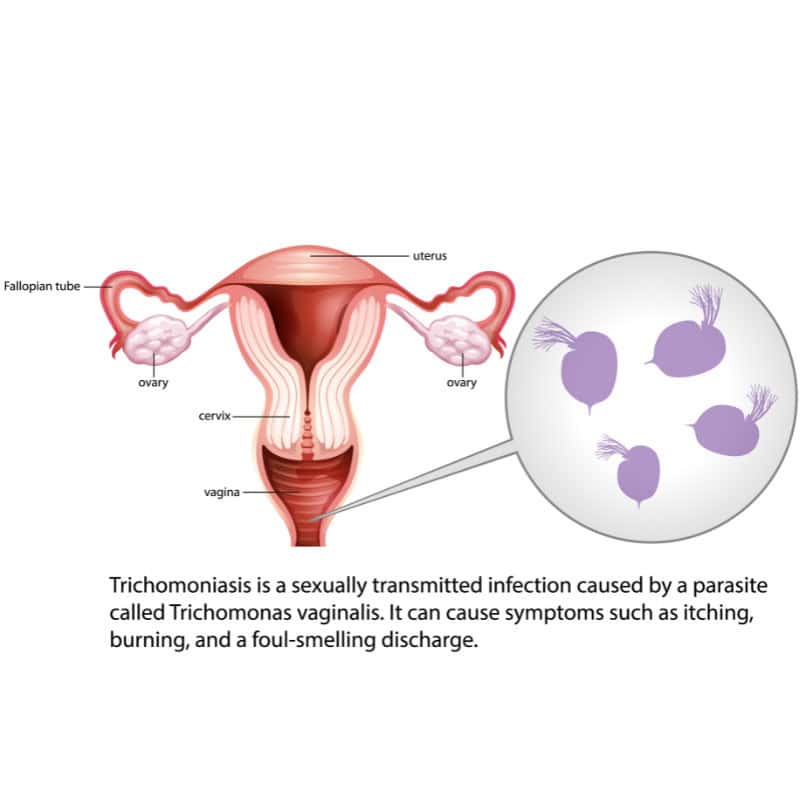
It is important to point out that trichomoniasis is a common sexually transmitted infection caused by a small parasite called Trichomonas vaginalis. The infection is transmitted primarily through unprotected sexual contact. Any sexually-active individual can contract and spread trichomoniasis, male or female, making safe practices and awareness vital for prevention.
Vaginal, anal, and oral sex are the main routes of transmission, but it can also spread through close genital contact without ejaculation. In rare cases, the trich parasite may survive in moist environments like wet towels for a short time, leading to indirect transmission, although this is less common.
The infection affects both men and women, though women tend to experience more pronounced symptoms. Men may carry the parasite without showing clear signs, increasing the likelihood of unknowingly passing it to partners. Importantly, trichomoniasis cannot spread through non-sexual contact, such as sharing food, drinks, or toilet seats, nor is it caused by poor hygiene.
Risk Factors for Trichomoniasis
Certain behaviours and conditions increase the risk of contracting trichomoniasis. These include:
While trichomoniasis is most commonly transmitted through direct sexual contact, rare cases of transmission via damp towels or other moist objects demonstrate the parasite’s resilience in certain conditions.
Key Points About Trichomoniasis Transmission
Trichomoniasis Is Not Spread Through:
Take-Aways
By understanding the causes and modes of transmission, it is possible to take proactive steps to prevent and manage trichomoniasis effectively.
Trichomoniasis Test
Testing and Diagnosis of Trichomoniasis

Accurate diagnosis of trichomoniasis is most essential for effective treatment and preventing the spread of this common STI. Healthcare providers use a combination of physical exams and laboratory tests to confirm the trichomoniasis infection.
Prompt testing is particularly important if symptoms such as unusual discharge, itching, or burning occur. Let’s now look a the common ways this condition is diagnosed and tested:
Diagnostic Methods
Key Points About Diagnosis
Take-Aways
Clear and accurate testing, combined with open communication and prompt treatment, helps control the spread of trichomoniasis and ensures better overall sexual health.
Trichomoniasis Treatment

Can Trichomoniasis Be Cured?
Yes, trichomoniasis is curable with proper treatment. Patients treated with antibiotics such as metronidazole or tinidazole have a high cure rate, typically between 90% and 95%. These rates are even higher when both the infected individual and their sexual partner(s) are treated simultaneously, as this helps to prevent reinfection.
However, recurrent infections are common in sexually active individuals, particularly if partners are not treated or safe sexual practices are not followed.
Why Prompt Treatment Is Important
Trichomoniasis is not just an isolated infection; it is strongly associated with other sexually transmitted infections (STIs). Individuals with trichomoniasis are at an increased risk of contracting and transmitting infections such as HIV, gonorrhea, human papillomavirus (HPV), herpes, and chlamydia. This makes early diagnosis and treatment critical for protecting overall sexual health.
For pregnant women, untreated trichomoniasis can lead to severe complications, including:
Trichomoniasis increases the risk of developing pelvic inflammatory disease (PID), a serious condition that can cause long-term reproductive health issues, including infertility (Van Gerwen et al., 2023).
Take-Aways
Addressing trichomoniasis promptly and adopting preventative measures can help ensure better long-term sexual and reproductive health.
Trichomoniasis Medication
Trichomoniasis is a curable sexually transmitted infection, but it requires prompt and proper treatment to eliminate the protozoan parasite causing the infection. While I’m not a fan of antibiotics in general, in cases of STIs there is no arguing that antibiotics are the most intelligent and effective solution.
Without treatment, trichomoniasis can persist for months or even years, during which time it can be transmitted to one or more sexual partners. Treating all sexual partners simultaneously is crucial to prevent reinfection.
The drug of choice is often metronidazole, which is highly effective in most all cases. I’ve also found it the drug of choice in hard to treat cases of the parasite called blastocystis hominis.
How Is Trichomoniasis Treated?
Key Points About Treatment
Take-Aways
Effective treatment combined with proper precautions can eliminate trichomoniasis and prevent its spread, ensuring better overall sexual health.
Natural Approaches to Trichomoniasis Care

While antibiotics like metronidazole or tinidazole are necessary for curing trichomoniasis, natural approaches can support the body’s healing process, reduce the risk of reinfection, and promote overall reproductive health.
After completing antibiotic treatment, restoring the balance of the vaginal and gut microbiomes is crucial, as antibiotics can disrupt these ecosystems.
Probiotics, particularly strains like Lactobacillus, can help re-establish healthy microbial balance, reducing the likelihood of future infections and supporting immune function.
Additionally, maintaining a healthy vaginal pH and reducing sugar intake can play a significant role in creating an environment that is less conducive to the overgrowth of pathogens like Trichomonas vaginalis.
Incorporating anti-inflammatory and immune-boosting foods into the diet can further aid the recovery process. Foods rich in antioxidants, like berries, leafy greens, and cruciferous vegetables, can help reduce inflammation and support the body’s natural defense systems. Herbs such as garlic, oregano oil, and thyme are known for their antimicrobial properties and may help protect the body from additional infections.
Furthermore, a holistic approach to managing stress through practices like yoga, meditation, or deep breathing can help support the body’s immune system, as chronic stress can weaken immune function and make the body more susceptible to infections.
To further optimise complete and deep recovery, it’s beneficial to avoid irritants like douches, scented products, or harsh soaps that can disrupt the vaginal microbiome. Adopting a nutrient-dense, low-sugar diet and focusing on good hygiene practices can also reduce the chances of reinfection, ensuring the body has the best conditions to heal and maintain balance.
Key Natural Approaches
This holistic approach can be a valuable complement and adjunct to conventional treatments, helping to maintain long-term reproductive health and prevent future infections. Once your trichomoniasis treatment has successfully cured the condition, consider our vaginal cleansing and balancing program, it is primarily used to treat chronic vaginal thrush (yeast infection), but is also very good after trich treatment:

4-Steps to Vaginal and Gut Cleansing and Balancing
Our 4-step yeast infection treatment protocol combines the latest scientific research with over three decades of clinical expertise, offering a highly effective and practical alternative to conventional pharmaceutical treatments for vaginal yeast infections.
The methods we recommend are not only scientifically validated to be as effective as, or even more effective than, drug-based interventions, but they have also been clinically proven over 30 years of practice. By focusing on the root cause of vaginal yeast infections, our approach provides lasting relief and addresses the underlying imbalances that contribute to recurrent issues. This comprehensive 4-step program is also an excellent option for those dealing with recurring trichomoniasis or bacterial vaginosis, offering a holistic solution for long-term vaginal health.
Trichomoniasis Prevention
Preventing Trichomoniasis
Trichomoniasis is a preventable sexually transmitted infection, and taking proactive steps can significantly reduce the risk of contracting or spreading this common STI.
The most effective way to prevent the spread of trich is to practice safe sexual habits and maintaining open communication with partners, the two essential components of prevention.
While no method guarantees 100% protection, these strategies are highly effective:
Key Prevention Methods
Take-Aways
By combining these preventive measures, individuals can protect themselves and their partners while promoting better overall sexual health.
Thanks for reading this post, please leave any comments below.

Ultimate Candida Cleanse System Bundle
Restore gut balance naturally with the Ultimate Candida Cleanse System Bundle — a complete, professional-grade gut health solution developed by naturopath Eric Bakker, N.D.
This all-in-one system combines two in-depth books — The Ultimate Candida Cleanse Program and The Ultimate Candida Cleanse Guide — along with the Yeastrix Gut Restore Kit, featuring targeted antifungal, probiotic, and enzyme formulations. Together, they deliver a structured, step-by-step approach to eliminating Candida overgrowth, rebalancing your gut microbiome, and rebuilding healthy digestion from the inside out — your foundation for lasting energy, comfort, and vitality.
To achieve real, lasting results, you need more than just a plan — you need the right support. That’s why Eric Bakker created Yeastrix, a professional-grade supplement range launched in 2025 to work hand-in-hand with his new Candida Cleanse Program. Each Yeastrix formula targets a key stage of gut recovery — helping restore microbial harmony, enhance digestion, and support long-term wellness.
If you’re ready to take control of your health and finally feel like yourself again, the Ultimate Candida Cleanse System gives you everything you need — expert guidance, a proven roadmap, and powerful natural support that truly works.

Eric Bakker N.D.
Greetings! I am a naturopathic physician from New Zealand. Although I’ve retired from clinical practice since 2019 after 34 years of clinic. I remain passionate about helping people improve their lives. You’ll find I’m active online with a focus on natural health and wellbeing education through my Facebook page, Reddit page and YouTube channel, including this website.